
At a press conference held on July 7, Maxim Liksutov, Deputy Mayor of Moscow for Transport and Industry, gave comprehensive answers to key questions about the development of urban transport.
Major Metro Upgrades:
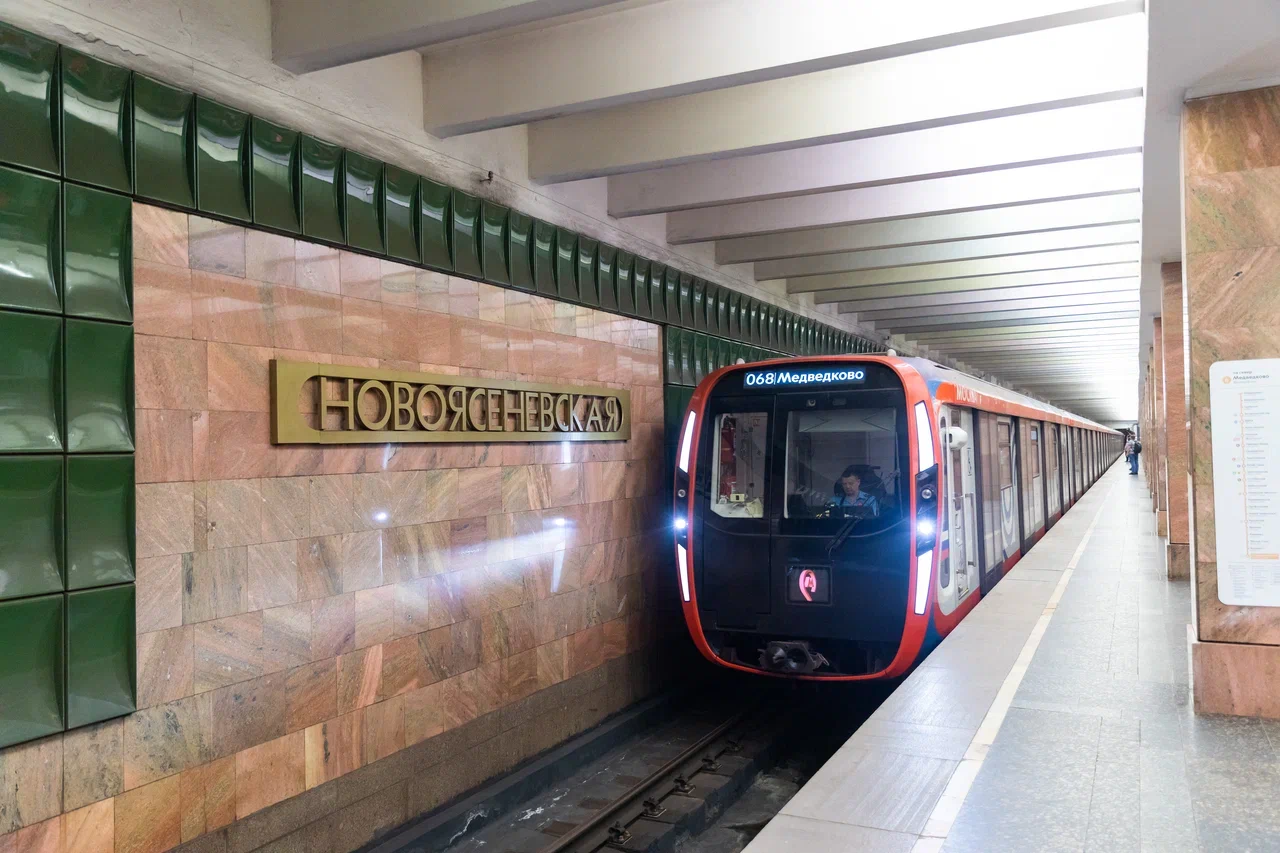
– The share of upgraded rolling stock in the Moscow Metro has reached 77%.
– So far this year, 144 Moskva-2024 cars have been delivered, with another 128 expected by the end of the year.
– In 2026–2027, the fleet will be expanded with more than 700 new Moskva-2026 cars.
– By 2030, the share of new trains will exceed 90%.
Industrial Growth and Innovation:
– Moscow is the largest industrial and scientific center in Russia, home to over 4,500 enterprises.
– Over the past five years, clothing production has increased 58.3 times, machinery and equipment production 7.5 times, and electronics and optics production 5.4 times.
– The industrial production index for January–May 2025 rose by 6% compared to last year.
Autonomous Technologies and Safety:
– In 2025, Russia’s first passenger-carrying autonomous tram will start operating; by 2035, the entire tram fleet will be autonomous.
– The metro is implementing the “Sfera” video analytics system, which has already helped locate 17,000 criminals and 2,000 missing people, including children.
Regular River Transport:
– In just two years of operation, Moscow’s regular river routes have made the city a global leader: no other metropolis has a comparable electric water transport system.
– More than 2 million passengers have used river transport, far exceeding the city’s expectations.
– The capital already operates three routes and 29 electric vessels; by 2030, the fleet will grow to 60 vessels and four new routes will be added.
– The recently launched “Novospasskiy — ZIL” route has already completed about 15,000 trips.
A New Future for the Monorail — Park in the Sky:
– Over 71% of Muscovites supported the creation of Russia’s first year-round park on the former monorail line.
– The new 40,000 sq. m park will connect five districts and become a new city landmark with running tracks, alleys, cafes, and relaxation zones.
– Some monorail cars will be preserved as historical monuments, and staff will receive new jobs in the metro.
Major Infrastructure Projects:
– In 2026, reconstruction of Yaroslavsky Railway Station will begin, lasting 2.5 years, expanding passenger areas and integrating the station into the city’s transport system.
– In New Moscow, the country’s first cluster for the production of battery cells for electric transport is being built, which will cover almost all the needs of the Central Federal District.
Micromobility Development:
– Around 350 slow zones for e-scooters are in operation in Moscow, where speed is limited to 5–15 km/h.
– In just 3.5 months, users made over 32 million e-scooter trips; the number of serious accidents fell by 25% thanks to comprehensive safety measures.
– Mandatory verification through Mos ID was introduced, allowing the blocking of 32,000 underage accounts.
– During the season, 39,000 fines were issued and 46,000 violators’ accounts were blocked.