
The key outcomes of the IV International Transport Summit were 19 cooperation agreements in the transport sector between Moscow and foreign megacities, and 17 new cities joining the UrbanTransportData analytical platform. The forum was attended by experts from 43 major cities in 36 countries worldwide.
The international portal for analyzing the transport infrastructure of megacities, UrbanTransportData, was launched. It now includes 32 cities worldwide with a combined population of about 152.5 million people. These are millionaire cities and rapidly developing centers in Asia, Africa, Latin America, the CIS, and Eastern Europe, including Beijing, São Paulo, Hanoi, Bangkok, Minsk, Nairobi, Kampala, and others. The platform has collected about 600 indicators that have been processed and unified according to common standards. The project is unique because it allows comparison of transport systems in different countries, taking into account their geographical and economic characteristics. This enables a deeper understanding of global trends in transport system development, studying cities’ experiences in implementing innovations, and conducting an analysis of the current state based on 50 indicators.
“The International Transport Summit was held in the capital for the fourth time with the support of Moscow Mayor Sergey Sobyanin. As part of the event, we signed 19 cooperation agreements in the transport sector with foreign megacities, and another 17 cities joined the UrbanTransportData analytical platform. We showed our foreign colleagues our achievements in the development of urban transport and industry, and they shared their practices and latest solutions in these areas. We thank the guests for visiting Moscow,” said Maxim Liksutov, Deputy Mayor of Moscow for Transport and Industry Development.
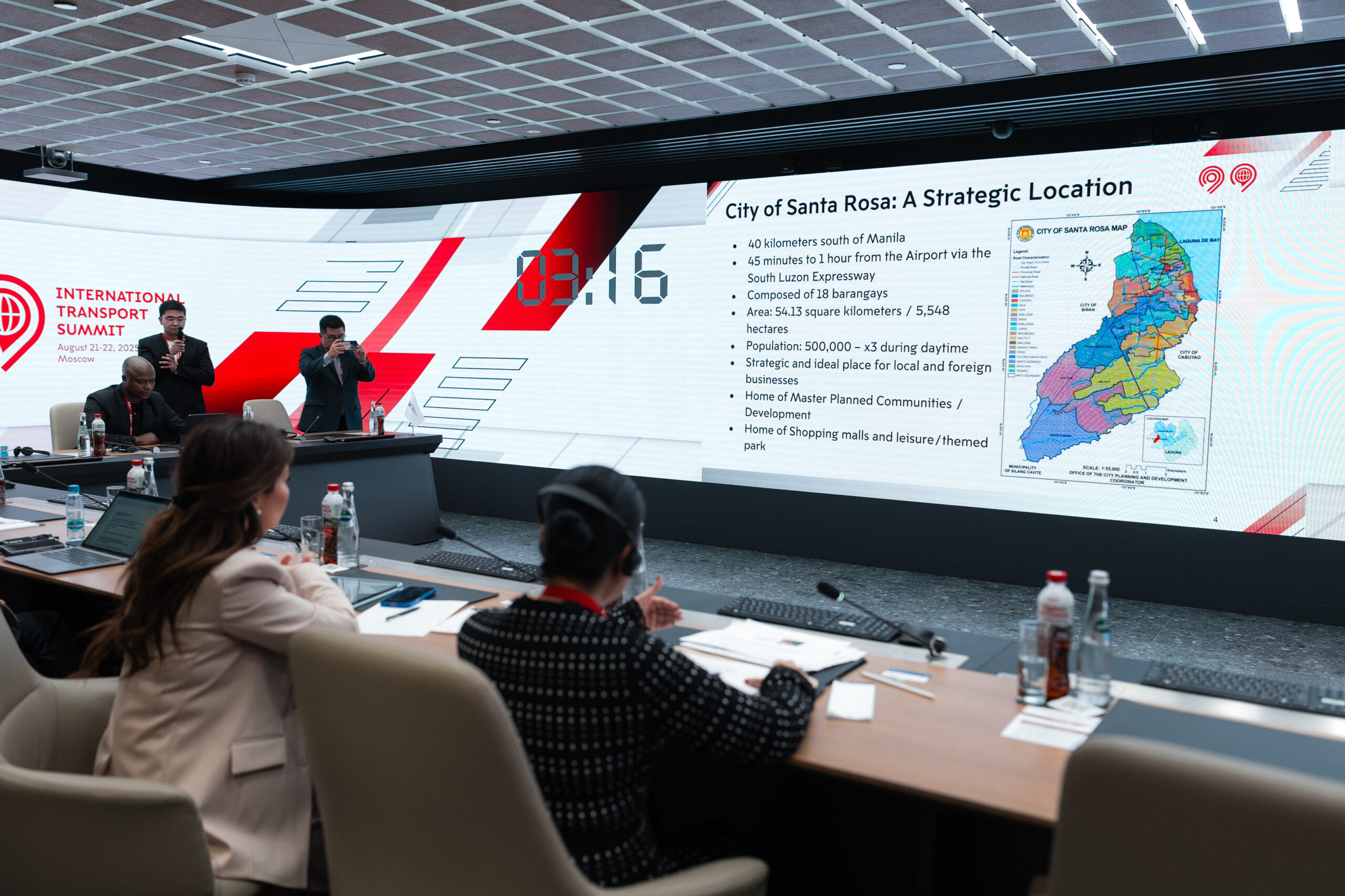
More than 40 foreign speakers presented their work during roundtable discussions. Delegates from Brazil, Cuba, Ghana, and Turkey spoke about infrastructure development and the integration of water transport. Deputy Director of the Engineering Design Department of the Beijing Municipal Commission of Transport, Wang Xiaolei, presented the results of a study on optimizing elements of urban space design.
The Minister of Land Transport of the Republic of Mauritius, Mahomed Oussman Cassam Mahomed, expressed hope for deepening bilateral cooperation: “We’re now embarked on modernizing land transport. At the summit, I had an opportunity to witness many presentations concerning the use of technologies to improve this sphere. I believe this is very much in line with what we are doing in our country, and I hope for enhanced cooperation”.
Significant attention was paid to the coordinated development of industrial and transport systems in megacities. During the roundtable on this topic, representatives from Algeria, Beijing, Cebu, Santa Rosa, and Accra shared their experiences.
Delegates from Chengdu, Harbin, Yerevan, Vientiane, Lomé, Addis Ababa, and Niš discussed the formation of environmentally sustainable transport systems. Furthermore, summit participants discussed passenger digital services, ticketing systems, and unmanned vehicle technologies.
The Mayor of Thiès, the second most populous city in Senegal, Babacar Diop, shared what impressed him about Moscow’s transport: “I really like how ambitiously Moscow approaches its tasks. We saw how urban transport is developing in your capital, and I was particularly impressed by the tram network. I think it would be great to develop a tram network in our city. I believe we need to build strong partnerships between Thiès and Moscow, which will help strengthen relations between our countries.”
Technical visits were also organized to modern transport infrastructure facilities in Moscow: the Unified Dispatch Center of the Moscow Metro, the Big Circle Line, the Moscow Central Diameters, an electric bus depot, electric charging stations, river electric transport, the Traffic Management Center (TsODD) situation room, the Unmanned Transport Research and Development Center, as well as sites of the Technopolis Moscow Special Economic Zone – the city’s center for high-tech industrial development.
As part of the summit’s cultural program, participants visited the “High Above the Ground” exhibition, VDNKh, the interactive exhibition “That Very Moscow” at the Central Manege Exhibition Hall, and the North River Terminal.