The Moscow Metro is expanding its unique urban initiative: hosting official wedding ceremonies at the iconic Mayakovskaya station. Today, for the first time, media representatives were given a rare behind-the-scenes look at how this everyday transit space transforms after hours into an elegant venue for one of life’s most meaningful moments.
After the station closes to passengers for the night, its platform is reimagined as a formal setting for civil marriage registrations. Preparing for these ceremonies requires seamless coordination among specialists: within just a few hours, the space is completely reconfigured to create an atmosphere of grandeur and intimacy. While this transformation typically goes unseen by commuters, it is essential to the success of each event.
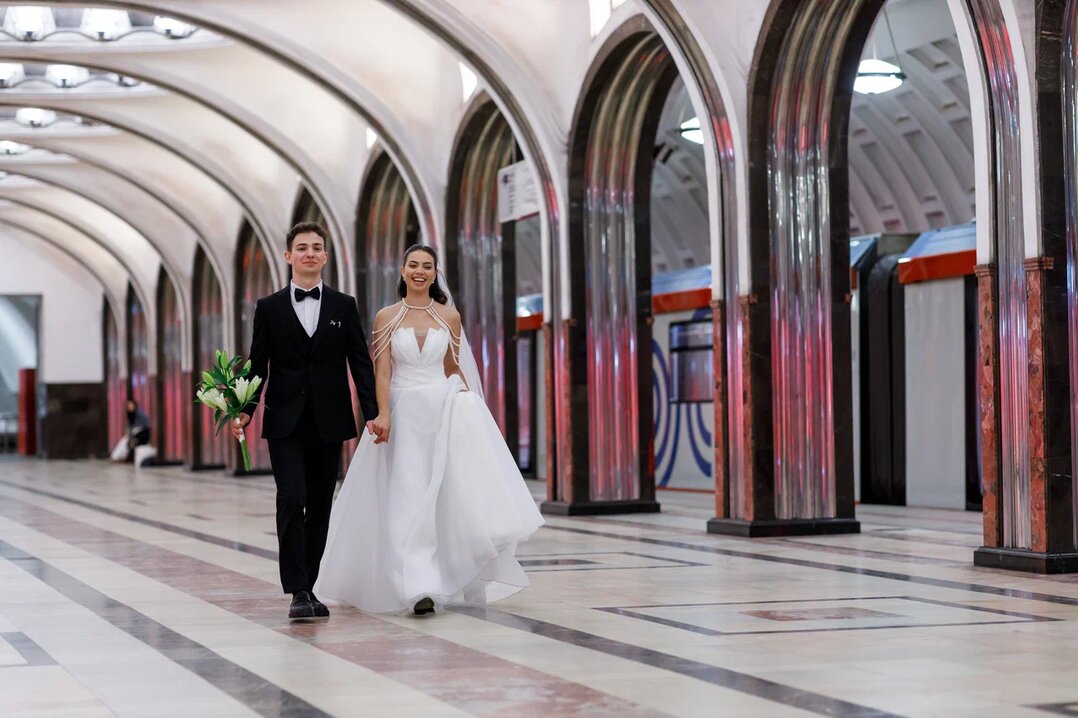
“This is already the 106th wedding ceremony held at Mayakovskaya Metro Station,” said Maksim Liksutov, Deputy Mayor of Moscow for Transport and Industrial Development. “This format requires dedicated preparation: for several hours, the station’s layout is adjusted to create a dignified setting for marriage registration. This work usually remains invisible to passengers, yet it is precisely what allows the ceremony to unfold in such a distinctive and memorable atmosphere.”
Couples wishing to exchange vows at Mayakovskaya must apply in person at Palace of Marriage Registration No. 1. Due to the venue’s symbolic appeal and limited availability, bookings are scheduled well in advance.
Mayakovskaya remains one of Moscow’s most sought-after locations for off-site civil wedding registrations. Its celebrated architecture—featuring soaring arches, marble columns, and vintage chandeliers—combined with its historic ambiance, makes each ceremony truly unforgettable.
“Mayakovskaya Metro Station has traditionally enjoyed special popularity among Moscow newlyweds,” said Anastasia Rakova, Deputy Mayor for Social Development. “Wedding ceremonies at this venue have become one of the city’s most beautiful and unconventional traditions. In the early hours of March 22, three couples were married here.”
The Moscow Metro plans to continue developing initiatives that not only enhance urban mobility but also open up public infrastructure to new forms of cultural expression and social connection—turning everyday spaces into places where life’s most important moments can unfold.