The tunnel boring machine «Sofia» has successfully completed the excavation of the second, left running tunnel from the under-construction Zvenigorodskaya station to the underground dismantling chamber near Shelepikha, which previously operated as part of the BCL.
The shield overcame 348 meters in difficult geological conditions. It took less than three months to complete.
«Sofia» has already laid the right tunnel in this section. Part of the route was excavated by miners manually, using small mechanization tools.
With the completion of this work, the entire mechanized tunneling from Shelepikha to Bulvar Generala Karbysheva with a length of 4.8 km has been completed. Both new tunnels will be integrated with the existing tunnels.
Previously, the shields «Natali» and «Victoria» completed the first section as part of the construction of the Line 17 between the stations Zvenigorodskaya and Narodnoe Opolchenie, and then to Bulvar Generala Karbysheva.
The first section of the new line will begin to work next year.
Line 17 will connect the business district of the Moscow International Business Center «Moscow-City» and the smart district SberCity. This line will have 12 stations, and there are plans to extend it to Krasnogorsk in the future.
В Москве обновили дизайн схемы метрополитена. Теперь для оформления использованы только плавные линии, также на карте изобразили крупные парки в пешей доступности от метро. Последний раз дизайн схемы кардинально менялся в 2013-м.
Московский метрополитен.
Департамент транспорта Москвы показал обновленную карту столичного метрополитена. Среди основных изменений: для схематичного изображения использованы только плавные линии, также на карте изобразили крупные парки в пешей доступности от метро. Заммэра Москвы по вопросам транспорта и промышленности Максим Ликсутов отметил, что нововведения призваны сделать карту более удобной для пассажиров.
По словам Ликсутова, некоторые элементы на схеме внедрили впервые за 90 лет, последний раз ее дизайн кардинально менялся в 2013 году. Новую карту подготовили к открытию нового участка Троицкой линии «Новаторская» — «ЗИЛ».
«В этом году для удобства пользователей изменим дизайн схемы метро. Всего разместим более 38 тыс. схем к открытию нового участка Троицкой линии. Дизайн разрабатывали с учетом обратной связи от пассажиров, а новый подход к созданию навигации позволит москвичам и туристам еще быстрее считывать информацию», — прокомментировал заммэра.
Московское метро самое крупное в Европе по пассажиропотоку и занимает второе место в мире по этому показателю. Программа развития метрополитена предусматривает, что до 2030 года в Москве будет построена еще 31 станция.
Сейчас продолжаются работы по строительству Троицкой и Рублево-Архангельской линий, а также станции «Достоевская» Кольцевой линии. Кроме того, ведется проектирование на Бирюлевской линии метро, продление Арбатско-Покровской линии со строительством новой конечной станции «Гольяново».
Moscow has updated the design of its metro map. Now, only smooth lines are used for the design, and large parks within walking distance from the metro are depicted on the map. The last time the map’s design was radically changed was in 2013.
Moscow Metro.
The Moscow Department of Transport has unveiled the updated map of the capital’s metro. Among the main changes: only smooth lines are used for the schematic representation, and large parks within walking distance from the metro are shown on the map. Maksim Liksutov, Deputy Mayor of Moscow for Transport and Industry, noted that the innovations are aimed at making the map more convenient for passengers.
According to Liksutov, some elements on the map have been introduced for the first time in 90 years; the last time its design was radically changed was in 2013. The new map was prepared for the opening of the new section of the Line 16, Novatorskaya — ZIL.
“This year, we will change the design of the metro map for the convenience of users. A total of more than 38 thousand maps will be placed for the opening of the new section of the Troitskaya line. The design was developed taking into account feedback from passengers, and the new approach to creating navigation will allow Muscovites and tourists to read information even faster,” –commented the Deputy Mayor.
The Moscow Metro is the largest in Europe in terms of passenger traffic and ranks second in the world in this indicator. The metro development program provides for the construction of 31 more stations in Moscow by 2030.
Currently, work continues on the construction of the Lines 16 and 17, as well as the Dostoevskaya station of the Circle Line. Additionally, design work is underway for the Line 18 and the extension of the Line 3 with the construction of a new terminal station, Golyanovo.
Москва внедрила новый сервис искусственного интеллекта (ИИ) для обнаружения переломов плеча на рентгеновских снимках. По словам Юрия Василева, начальника отдела радиологии Департамента здравоохранения Москвы, это 41-я клиническая область, в которой радиологи используют технологии компьютерного зрения.
Департамент здравоохранения Москвы запускает сервис искусственного интеллекта для диагностики переломов плеча.
Москва продолжает продвигать интеграцию технологий искусственного интеллекта в практические приложения в сфере здравоохранения. Алгоритм помогает врачам, автоматически выделяя подозрительные области, указывающие на возможные переломы, и выполняя необходимые измерения на снимках. Это ускоряет интерпретацию исследований и повышает точность обнаружения травм. Васильев подчеркнул критическую важность этого сервиса в травматологических центрах, где эффективность и точность диагностики имеют первостепенное значение для своевременного лечения и снижения риска осложнений. Эта интеграция ИИ в травматологию способствует дальнейшему развитию цифровой медицины в Москве, интегрируя сервис в комплексную инфраструктуру нейронных сетей города, которая в настоящее время работает в 41 направлении.
«Плечевой сустав — одна из самых сложных анатомических областей для интерпретации рентгеновских снимков, — отметил Василев. — Даже незначительные отклонения в положении пациента во время обследования могут повлиять на точность визуализации, что требует исключительной внимательности врача. Этот алгоритм искусственного интеллекта действует как дополнительный фильтр, служа надежным вспомогательным инструментом для повышения точности анализа».
«Плечевой сустав является одной из самых сложных анатомических задач для интерпретации рентгеновских снимков», — отметил Василиев. «Даже незначительные отклонения в положении пациента могут повлиять на точность визуализации, что требует исключительной клинической бдительности. Этот алгоритм искусственного интеллекта функционирует как диагностический фильтр, служа надежным вспомогательным инструментом для повышения точности анализа».
Своевременная диагностика переломов имеет решающее значение для определения тактики лечения. Задержки увеличивают риск осложнений, включая неправильное сращение костей, хроническую боль и ограниченную подвижность. Внедрение ИИ минимизирует эти риски, позволяя начать лечение на более ранней стадии.
В рамках пятилетнего эксперимента по компьютерному зрению в Москве в сферу здравоохранения интегрировано более 200 ИИ-сервисов, участвующих в проекте. Около 100 алгоритмов интегрировано в медицинскую информационную систему города, около 50 из них в настоящее время анализируют медицинские изображения в режиме реального времени.
Проект возглавляет Московский комплекс социального развития на базе Центра диагностики и телемедицины Департамента здравоохранения Москвы в сотрудничестве с Департаментом информационных технологий города. Он соответствует целям Стратегии развития медицины в Москве до 2030 года, направленной на улучшение качества и доступности медицинской помощи для жителей.
Moscow has deployed a new artificial intelligence (AI) service to detect shoulder fractures on X-ray images. This marks the 41st clinical area where the radiologists utilize computer vision technologies, according to Yuri Vasilev, Chief Officer of Radiology at the Moscow Health Care Department.
Moscow Health Care Department Launches AI Service for Diagnosing Shoulder Fractures.
Moscow is continually advancing the integration of artificial intelligence technologies into practical healthcare applications. The algorithm assists doctors by automatically highlighting suspicious areas indicating potential fractures and performing necessary measurements on the images. This accelerates the interpretation of studies and enhances the accuracy of injury detection. Vasilev emphasized the service’s critical importance in trauma centers, where efficiency and diagnostic precision are paramount for timely treatment and reducing complication risks. This integration of AI into traumatology advances Moscow’s ongoing development of digital medicine, integrating the service into the city’s comprehensive neural network infrastructure, which now operates across 41 modalities.
“The shoulder joint is one of the most complex anatomical areas for interpreting X-ray images,” Vasiliev noted. “Even minor deviations in the patient’s position during the examination can affect visualization accuracy, demanding exceptional doctor attentiveness. This AI algorithm acts as an additional filter, serving as a reliable auxiliary tool to increase analysis accuracy.”
“The shoulder joint is one of the most complex anatomical challenges for X-ray interpretation,” Vasiliev noted. “Even minor patient positioning variations can compromise visualization accuracy, requiring exceptional clinical vigilance. This AI algorithm functions as a diagnostic filter, providing a reliable auxiliary tool to enhance analytical precision.”
Timely fracture diagnosis is crucial for determining treatment tactics. Delays increase risks of complications, including improper bone fusion, chronic pain, and limited mobility. AI implementation minimizes these risks by enabling earlier therapy initiation.
Moscow’s integration of smart algorithms into healthcare, as part of a five-year experiment in computer vision, now includes over 200 AI services participating in the project. Approximately 100 algorithms have been integrated into the city’s medical information system, with about 50 currently analyzing medical images in real-time streaming mode.
The project is led by the Moscow Social Development Complex, based on the Center for Diagnostics and Telemedicine of the Moscow Healthcare Department, in collaboration with the city’s Department of Information Technology. It aligns with the goals of the Moscow Medicine Development Strategy until 2030, aiming to improve the quality and accessibility of medical care for residents.
Time for new technologies! Testing neural voice in audio messages in the Moscow metro.
Time for new technologies! Testing neural voice in audio messages in the Moscow metro. – Московское метро тестирует нейроголос в аудиосообщениях.
We are gradually introducing artificial intelligence into the capital’s transport system. For example, since the beginning of the year, a neural network has been helping Alexandera’s chatbot answer your questions. Now, as part of a pilot project, AI will assist announcers in the Moscow metro.
As Maksim Liksutov explained, audio announcements are one of the most important ways to communicate with passengers. Sometimes something changes in metro operations: an escalator is closed for repair or trains follow a different route. Each situation requires a prompt announcement. Neural voice will help solve this task in minutes.
Moreover, the required audio file can be created remotely. Specialists only need to:
Prepare the text.
Upload it to the program.
Adjust the voice — choose the timbre, intonation, and pause length. By the way, AI was trained on real recordings of metro announcers.
We will test neural voice on the Line 1, which has many transfers to the MCC, MCD, other metro lines, car and railway stations. Also, Komsomolskaya station is located here — the leader in the number of transport infrastructure objects announced by announcers.
«Voices in neural processing allow creating prompt audio announcements in the unified style of Moscow Transport. After the pilot launch of the technology on the Line 1, we will decide on its further use in the metro and beyond. We will also consider passengers’ wishes. We continue to implement the most modern digital services, as instructed by Moscow Mayor Sergey Sobyanin», — said Maksim Liksutov.
Московское метро тестирует нейроголос в аудиосообщениях
Идет постепенное внедрение искусственного интеллекта в систему столичного транспорта. Например, с начала года нейросеть помогает чат-боту Александра отвечать на вопросы пассажиров. Теперь же в рамках пилотного проекта ИИ поможет в работе дикторам московского метро.
Московское метро тестирует нейроголос в аудиосообщениях.
Как пояснил Максим Ликсутов, аудиоинформирование — один из важнейших способов общения с пассажирами. Иногда в работе метро что-то меняется: закрывают эскалатор на ремонт или поезда следуют по другому маршруту. К каждой ситуации нужно оперативно подготовить объявление. Эту задачу за считанные минуты поможет решить нейроголос.
При этом нужный аудиофайл можно создать удаленно. Специалистам достаточно: 1) подготовить текст; 2) загрузить его в программу; 3) настроить голос — выбрать тембр, интонацию и длину пауз. Примечательно, что ИИ обучали на реальных записях дикторов метро.
Тестирование нейроголоса пройдет на Сокольнической линии, где много пересадок на МЦК, МЦД, другие линии метро, авто и ж/д вокзалы. Также здесь располагается «Комсомольская» — станция-лидер по количеству объектов транспортной инфраструктуры, которые объявляют дикторы.
Голоса в нейрообработке позволяют создавать оперативные аудиообъявления в едином стиле Московского транспорта. После пилотного запуска технологии на Сокольнической линии будет приниматься решение о дальнейшем использовании ее в метро и за его пределами. При этом будут учитываться пожелания пассажиров. Московское метро продолжает внедрять самые современные цифровые сервисы, как поручил Мэр Москвы Сергей Собянин, — отметил Максим Ликсутов.
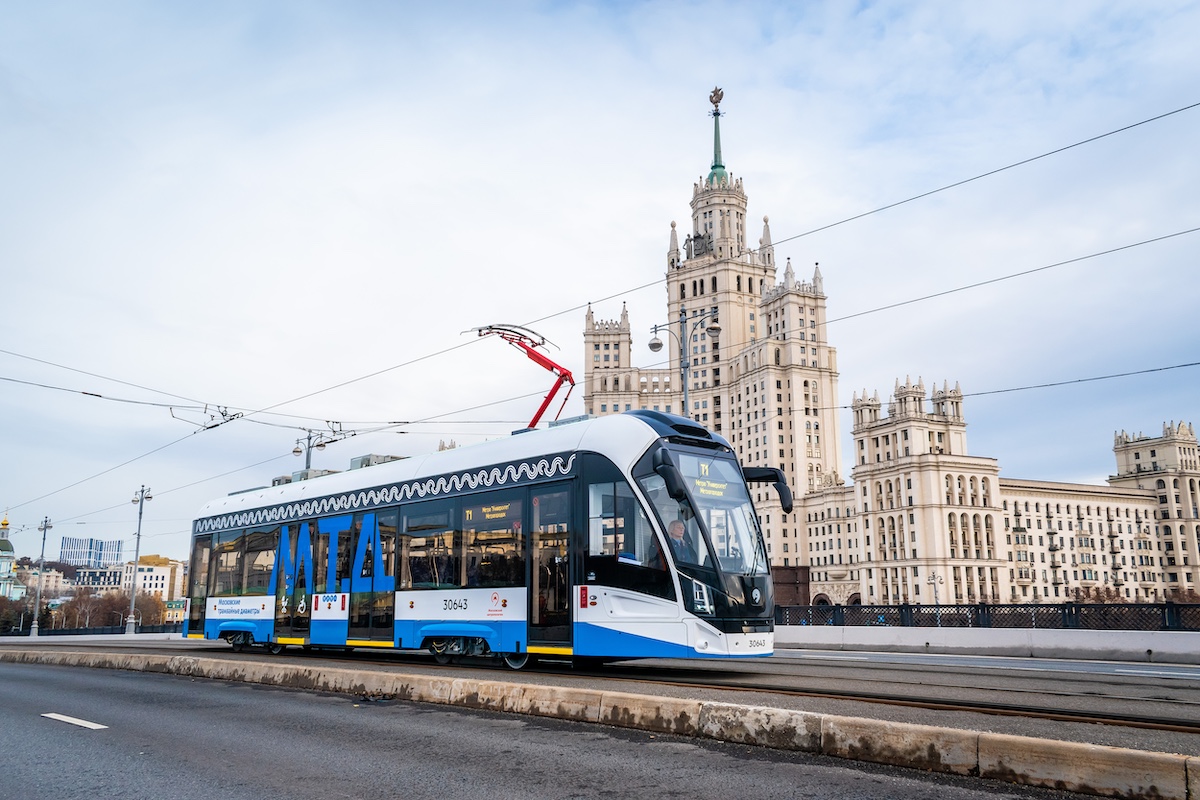
Russia conducted its first digital ruble payment as part of a smart contract for insuring the capital’s autonomous tram.
Russia conducted its first digital ruble payment as part of a smart contract for insuring the capital’s autonomous tram. – Московский метрополитен – В России провели 1-й платеж цифровыми рублями в рамках смарт-контракта на страхование столичного беспилотного трамвая.
As Maksim Liksutov reported, the transaction was successfully carried out in pilot mode between the insurance group SOGAZ and the metro, with the support of VTB Bank. The payment was not related to an actual insurance event.
Key advantages of digital rubles:
🔹 Reliability. This is a digital form of the national currency, alongside cash and non-cash funds.
🔹 Speed. Payments are processed automatically within one day under a smart contract.
🔹 Security. Full transparency of transfers, as well as payments for goods and services.
At the beginning of 2025, on the instructions of Moscow Mayor Sergey Sobyanin, the Moscow Government signed a smart contract to insure Russia’s first autonomous tram. This test payment proved the safety, transparency, and high speed of fulfilling obligations using digital rubles. The online calculation of simulated damages and the payout of compensation were completed within one day. In the future, digital rubles will become one of the payment methods for fares and other transportation services in the capital, — said Maksim Liksutov.
Источник: Московский метрополитен – В России провели 1-й платеж цифровыми рублями в рамках смарт-контракта на страхование столичного беспилотного трамвая
Московский метрополитен – В России провели 1-й платеж цифровыми рублями в рамках смарт-контракта на страхование столичного беспилотного трамвая.
Как рассказал Максим Ликсутов, транзакцию успешно совершили в пилотном режиме между страховой группой «СОГАЗ» и метро при поддержке ВТБ. Платеж не связан с наступлением страхового случая.
Главные преимущества цифровых рублей:
🔹 Надежность. Это цифровая форма национальной валюты наряду с наличными и безналичными средствами
🔹 Скорость. Платежи проходят автоматически в течение 1 дня в рамках смарт-контракта
🔹 Безопасность. Полная прозрачность переводов, оплаты товаров и услуг
В начале 2025 года по поручению Мэра Москвы Сергея Собянина Правительство Москвы заключило смарт-контракт на страхование первого в России беспилотного трамвая. Тестовый платеж доказал безопасность, прозрачность и высокую скорость исполнения обязательств с применением цифровых рублей. Онлайн-расчет имитируемого ущерба и выплата возмещения произошла в течение 1 дня. В дальнейшем цифровые рубли станут одним из способов оплаты проезда и других транспортных услуг в столице, — сообщил Максим Ликсутов.
As Maxim Liksutov stated, by the end of 2025, all payment equipment for station access will be connected to the biometrics service. For example, late last week, work was completed on the Solntsevskaya line, where biometrics were implemented at 138 access points. Biometrics have become a convenient and secure way to pay for travel, with all user data securely encrypted and the system itself having bank-level protection.
Previously, this convenient payment method was launched on all turnstiles of the following lines: Troitskaya, Butovskaya, Nekrasovskaya, and Filyovskaya.
Moscow is a global leader in the number of transport types where biometric payment is available. The payment service operates in the metro, on the MCC, Aeroexpress, regular river routes, and some MCD stations. The most modern payment method can be used at approximately 1.5 thousand urban transport turnstiles. Following the task of Moscow Mayor Sergey Sobyanin, the best Russian payment solutions continue to be developed in the capital’s transport for user convenience, Maxim Liksutov added.