Aminyevskaya Stations on MCD-4 and the Big Circle Line Transform Ramenki and Ochakovo-Matveyevskoye Districts.

Just four years ago, residents of Moscow’s Ramenki and Ochakovo-Matveyevskoye districts in the southwestern part of the city relied solely on surface transport and Metro Lines 8 and 8A. The situation changed dramatically with the opening of the twin Aminyevskaya stations on the Big Circle Line (BCL) and the MCD-4 commuter rail line. These transport hubs have not only significantly improved mobility but also triggered large-scale urban development in the area.

Today, over 272,000 residents enjoy fast and comfortable transit options within walking distance of their homes. In just four years, daily ridership on MCD-4 in this area has grown more than 23-fold.

According to the Moscow Department of Economic Policy and Development, the stations have also given a strong boost to the local economy: by 2025, total revenue of businesses and entrepreneurs located within a 1.5 kilometer radius of the Aminyevskaya stations (BCL and MCD-4) had risen by 54% in real terms compared to 2021.

The arrival of new transport infrastructure has also accelerated residential construction: over 600,000 square meters of housing have been completed near the stations since their launch. An additional 300,000+ square meters are planned for completion within the next three years.
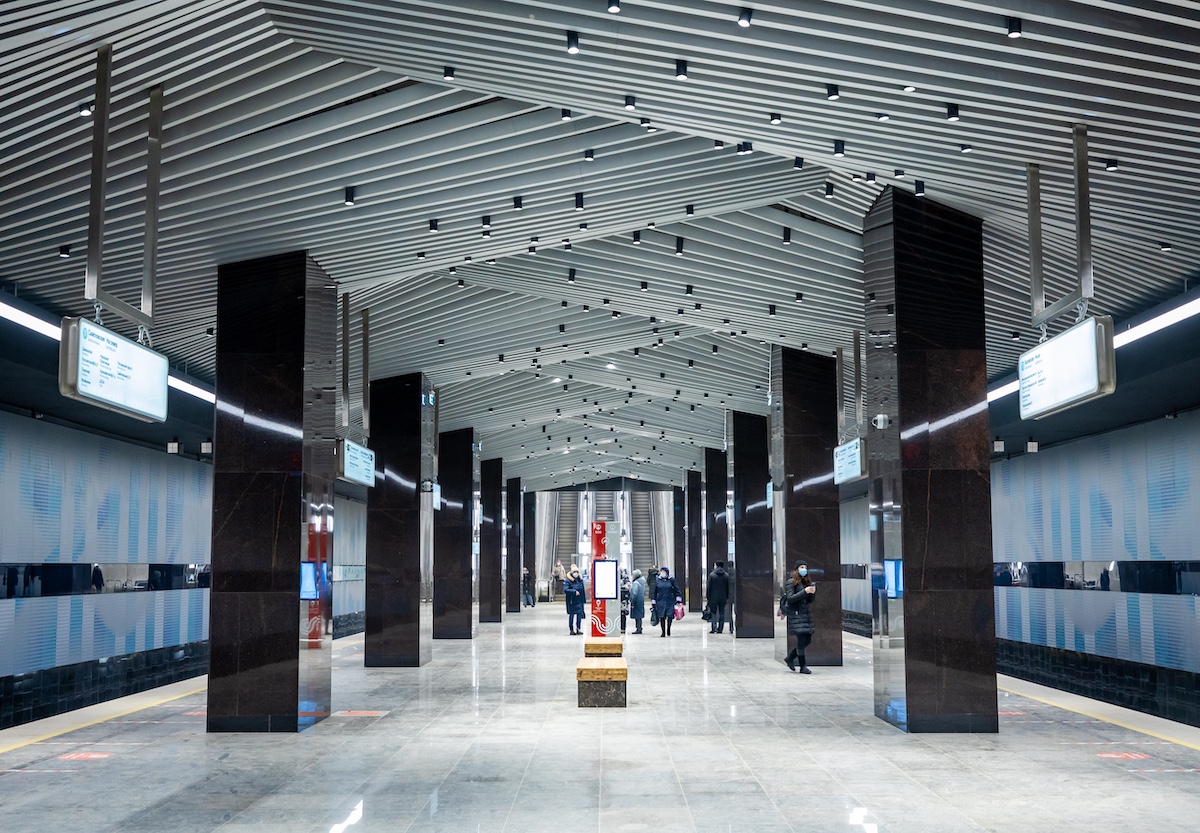
Currently, Aminyevskaya MCD-4 operates as a full-fledged urban railway hub, with 17,300 trips originating from the station daily. The BCL station handles even higher traffic—approximately 42,000 trips per day.

“Transport accessibility is one of the key factors when choosing housing. On the instructions of Moscow Mayor Sergey Sobyanin, we continue to expand and enhance the city’s rail network. The opening of the Aminyevskaya stations on MCD-4 and the Big Circle Line was a pivotal step: housing construction is now booming in the area, and the local population has grown to 278,000 residents. We clearly see how in-demand these transport solutions are,” said Maksim Liksutov.
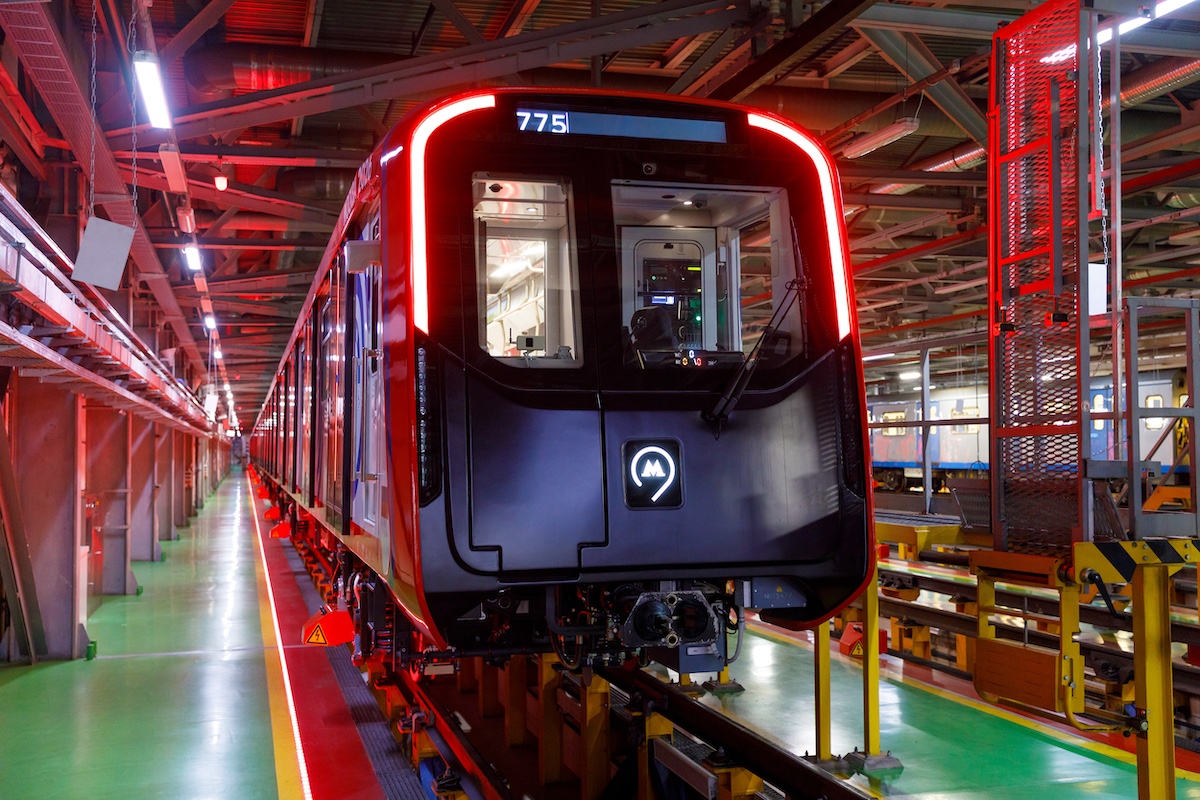
The first driverless metro train in Russia is preparing to go on the tracks.

Maxim Liksutov said that the first stage of pilot operation of the driverless metro train will start on the BCL in December 2025.

The testing of the main systems will include:

1) automatic track intrusion detection — to detect people or foreign objects on the tracks;

2) machine vision — to identify anomalies on the rolling stock while moving;

3) interaction with the dispatch center — for prompt data transmission from the train and quick response to incidents. In the future, the system will be able to automatically schedule train movements.

“Our priorities remain safety and stability of transportation. At the first stage of pilot operation, the system will be tested on a modern Moskva series train at night without passengers under the control of a driver. According to the Moscow transport development strategy approved by Moscow Mayor Sergey Sobyanin, by the end of 2026 a working prototype of the train will be ready, capable of operating fully in driverless mode considering the intervals of the Moscow metro,” added Maksim Liksutov.

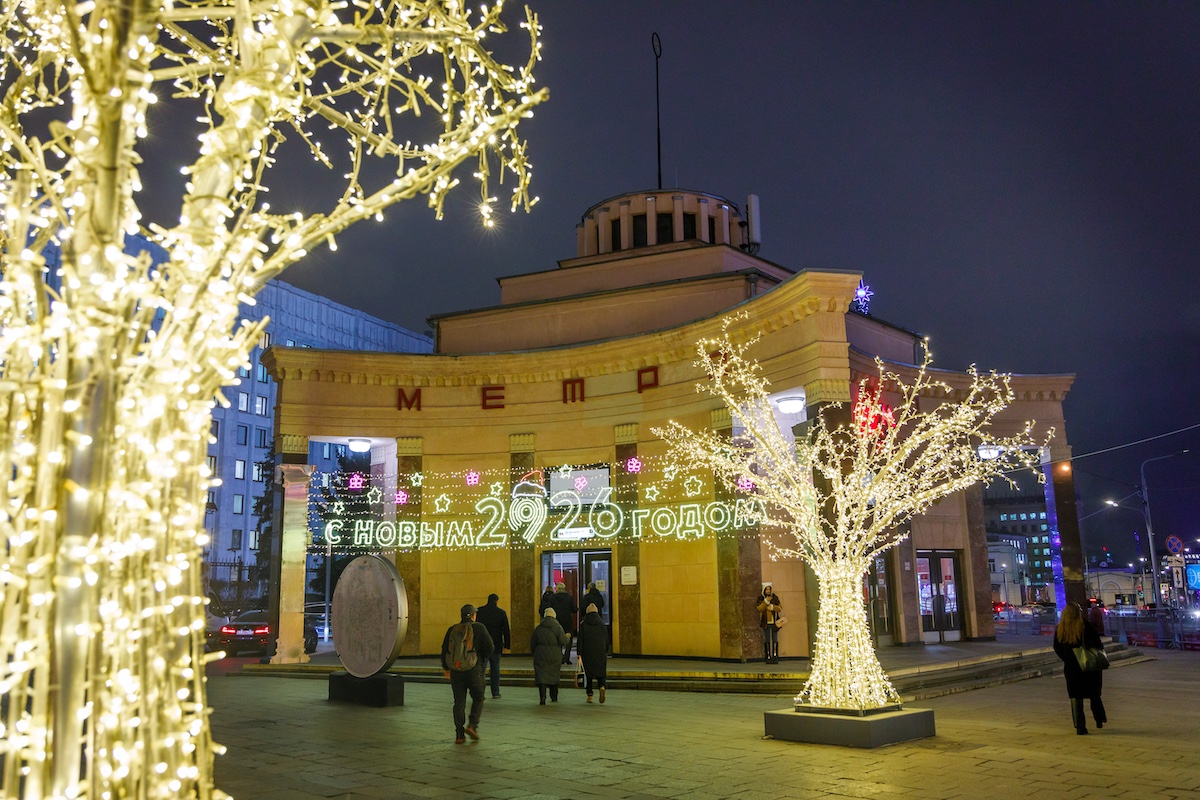
For the holiday, more than 100 stations in Moscow metro will be decorated for the New Year.

Several New Year installations have been placed in the metro. In the run-up to the New Year, they can be found at the stations:

Trubnaya — over 400 New Year decorations along the arched structures: Christmas tree toys, gifts, snowmen, bells, and light balls.

Krasnopresnenskaya — the station facade with glowing volumetric elements and the Moscow Transport logo.

Mayakovskaya — a photo zone “Santa Claus Residence” in the form of a New Year interior with a fireplace, decorated trees, an armchair, and decorative gifts.

Michurinskiy Prospekt — a photo zone in the style of the New Year’s fairy tale “The Nutcracker.”

“By the New Year, we will decorate more than 100 metro stations and install over 50 thematic installations. Most of the decorative elements are carefully stored and reused in subsequent years — this allows for an environmentally friendly approach to decoration. Photo zones and thematic installations help passengers feel the New Year mood,” said Maksim Liksutov.

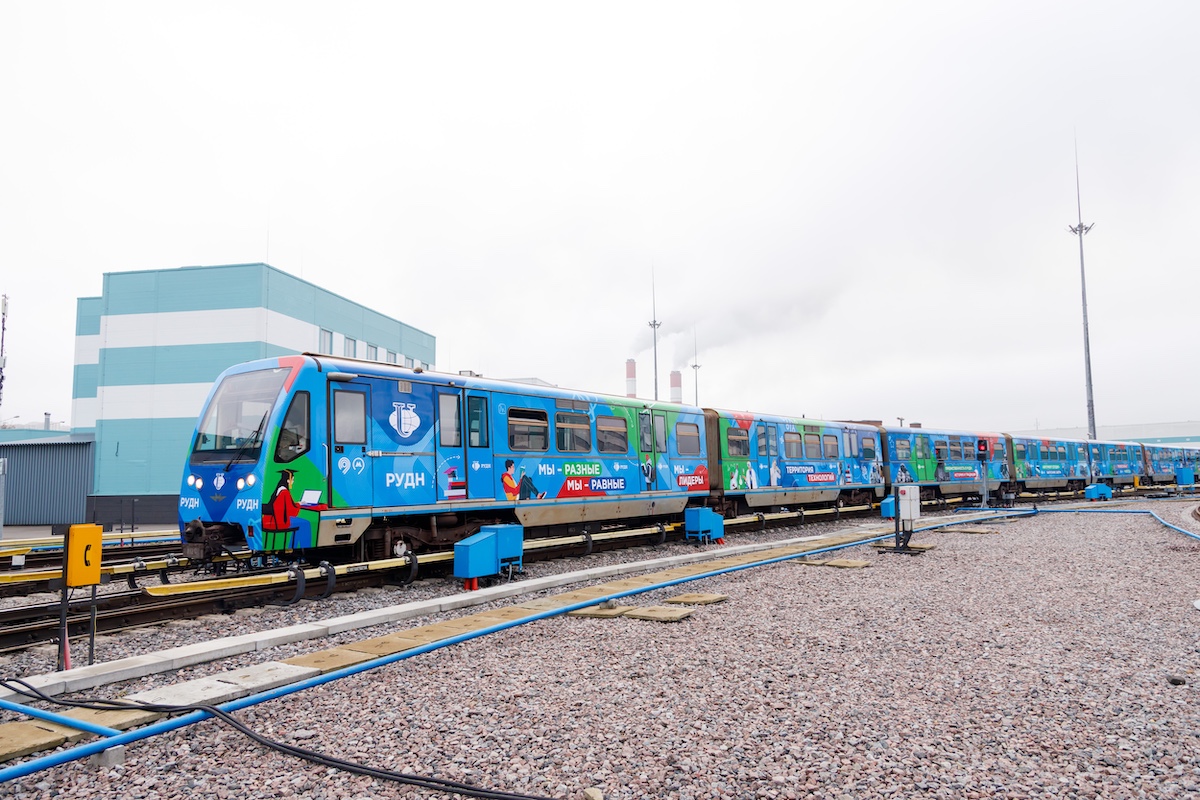
A themed train was launched in Moscow Metro in honor of the 65th anniversary of RUDN University.

RUDN is considered one of the most international universities in Russia due to the large number of foreign students from nearly 160 countries and 500 nationalities, and it also holds high positions in international rankings. About 9,000 foreign students study there annually.

The design of the themed train cars tells the history of the university. Passengers also learn about student life at the university, its international programs, educational directions, and scientific achievements.

Since 2024, RUDN students and staff can quickly and conveniently get here by metro: Universitet Druzhby Narodov station opened on the first section of the Line 16. Today, it is the most popular station on the line — on weekdays, more than 21,000 trips are made here.

This year, Moscow Transport is actively participating in the celebration of RUDN’s anniversary: at the beginning of the year, a themed photo exhibition dedicated to the vibrant life of the university was held at the Universitet Druzhby Narodov station. A unique exhibition in flasks titled RUDN: Territory of Opportunities was also presented at the Vorobyovy Gory station. Additionally, a themed Troika card was issued in honor of the university, featuring the inspiring slogan — A pass to the world of knowledge.

As Maksim Liksutov noted, since the beginning of this year, 27 themed trains have already been launched in the Moscow Metro. Following the task set by Moscow Mayor Sergey Sobyanin, the capital’s metro is developing not only as a transport facility but also as a platform for cooperation with partners from the fields of education, science, and culture.

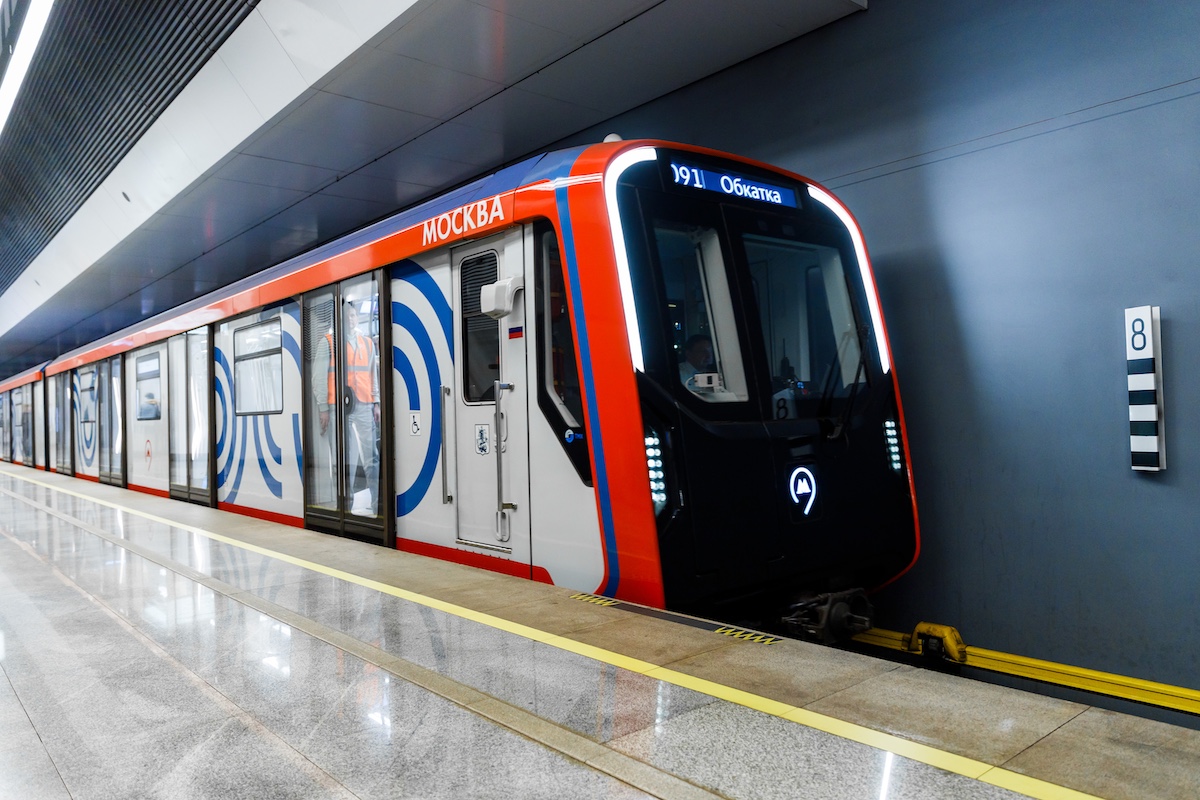
The trial run of the new Moskva-2026 train has begun in the capital’s metro.

Recently, the Metrovagonmash enterprise (part of JSC “TMH”) completed the assembly of the most modern Russian train set Moskva-2026. The train underwent testing of all systems at the manufacturer’s plant and additional checks at the electric depot.

Currently, a control trial run without passengers is being conducted — this is the final stage before launch. During this, metro specialists analyze every detail, after which the train will go into service and start full operation.

The trial run consists of 2 stages.
The train must run smoothly on the metro rails:
1) 15 km and.
2) 300 km.

During this time, dozens of parameters are checked, including:

1) safety and reliability of the train’s operation on the line;

2) smoothness of the ride on the rails;

3) lighting and vibration in the cabin;

4) braking distance and much more.

In addition, separate tests of all new components will be conducted. If any deviations are found during the trial run, they will be corrected, and the checks will start over.

“Moscow Mayor Sergey Sobyanin has decided to purchase 40 additional cars, which will be put into service this year on one of the most in-demand lines of the capital’s metro — the Line 2. The Moskva-2026 train sets are the most modern Russian trains, made from domestic components. Over the next 2 years, more than 700 new cars are planned to be delivered, which will allow us to complete the renewal of trains on the Line 2. Currently, more than 50% of the rolling stock here belongs to the new generation,” noted Maksim Liksutov.

Rosneft Restoring Siberia’s Forests

Source: Rosneft – An important disclaimer is at the bottom of this article.

The East Siberian Oil and Gas Company (Rosneft subsidiary) has planted around one million conifer seedlings in Siberia. In 2025, reforestation activities were carried out in the Achinsk and Karatuz forest districts of the Krasnoyarsk Territory. The total area of reforestation exceeded 310 hectares.

Siberian spruce seedlings were selected for reforestation as the species best adapted to local soil and climatic conditions. In addition, oil workers arranged for agricultural care to improve the survival rate of these new trees. The activities aim to clear the plantations of weeds and improve soil condition, which will contribute to the successful formation of the forest.

Over the past four years, Vostsibneftegaz has planted 3.5 million coniferous trees in an effort to reforest Siberia, covering an area of over 1,000 hectares.

Preserving the environment for future generations is an integral part of the Rosneft’s corporate culture and social policy. The Company is implementing a number of large-scale environmental programmes to minimise environmental impact and improve the environmental performance of its production. The Company’s approaches to forestry and reforestation are outlined in the public position «Preserving the planet for the benefit of present and future generations: sustainable forest management«.

Vostsibneftegaz is committed to preserving aquatic biodiversity, enhancing urban spaces and implementing circular economy principles. For over a decade, the enterprise has been supporting scientific research aimed at preserving the fragile ecosystem of Evenkia.

For reference:

The East Siberian Oil and Gas Company (Vostsibneftegaz), a subsidiary of Rosneft Oil Company, develops the Yurubcheno-Tokhomskoye oil and condensate field in the Evenkiysky District of Krasnoyarsk Territory.

Department of Information and Advertising
Rosneft Oil Company
November 27, 2025

Keywords: Environmental news 2025

Please note; this information is the raw content received directly from the information source. This is exactly what the source claims and does not necessarily reflect the position of MIL-OSI or its clients.

RN-Yuganskneftegaz Sponsors Renovation of Aqua Centre in Yugra

Source: Rosneft – An important disclaimer is at the bottom of this article.

The Dolphin aqua centre in Pyt-Yakh has been renovated with the sponsorship of RN-Yuganskneftegaz (Rosneft subsidiary). This project has been implemented under the cooperation agreement between Rosneft and the government of the Khanty-Mansi Autonomous District—Yugra.

The enterprise financed the installation of modern filtration systems and engineering communications for the pool, and the showers and changing rooms were renovated. The centre’s visitors now have a wider range of training options thanks to the new cardio and strength training machines, while the refurbished relaxation area, complete with comfortable furniture, is set to become a hub for leisure activities.

The aqua centre features dynamic decorative lighting that can change colour depending on the programme.

Using modern engineering solutions will make this important sports facility more reliable for year-round operation in the city’s northern climate, and improve visitor comfort.

Supporting mass and professional sports, as well as healthy lifestyles, is one of the key areas of social work for Rosneft. In the regions of operations, the Company builds multifunctional sports complexes and playgrounds, ice arenas and organises mass sports events in various disciplines for children and adults.

As part of the cooperation agreement between Rosneft and the Khanty-Mansi Autonomous District—Yugra Government, the enterprise also funded repairs and purchased equipment, uniforms and inventory for the Olymp sports school in Pyt-Yakh this year, as well as renovating the sports ground. Video surveillance systems have been installed in several playgrounds.

For reference:

RN-Yuganskneftegaz is developing fields in licence areas totalling over 21,000 square kilometres in the Khanty-Mansi Autonomous District—Yugra. Cumulative oil production since the beginning of operations exceeds 2.7 billion tonnes.

Department of Information and Advertising
Rosneft Oil Company
November 20, 2025

Keywords: Social news 2025

Please note; this information is the raw content received directly from the information source. This is exactly what the source claims and does not necessarily reflect the position of MIL-OSI or its clients.

Anniversary Interregional Science and Technology Conference for young Rosneft professionals opens in Moscow

Source: Rosneft – An important disclaimer is at the bottom of this article.

The 20th Interregional Science and Technology Conference (ISTC) of Rosneft Oil Company has started in Moscow.

More than 600 people are participating in the anniversary conference, including young professionals from 77 subsidiaries of the Company – winners of regional and cluster conferences in 2025, as well as students from Rosneft’s partner universities – Gubkin Russian State University of Oil and Gas, Lomonosov Moscow State University, Tyumen Industrial University, Ufa Oil Technical University, and St. Petersburg Mining University of the Empress Catherine II.

There are 20 specialized sections of the ISTC operating at the Gubkin Russian State University of Oil and Gas, covering all of Rosneft’s core business processes. 320 projects by young professionals have made it to the final round of the competition and will be evaluated by a competent jury. It includes managers and experts from the Company’s Corporate Headquarters.

The conference allows to identify projects, the implementation of which will contribute to improving business efficiency, as well as to highlight young professionals with high potential for inclusion in the Company’s personnel reserve. All winners and prizetakers of the conference, as well as their academic supervisors, will receive commemorative and monetary awards.

This year, for the first time, an international student section on “Oil and Gas Field Development” has been organized at the ISTC. Students from friendly countries who are studying at the Russian State University of Oil and Gas, including those receiving financial support from the Company, have been invited to participate.

The conference also included a solemn award ceremony for the 93 winners and prizetakers of the 20th corporate review contest “Best in Profession.” Training has been organized for them to develop soft skills—teamwork, effective communication, and mentoring. The contest contributes to raising the prestige of blue-collar professions, manufacturing culture, and industrial safety standards.

Rosneft holds annual science and technology conferences to develop the vocational skills of young professionals, increase their motivation and involvement in innovative research activities, and encourage talented young people.

The projects presented at the ISTC are of great practical importance for the Company’s production and commercial operations. In 2025, Rosneft implemented 31 projects that were selected based on the results of last year’s ISTC. Their expected economic benefit exceeds 780 million rubles. 21 more projects are planned to be implemented at the Company’s facilities in 2026-2027.

Over the past 20 years, young professionals have presented 4,310 projects in the final stages of the ISTC, 1,221 projects have been recommended for implementation, and their economic benefit has amounted to 5.6 billion rubles.

For reference:

Science and technology conferences are an effective way of engaging with young Rosneft professionals and assessing their potential. The conferences are held in three stages:

Stage 1 – Regional Science and Technology Conferences (RSTCs) at the Company’s subsidiaries.

Stage 2 – Cluster Science and Technology Conferences (CSTCs) by region.

Stage 3 – Final Interregional Science and Technology Conference (ISTC) in Moscow.

Department of Information and Advertising
Rosneft Oil Company
November 24, 2025

Keywords: Social news 2025

Please note; this information is the raw content received directly from the information source. This is exactly what the source claims and does not necessarily reflect the position of MIL-OSI or its clients.

Rosneft Hosts Corporate Gathering of Volunteers

Source: Rosneft – An important disclaimer is at the bottom of this article.

Rosneft has hosted the annual corporate gathering of volunteers. Over 100 Company activists reviewed the results of their work for the year and discussed the prospects for developing the volunteer movement. The event took place on the shores of Lake Ladoga at the Vladimirovsky hotel complex, which was opened by Rosneft in 2021.

Before the event, volunteers visited the Priozersky Integrated Centre for Social Services for Minors and Families with Children. The children at the centre received sought-after items and souvenirs from different regions of the country, which had been collected by Rosneft employees and presented as a gift from the Company.

In 2025, over 10,000 Company volunteers participated in campaigns supporting children, including those from newly acquired regions, disadvantaged families, orphanages, and family centres. Popular events for children included attending Continental Hockey League matches featuring the CSKA team, which Rosneft has owned since 2011, as well as field trips and educational initiatives at zoos across the country.

Volunteering is an integral part of the Company’s culture. In 2025, the oil workers organised more than 1,000 events attended by 76,000 Rosneft employees.

The Company’s volunteer programme, the Good Deeds Platform, includes social, humanitarian, historical, cultural and environmental activities. Volunteers organise events that aim to preserve religious and patriotic values, educate the younger generation, and promote healthy lifestyles and respect for nature.

To mark the 80th anniversary of the Great Victory, Rosneft volunteers offered their support and best wishes to war veterans and home front workers. A variety of patriotic events, sports competitions and creative contests were organised across all regions of operation. These events aimed to strengthen historical memory, foster civic responsibility and preserve cultural heritage. Over 50 monuments, memorials and burial sites of Great Patriotic War heroes were renovated and landscaped. More than 100,000 Rosneft employees participated in the nationwide Immortal Regiment campaign, while the St. George Ribbon campaign took place at the Company’s filling stations.

One of Rosneft’s operating principles is to protect the environment. As part of the volunteering activities, the Company’s employees organise clean-up days, collect waste paper, used batteries and plastic for recycling, and plant hundreds of thousands of trees. They also clean the banks of waterways and parks. In 2025, over 300 environmental initiatives were implemented, involving more than 30,000 Rosneft employees and their family members.

Other volunteer activities include Donor Days at all of the Company’s subsidiaries, helping to search for missing people, supporting shelters for stray animals, promoting reading and much more.

Department of Information and Advertising
Rosneft
November 14, 2025

Keywords: Social news 2025

Please note; this information is the raw content received directly from the information source. This is exactly what the source claims and does not necessarily reflect the position of MIL-OSI or its clients.

Rosneft Preserves the Cultural and Historical Heritage of Taimyr’s Indigenous Peoples

Source: Rosneft – An important disclaimer is at the bottom of this article.

Thanks to a grant from RN-Vankor (part of Rosneft), the Taimyr House of Folk Arts will create a digital archive of the ethnocultural heritage of the indigenous peoples of the North.  The project is being implemented under the oil company’s grant programme, which supports research with practical significance for the indigenous population of the Taimyr Dolgano-Nenets Municipal District in Krasnoyarsk Krai.

The House of Folk Arts archive contains over 5,000 objects and documents that document the lifestyle, traditions, and worldview of the Nganasan, Dolgan, Enets, and other indigenous ethnic groups of the peninsula. The collections include ethnographic materials, many of which exist as unique specimens.  The museum houses original manuscripts from early researchers of remote Taimyr settlements, video chronicles of rituals, recordings of endangered languages, and photographs capturing the everyday life of northern peoples in the mid-20th century.  These documentary records hold immense value for anthropological, linguistic, and historical research.

The digitization of exhibits and archival holdings will preserve all valuable information.  Data systematization will enable rapid searches within a unified database, with the ability to compare materials by type (photo, text, audio), chronology, and ethnic group. The digital archive will serve as the foundation for creating educational materials, multimedia presentations, and virtual exhibitions.  Future plans include publishing an illustrated volume featuring works by Taimyr folk artists.

RN-Vankor’s grant programme supports the preservation of traditional lifestyles and addresses significant social challenges in the ancestral territories of northern indigenous peoples, advances scientific knowledge about the region, and promotes biodiversity conservation. The company supports research on the northern territories of Krasnoyarsk Krai, including tundra vegetation, water bodies, water resources, rare bird species, and populations of wild reindeer and musk oxen.

The research has yielded scientific publications, educational materials, and cartographic resources. Participants in RN-Vankor’s grant programme have included teams from leading Siberian universities, the Siberian Branch of the Russian Academy of Sciences, state nature reserves, and cultural institutions.  More than 30 projects were submitted to the competition.

Department of Information and Advertising
Rosneft
November 14, 2025

Keywords: Social news 2025

Please note; this information is the raw content received directly from the information source. This is exactly what the source claims and does not necessarily reflect the position of MIL-OSI or its clients.