Source: Rosneft – An important disclaimer is at the bottom of this article.
The 7th Russia-China Energy Business Forum (RCEBF) took place in Beijing. Russian President Vladimir Putin and Chinese President Xi Jinping addressed the participants with welcoming remarks.
The Forum was attended by approximately 450 people, including representatives of more than 100 major Russian and Chinese companies in the energy and related sectors of the economy, the financial sector, as well as academics and industry experts.
Ding Xuexiang, Vice Premier of the State Council and member of the Standing Committee of the Communist Party of China Central Committee; Igor Sechin, Executive Secretary of the Commission for Strategic Development of the Fuel and Energy Sector and Environmental Security, and Chief Executive Officer of Rosneft Oil Company; Alexander Novak, Deputy Prime Minister of the Russian Federation; and Dai Houliang, Chairman of the Board of Directors of China National Petroleum Corporation (CNPC), delivered speeches at the RCEBF opening ceremony.
Igor Sechin read a greeting from the President of the Russian Federation to the RCEBF participants. According to Vladimir Putin, the bilateral comprehensive partnership and strategic cooperation between the Russian Federation and the People’s Republic of China continues to develop steadily, with energy being one of the most important areas of practical cooperation.
“Truly large-scale joint projects in the fuel and energy sector are being implemented, which are of great importance for the economic and technological development of our countries. Russia ranks first in oil and natural gas supplies to China and is increasing its coal exports. Russian and Chinese specialists are successfully collaborating in the construction of nuclear power plants and the development of clean energy sources, working together to improve energy production and processing technologies,” Vladimir Putin noted.
The Russian President wished the forum participants fruitful work, expressing confidence in the effectiveness of direct energy dialogue between the two countries’ leading companies.
The message from the President of the People’s Republic of China was read by Ding Xuexiang. In it, Xi Jinping sincerely congratulated the forum participants on its opening. “China is ready to work with Russia to further strengthen the comprehensive energy partnership and jointly maintain the stability and uninterrupted operation of the global energy production and supply chain,” the Chinese leader noted.
“I hope that the forum will host discussions that will strengthen energy cooperation for the benefit of the two countries and peoples,” the Chinese President noted in his message.
In his report, Igor Sechin expressed deep gratitude to the leaders of Russia and China for their support and continued personal attention to the development of bilateral energy cooperation. He also thanked his Chinese friends and personally Vice Premier Ding Xuexiang for the warm welcome extended to the Russian delegation in Beijing. He called China a strategic ally of Russia and emphasized that the dynamics of trade between Russia and China in recent years clearly confirm the special status of the two countries’ relations.
“Over the past twenty-five years, economic cooperation between Russia and China has reached an unprecedented level. Two years ago, the goal of increasing bilateral trade to $200 billion was exceeded by 20%. Last year, mutual trade volume reached a record $245 billion,” Sechin emphasized.
Timely decisions to create a modern hydrocarbon supply infrastructure have become an important factor in ensuring energy security for Russia and China, said the head of Rosneft.
Igor Sechin recalled that Wang Qishan, the legendary Chinese leader who held the posts of Vice Premier of China and Co-Chair of the Russia-China Energy Dialogue at the time, was at the forefront of the creation of the ESPO pipeline system.
STATISTICAL ERROR LEVEL
In recent years, trade settlements between Russia and China have been almost entirely converted to national currencies, and the share of the dollar and euro has shrunk to the level of statistical error, said Igor Sechin. At the same time, the dollar’s position as a means of payment is weakening globally due to its use as a sanctions weapon.
According to him, the conditions are being created for the use of alternative instruments—such as gold, the price of which typically rises ahead of global crises. “It is gold that is currently replacing US Treasury bonds, which are gradually losing their ‘safe haven’ status,” concluded the head of Rosneft.
CHINA: AN INDUSTRIAL SUPERPOWER
Sechin also called China the only modern industrial superpower, accounting for 35% of global industrial output. He explained that American manufacturing companies’ dependence on Chinese components is now three times greater than Chinese companies’ dependence on the US. “But just twenty years ago, it was the other way around,” the head of Rosneft emphasized.
This is the result of the consistent and far-sighted policies of the Chinese leadership: one of the main goals of China’s 15th Five-Year Plan is to create the conditions for building a “socialist modern power” by 2035, which entails doubling its GDP. This allows China to reap the benefits of both a planned and a market economy. “Thanks to this synergistic effect, China can maintain accelerated economic growth rates of around 5% per year. Obviously, such a development trajectory will require further growth in energy consumption,” Sechin explained.
Sechin believes that China is shaping a new global energy landscape, one that represents a synthesis of traditional and alternative sources. At the same time, the West followed the path of the well-known German philosopher Jakob Böhme, who preached a magical method for achieving results. “As we say, ‘by magic, by my will,’ or ‘with God’s help,'” joked Igor Sechin.
He noted that China’s electricity generation is more than twice that of the United States, while 20 years ago, the opposite was true. China accounts for a third of global investment in the energy sector, Sechin emphasized. This year, investment is expected to reach approximately $900 billion, 30% more than the entire North American total and more than 1.5 times that of Europe.
RUSSIA, THE GUARANTOR OF EURASIA’S ENERGY SECURITY
Russia, with its unique resource base, can guarantee the energy security of all of Eurasia. “The total value of our country’s natural resources is nearly $100 trillion, almost twice that of the United States,” said Igor Sechin.
He noted that Russia is a key player in the global energy market, accounting for approximately 15% of global hydrocarbon exports.
“Here, our cooperation is fully consistent with the principle formulated by Chinese President Xi Jinping: ‘Security is a prerequisite for development, and development is a guarantee of security,'” the Rosneft CEO noted.
ECONOMIC EFFECT FOR CHINA
Russian energy supplies are a crucial support factor in China achieving its strategic goals. Over the past 10 years, Igor Sechin noted, thanks to a timely shift to the East, Russia has become China’s number one oil supplier, with a share of approximately 20%. “Thanks to the higher efficiency of purchasing Russian oil compared to Middle Eastern alternatives, the cumulative economic benefit for China starting in 2022, according to our estimates, is approximately $20 billion,” the head of Rosneft emphasized.
He noted that the growth points for global oil consumption are in the Asia-Pacific region, and forecasts from leading global analytical agencies indicate that China’s oil imports could increase by 1.4 million barrels per day by 2030. According to the IEA, oil demand in neighboring India should increase by 2.5 million barrels per day over the next ten years, Sechin said.
One of the key drivers of oil demand is the petrochemical sector, the head of Rosneft added.
At the same time, the global oil industry continues to suffer from underinvestment, according to Igor Sechin. Spending on geological exploration is being particularly sharply reduced, he noted. For this reason, the organic reserve replacement rate for Western oil majors has been only around 40% over the past five years, noted the head of Rosneft.
“Meanwhile, Rosneft’s organic reserve replacement rate consistently exceeds 100% thanks to its extensive resource base and highly efficient geological exploration,” said Igor Sechin.
ENERGY BALANCE DIVERSIFICATION
The challenges facing China’s economy are driving the need to diversify the country’s energy mix, aimed at achieving independence from geopolitical instability and the associated risks, according to Igor Sechin.
He cited the apt words of Chinese President Xi Jinping: “China needs to hold the energy rice bowl in its hands.” Partnership in this area is a priority for Russia and China, the head of Rosneft added.
He noted that the coal sector is experiencing a resurgence. “Last year, China issued permits for the construction of approximately 100 gigawatts of new coal-fired generation. Unlike many Western countries, China understands that alternative energy can only complement traditional energy, not replace it,” said Igor Sechin.
Cooperation between the two countries in the gas sector is also developing dynamically – Russia’s share of supplies to China exceeds 20%. China has also become a recognized global leader in renewable energy. In recent years, the country has commissioned the largest volume of new capacity and accounts for over 70% of global production of equipment for the green economy.
In developing its nuclear industry, China is relying on the latest technological advances of leading nuclear powers, including Russia. According to Igor Sechin, four power units of the Tianwan Nuclear Power Plant have been built with Russia’s participation, and four more nuclear units are planned for completion in the next few years at the Tianwan and Xudapu Nuclear Power Plants. Partnerships are developing in both raw material supplies and fuel cell production using Russian technology, the head of Rosneft noted.
“Russia is also assisting China in implementing the fast neutron reactor project, which ensures deeper fuel burnup and higher efficiency. Let me remind you that our country is the sole owner of this technology,” Sechin noted.
Sechin also emphasized the economic benefits of joint projects. The cost of Russia’s most advanced VVER-1200 reactor is half that of the American AP 1000.
ECONOMIC CRISIS IN WESTERN COUNTRIES
Igor Sechin believes that the continuation of sanctions against Russia and China will bring about another economic crisis in Western countries. He noted that localized goals are currently being set to strengthen sanctions in the energy sector, energy assets are being seized in international jurisdictions, and instead of achieving the stated goals, energy consumers in Western countries are already in a dramatic situation.
“The efficiency with which Russia and China supply their economies with electricity is the foundation of our development, our natural advantage. It is a fundamental factor in competitiveness. Thanks to forward-looking energy policies, the cost of electricity for the industrial sector in our countries is currently more than half that of the US and three to four times lower than in some EU countries,” Sechin said. In his opinion, deprived of access to Russia’s competitive resource base and China’s component platform, Western opponents could lose their technological and economic influence. This would create the preconditions for the risks of civilizational upheaval.
“As the eminent Chinese strategist and thinker Sun Tzu said: ‘Tactics without strategy is simply vanity before defeat,'” Sechin concluded.
“Let me remind you that, like China, Russia has been under increasing external pressure for many years, the main goal of which is to displace our two countries from the global market. The experience of the last 10 years has shown that these attempts are doomed to failure,” Igor Sechin said.
In this context, the head of Rosneft also recalled the words spoken by the country’s leadership on the first day of the Great Patriotic War, which are more relevant today than ever: “Our cause is just, the enemy will be defeated, victory will be ours!”
Igor Sechin noted that in the coming years, the global economy will undergo profound and complex changes, the signs of which are already visible: rising debt, loss of trust in the established financial system, the search for alternatives, including gold, uneven population growth in developing countries, uncontrolled migration, and new sources of energy consumption growth, including data centers, which are shifting the balance and depriving consumers of affordable energy. “Deepening our strategic cooperation is the tool for countering these global challenges. Asymmetric responses will be found,” he added.
In the conclusion of his report, Igor Sechin quoted a well-known Chinese proverb from the Book of Changes: “If people share a common soul, then their shared strength is so great that it can cut through the strongest metal and overcome any obstacle.”
ENERGY AS AN ANCHOR OF COOPERATION
In his report, Vice Premier Ding Xuexiang of the State Council of the People’s Republic of China (PRC) called energy cooperation between the two countries the anchor of practical Chinese-Russian cooperation and a stabilizing factor in the global energy market.
Beyond international agreements, China and Russia remain committed to developing cooperation, maintain high momentum in energy interaction, and have achieved a number of new practical results, he emphasized.
“We are ready to deepen strategic energy cooperation and further strengthen our energy partnership to reach new horizons of mutually beneficial cooperation,” Ding Xuexiang said.
Among possible areas, the Vice Premier of the State Council of the PRC noted the integration of all energy production chains, the need to deepen cooperation in energy transformation, and called for increased interaction on multilateral platforms.
“China and Russia, as major global energy suppliers and consumers, must firmly uphold multilateralism and play a worthy role in global energy governance,” said Ding Xuexiang.
The Russian Federation is interested in the long-term development and strengthening of relations with China, said Deputy Prime Minister Alexander Novak.
“This is one of our country’s main foreign policy priorities. Comprehensive partnership and strategic interaction between our countries is currently developing dynamically, based on a broad legal and institutional framework and a comprehensive mechanism for contacts at all levels,” he noted.
Alexander Novak emphasized that leadership diplomacy plays a central, guiding role in advancing the entire range of interstate relations, as vividly demonstrated by this year’s summits and their significant results.
CNPC Chairman Dai Houliang assured those gathered that his company will effectively utilize platforms, including the RCEBF, to strengthen cooperation with the Russian side and steadily advance the energy partnership.
“We will develop oil and gas trade as a key driver and create a new format for the integrated development of traditional new energy. Based on the new changing conditions, we will take proactive and effective measures to maintain a stable base and gradually move forward,” said Dai Houliang.
The Forum discussed strategic energy development issues with the aim of creating a comprehensive, multi-layered model of cooperation between the two countries. This included cooperation in nuclear and hydropower, renewable energy, scientific and technological innovation, AI, education, environmental safety, and other areas.
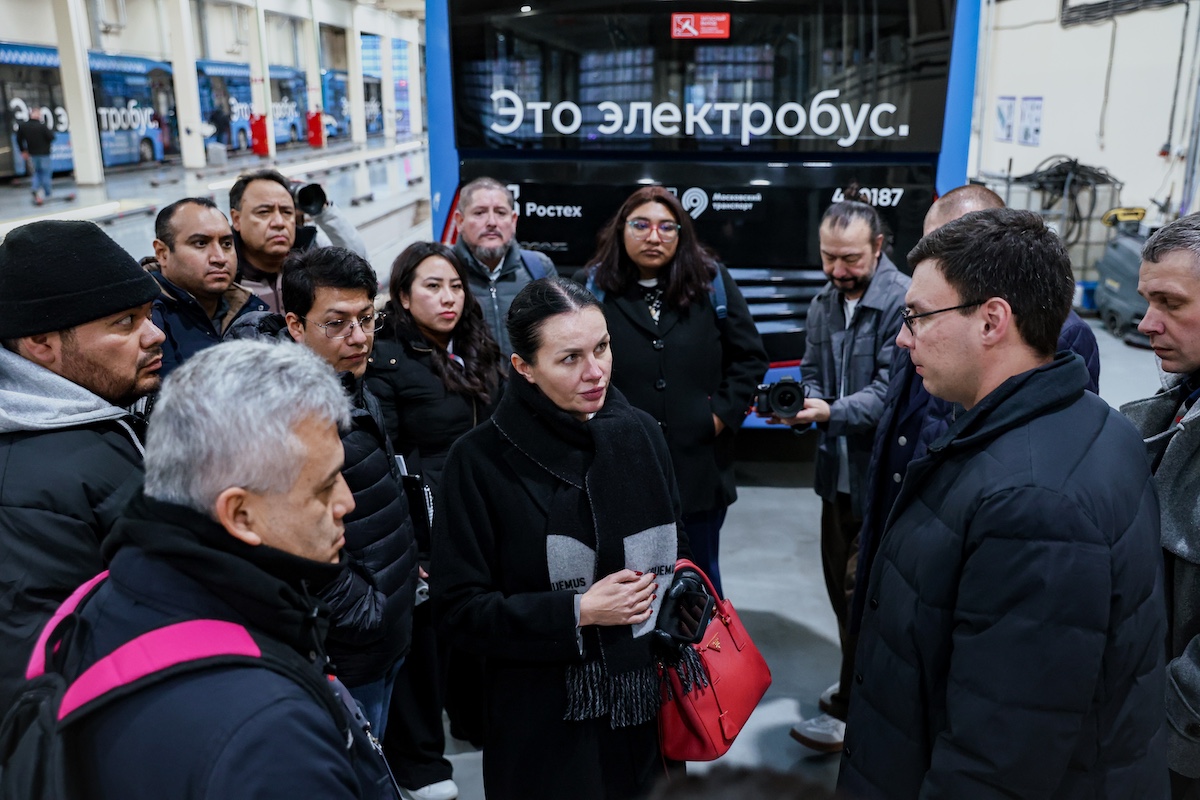
The Forum organizers’ excursions to fuel and energy infrastructure facilities, including a zero-carbon transformer station, generated significant interest among participants.
The Russia-China Energy Business Forum has been held annually since 2018 in accordance with agreements reached between Russian President Vladimir Putin and Chinese President Xi Jinping. The forum is being held under the auspices of the Commission for Strategic Development of the Fuel and Energy Sector and Environmental Security and the National Energy Administration of China. Rosneft and the China National Petroleum Corporation (CNPC) are co-organizers of the RCEBF.
The next 8th Russia-China Energy Business Forum will be held in 2026 in Russia.
Text of the report by I.I. SECHIN, Executive Secretary of the Commission for Strategic Development of the Fuel and Energy Sector and Environmental Security, at the 7th Russian-Chinese Energy Business Forum
Department of Information and Advertising
Rosneft Oil Company
November 25, 2025
Please note; this information is the raw content received directly from the information source. This is exactly what the source claims and does not necessarily reflect the position of MIL-OSI or its clients.