Maksim Liksutov noted that today there are 13 payment options available in the capital’s transport system. These include both traditional methods and the most modern ones.
Moscow Metro.
Thanks to the introduction of modern payment solutions:
Over 95% of passengers no longer visit ticket offices.
98% do not buy paper tickets.
91.2% choose contactless payment.
Today, Moscow leads in the number of ways to pay for public transportation fares. The developed ticketing system allows the city to save on printing paper tickets and receipts and eliminates queues at metro ticket offices.
Moscow Metro.
To create the best payment system in the world, the Moscow Government uses the most advanced domestic developments. Following the directive of Moscow Mayor Sergey Sobyanin, efforts continue to make fare payments in urban transport even more convenient for all passengers, Maksim Liksutov reported.
The tunnel boring machine «Sofia» has successfully completed the excavation of the second, left running tunnel from the under-construction Zvenigorodskaya station to the underground dismantling chamber near Shelepikha, which previously operated as part of the BCL.
The shield overcame 348 meters in difficult geological conditions. It took less than three months to complete.
«Sofia» has already laid the right tunnel in this section. Part of the route was excavated by miners manually, using small mechanization tools.
With the completion of this work, the entire mechanized tunneling from Shelepikha to Bulvar Generala Karbysheva with a length of 4.8 km has been completed. Both new tunnels will be integrated with the existing tunnels.
Previously, the shields «Natali» and «Victoria» completed the first section as part of the construction of the Line 17 between the stations Zvenigorodskaya and Narodnoe Opolchenie, and then to Bulvar Generala Karbysheva.
The first section of the new line will begin to work next year.
Line 17 will connect the business district of the Moscow International Business Center «Moscow-City» and the smart district SberCity. This line will have 12 stations, and there are plans to extend it to Krasnogorsk in the future.
Moscow has updated the design of its metro map. Now, only smooth lines are used for the design, and large parks within walking distance from the metro are depicted on the map. The last time the map’s design was radically changed was in 2013.
Moscow Metro.
The Moscow Department of Transport has unveiled the updated map of the capital’s metro. Among the main changes: only smooth lines are used for the schematic representation, and large parks within walking distance from the metro are shown on the map. Maksim Liksutov, Deputy Mayor of Moscow for Transport and Industry, noted that the innovations are aimed at making the map more convenient for passengers.
According to Liksutov, some elements on the map have been introduced for the first time in 90 years; the last time its design was radically changed was in 2013. The new map was prepared for the opening of the new section of the Line 16, Novatorskaya — ZIL.
“This year, we will change the design of the metro map for the convenience of users. A total of more than 38 thousand maps will be placed for the opening of the new section of the Troitskaya line. The design was developed taking into account feedback from passengers, and the new approach to creating navigation will allow Muscovites and tourists to read information even faster,” –commented the Deputy Mayor.
The Moscow Metro is the largest in Europe in terms of passenger traffic and ranks second in the world in this indicator. The metro development program provides for the construction of 31 more stations in Moscow by 2030.
Currently, work continues on the construction of the Lines 16 and 17, as well as the Dostoevskaya station of the Circle Line. Additionally, design work is underway for the Line 18 and the extension of the Line 3 with the construction of a new terminal station, Golyanovo.
Moscow has deployed a new artificial intelligence (AI) service to detect shoulder fractures on X-ray images. This marks the 41st clinical area where the radiologists utilize computer vision technologies, according to Yuri Vasilev, Chief Officer of Radiology at the Moscow Health Care Department.
Moscow Health Care Department Launches AI Service for Diagnosing Shoulder Fractures.
Moscow is continually advancing the integration of artificial intelligence technologies into practical healthcare applications. The algorithm assists doctors by automatically highlighting suspicious areas indicating potential fractures and performing necessary measurements on the images. This accelerates the interpretation of studies and enhances the accuracy of injury detection. Vasilev emphasized the service’s critical importance in trauma centers, where efficiency and diagnostic precision are paramount for timely treatment and reducing complication risks. This integration of AI into traumatology advances Moscow’s ongoing development of digital medicine, integrating the service into the city’s comprehensive neural network infrastructure, which now operates across 41 modalities.
“The shoulder joint is one of the most complex anatomical areas for interpreting X-ray images,” Vasiliev noted. “Even minor deviations in the patient’s position during the examination can affect visualization accuracy, demanding exceptional doctor attentiveness. This AI algorithm acts as an additional filter, serving as a reliable auxiliary tool to increase analysis accuracy.”
“The shoulder joint is one of the most complex anatomical challenges for X-ray interpretation,” Vasiliev noted. “Even minor patient positioning variations can compromise visualization accuracy, requiring exceptional clinical vigilance. This AI algorithm functions as a diagnostic filter, providing a reliable auxiliary tool to enhance analytical precision.”
Timely fracture diagnosis is crucial for determining treatment tactics. Delays increase risks of complications, including improper bone fusion, chronic pain, and limited mobility. AI implementation minimizes these risks by enabling earlier therapy initiation.
Moscow’s integration of smart algorithms into healthcare, as part of a five-year experiment in computer vision, now includes over 200 AI services participating in the project. Approximately 100 algorithms have been integrated into the city’s medical information system, with about 50 currently analyzing medical images in real-time streaming mode.
The project is led by the Moscow Social Development Complex, based on the Center for Diagnostics and Telemedicine of the Moscow Healthcare Department, in collaboration with the city’s Department of Information Technology. It aligns with the goals of the Moscow Medicine Development Strategy until 2030, aiming to improve the quality and accessibility of medical care for residents.
Time for new technologies! Testing neural voice in audio messages in the Moscow metro.
Time for new technologies! Testing neural voice in audio messages in the Moscow metro. – Московское метро тестирует нейроголос в аудиосообщениях.
We are gradually introducing artificial intelligence into the capital’s transport system. For example, since the beginning of the year, a neural network has been helping Alexandera’s chatbot answer your questions. Now, as part of a pilot project, AI will assist announcers in the Moscow metro.
As Maksim Liksutov explained, audio announcements are one of the most important ways to communicate with passengers. Sometimes something changes in metro operations: an escalator is closed for repair or trains follow a different route. Each situation requires a prompt announcement. Neural voice will help solve this task in minutes.
Moreover, the required audio file can be created remotely. Specialists only need to:
Prepare the text.
Upload it to the program.
Adjust the voice — choose the timbre, intonation, and pause length. By the way, AI was trained on real recordings of metro announcers.
We will test neural voice on the Line 1, which has many transfers to the MCC, MCD, other metro lines, car and railway stations. Also, Komsomolskaya station is located here — the leader in the number of transport infrastructure objects announced by announcers.
«Voices in neural processing allow creating prompt audio announcements in the unified style of Moscow Transport. After the pilot launch of the technology on the Line 1, we will decide on its further use in the metro and beyond. We will also consider passengers’ wishes. We continue to implement the most modern digital services, as instructed by Moscow Mayor Sergey Sobyanin», — said Maksim Liksutov.
Russia conducted its first digital ruble payment as part of a smart contract for insuring the capital’s autonomous tram.
Russia conducted its first digital ruble payment as part of a smart contract for insuring the capital’s autonomous tram. – Московский метрополитен – В России провели 1-й платеж цифровыми рублями в рамках смарт-контракта на страхование столичного беспилотного трамвая.
As Maksim Liksutov reported, the transaction was successfully carried out in pilot mode between the insurance group SOGAZ and the metro, with the support of VTB Bank. The payment was not related to an actual insurance event.
Key advantages of digital rubles:
🔹 Reliability. This is a digital form of the national currency, alongside cash and non-cash funds.
🔹 Speed. Payments are processed automatically within one day under a smart contract.
🔹 Security. Full transparency of transfers, as well as payments for goods and services.
At the beginning of 2025, on the instructions of Moscow Mayor Sergey Sobyanin, the Moscow Government signed a smart contract to insure Russia’s first autonomous tram. This test payment proved the safety, transparency, and high speed of fulfilling obligations using digital rubles. The online calculation of simulated damages and the payout of compensation were completed within one day. In the future, digital rubles will become one of the payment methods for fares and other transportation services in the capital, — said Maksim Liksutov.
Source: Rosneft – An important disclaimer is at the bottom of this article.
Mohammed Bin Saleh Al-Sada has been elected Chairman of the Board of Directors of Rosneft Oil Company. The meeting also formed the composition and elected the chairmen of the three permanent committees of the Board of Directors.
Mohammed Bin Saleh Al-Sada was first elected Chairman of Rosneft Board of Directors in June 2023. He holds more than 40 years of experience in the energy sector. Currently, Al-Sada holds the position of Chairman of the Board of Trustees of Doha University for Science and Technology (the State of Qatar), Member of the Board of Trustees at the Abdullah Bin Hamad Al-Attiyah International Foundation for Energy & Sustainable Development and Advisory Board member for GCC supreme council, as well as Vice Chairman of the Board of Directors of Nesma Infrastructure & Technology.
From 2007 to 2011, Minister of State for Energy & Industry Affairs of the State of Qatar, from 2011 to 2018 as Minister of Energy and Industry of the State of Qatar, and Chairman of the Board of Qatar Petroleum (now QatarEnergy).
Department of Information and Advertising Rosneft Oil Company July 21, 2025
These materials contain statements regarding future events and expectations that are forward-looking estimates. Any statement in these materials that is not historical information is a forward-looking statement that involves known and unknown risks, uncertainties and other factors which may cause actual results, performance or achievements to be materially different from the expected results, performance or achievements expressed or implied by these forward-looking statements. We assume no obligation to adjust the data contained herein to reflect actual results, changes in underlying assumptions or factors affecting the forward-looking statements.
Please note; this information is the raw content received directly from the information source. This is exactly what the source claims and does not necessarily reflect the position of MIL-OSI or its clients.

Source: Rosneft – An important disclaimer is at the bottom of this article.
Rosneft Oil Company considers the European Union’s decision to impose restrictive measures on the Indian refinery of Nayara Energy as unjustified and illegal. These sanctions are yet another example of extraterritorial implementation of politically motivated restrictions that blatantly violate international law and infringe on the economic interests of a sovereign state.
Rosneft emphasizes that it is not a controlling shareholder of Nayara Energy – the Company’s share in the authorized capital of the enterprise is less than 50%. The enterprise is managed by an independent Board of Directors.
The European Union’s grounds for imposing sanctions are completely far-fetched and false in content, Nayara Energy is an Indian legal entity whose economic activity is aimed at the development of its asset. The entity is taxed entirely in India. Nayara Energy shareholders have never received dividend payments and the accumulated profits have been used exclusively for the development of the refinery and petrochemicals and the company’s retail network in India.
The Nayara Energy refinery is a strategically important asset for the Indian energy industry, providing a stable supply of petroleum products to the country’s domestic market. The imposition of sanctions against the refinery directly threatens India’s energy security and will have a negative impact on its economy.
Such actions of the European Union demonstrate complete disregard not only for international law, but also for the sovereignty of third countries. Rosneft views these sanctions as part of the EU’s destructive policy aimed at destabilizing global energy markets. The restrictions on Nayara Energy are yet another example of the EU’s use of unfair competition practices.
We are counting on the fact that Nayara Energy will take measures to protect the legitimate interests of its shareholders and consumers, which will be supported by the governments of Russia and India.
Please note; this information is the raw content received directly from the information source. This is exactly what the source claims and does not necessarily reflect the position of MIL-OSI or its clients.
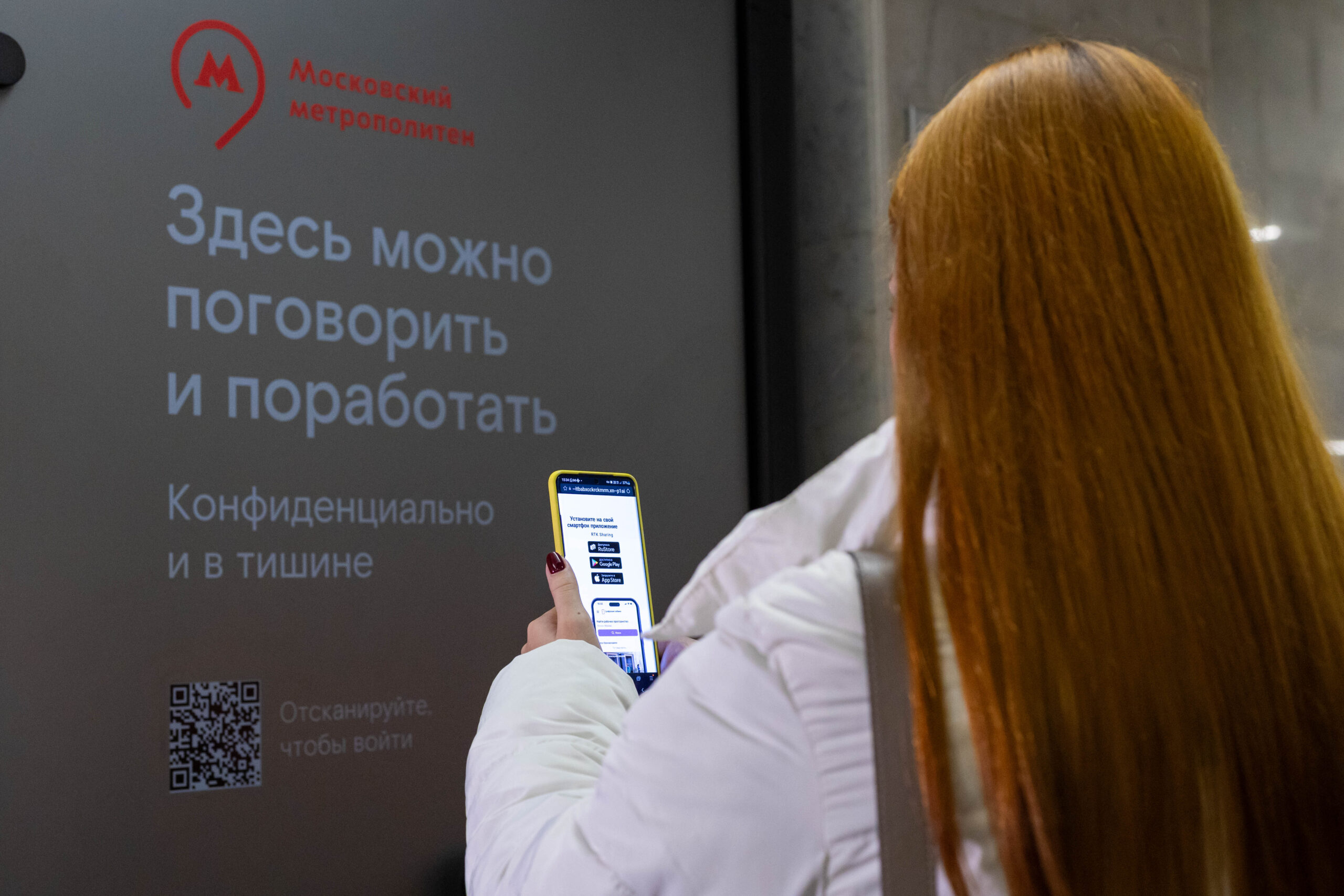
As Maxim Liksutov stated, by the end of 2025, all payment equipment for station access will be connected to the biometrics service. For example, late last week, work was completed on the Solntsevskaya line, where biometrics were implemented at 138 access points. Biometrics have become a convenient and secure way to pay for travel, with all user data securely encrypted and the system itself having bank-level protection.
Previously, this convenient payment method was launched on all turnstiles of the following lines: Troitskaya, Butovskaya, Nekrasovskaya, and Filyovskaya.
Moscow is a global leader in the number of transport types where biometric payment is available. The payment service operates in the metro, on the MCC, Aeroexpress, regular river routes, and some MCD stations. The most modern payment method can be used at approximately 1.5 thousand urban transport turnstiles. Following the task of Moscow Mayor Sergey Sobyanin, the best Russian payment solutions continue to be developed in the capital’s transport for user convenience, Maxim Liksutov added.
Recall that the tram line on this street was opened by Moscow Mayor Sergey Sobyanin in September last year.
Maksim Liksutov noted that more than 150 units of historical equipment participated in the parade and exhibition of retro transport: 16 trams of different generations, about 80 rally crews and about 75 cars, including the Ikarus-280 bus.
How it was:
🔹 More than 140 thousand spectators visited the parade and the exhibition.
🔹 Not only trams from different eras were presented, but also exhibits from the Moscow Transport Museum and the Museum of the Special Purpose Garage of the Federal Guard Service of Russia.
🔹 The audience was even able to see a horse-drawn tram – the predecessor of the electric tram.
🔹 The atmosphere of old Moscow was recreated by historical reenactors, and the concert program was attended by artists of the Music in the Metro project, the Academic Choir of the Moscow Metro and DJ Smash.
Today the 19th tram parade took place. The parade was led by a horse-drawn tram drawn by four horses. Such events are liked by Muscovites and traditionally gather a large number of spectators. On behalf of Moscow Mayor Sergey Sobyanin, we will continue to organize more interesting events for residents and guests of the capital, — added Maksim Liksutov.