A New Model Based on the KAMAZ-65658 Chassis Is Launched on the Market

Source: KAMAZ – An important disclaimer is located at the bottom of this article.

KAMAZ, together with its official partner, NPO Transmaster plant (Miass), has launched a tanker truck on the KAMAZ-65658 chassis of the latest generation K5, designed for the transportation and short-term storage of drinking water.

The novelty is based on the modern KAMAZ-65658 three-axle chassis, which belongs to the transport family of the latest generation K5 . This universal three-axle truck is often chosen by retailers for food delivery, in general, the chassis is convenient for mounting different types of superstructures. The truck is equipped with a comfortable cabin with a berth and good visibility, a low-consumption KAMAZ engine with a capacity of 390 hp, as well as a robotic twelve-speed gearbox. Among the features of the KAMAZ-65658 chassis are the 6×2 wheel formula and the lifting rear axle, which significantly improves the vehicle’s load capacity, fuel efficiency and maneuverability. To ensure smooth running, the rear axles of the chassis are equipped with air suspension.

The tank with a volume of 13 cubic meters is made in the form of a suitcase-shape horizontal tank with a thermal insulation layer. NPO Transmaster engineers have applied a combined product protection system: the inner shell is made of high-quality food grade stainless steel 12X18H10 with a thickness of 3 mm, which preserves all properties of drinking water. In turn, the outer shell is made of high-quality carbon steel 1.5-2 mm thick with a wear-resistant paint coating, which together makes the structure rigid and durable enough.

To ensure uninterrupted operation in all climatic conditions, engineers have provided a tank heating system. The temperature of the product in the tank is maintained by using exhaust gases from the chassis, and in the parking lot by using a 220V electric heating element. Heating of the pumping module is also provided. This configuration guarantees the vehicle’s performance even at extremely low temperatures.

Please note: This information is raw content obtained directly from the source. It is an accurate report of what the source claims and does not necessarily reflect the position of MIL-OSI or its customers.

The First KAMAZ Truck Turned 50 Years Old

Source: KAMAZ – An important disclaimer is located at the bottom of this article.

Exactly 50 years ago, on February 16, 1976, the first KAMAZ truck rolled off the main assembly line of the automobile plant.

Construction of the plant in Naberezhnye Chelny started on December 13, 1969, and on February 16, 1976, the first truck, the sided KAMAZ-5320, rolled off the main assembly line. This day became a bright page in the history of the auto giant and a long-awaited event for the Soviet engineering industry, as the country, which was in dire need of modern trucks, received an advanced vehicle for that time.

The release of the first KAMAZ truck was timed to coincide with the XXV Congress of the CPSU, which was held in Moscow from February 24 to March 5, 1976. As a sign of the successful fulfillment of the party’s plans, the first KAMAZ truck arrived on Red Square under its own power. The truck numbered 0000001 was driven by test driver Valery Peretolchin. Dmitry Zagrebelny, an installer, and Rafis Sabirzyanov, an employee of KAMGESENERGOSTROY, were also part of the first honorary crew of the KAMAZ-5320 on-board vehicle.

The first-born truck of the plant has survived to the present day. After rolling off the assembly line, it was handed over to the customer, worked for many years in Bashkiria, then was bought out by KAMAZ and restored. Currently, the KAMAZ-5320 with factory number 0000001 is one of the most valuable exhibits for KAMAZ and is located in the company’s Visitor Center in Naberezhnye Chelny.

Long before the first builders appeared in Naberezhnye Chelny, designers, researchers, technologists, and testers were already working on prototypes of Kama vehicles. One of the most experienced design teams in the country, the Moscow ZIL team, worked on the creation of the new model. Yaroslavl engine builders developed diesel power units. The Minsk Automobile Plant designed dump trucks and bodies for KAMAZ trucks. At the same time, the engineers took into account the experience of the domestic and foreign automotive industry. As a result, the design of the KAMAZ-5320 truck embodied the most advanced engineering solutions of those years and met the requirements of technological progress.

The KAMAZ-5320 was equipped with a modern V-shaped eight-cylinder diesel engine KAMAZ-740 with a capacity of 210 hp and a five-speed gearbox. The on-board platform of the vehicle was equipped with folding sides and a frame for installing an awning as standard.

From 1976 to 1978, the automobile plant produced three basic models: the KAMAZ-5320 truck with a load capacity of 8 tonnes, the KAMAZ-5511 construction dump truck with a load capacity of 10 tonnes and the KAMAZ-5410 truck tractor with a gross weight of 26 tonnes. Then, a 10-tonne KAMAZ-53212 truck with a wheelbase increased to 3690 mm, a 7-tonne KAMAZ-55102 agricultural dump truck, and a tractor truck for the 33-tonne KAMAZ-54112 road train were developed. The first generation of trucks was in demand among customers for many more years: models based on the KAMAZ-5320 truck, which became the ancestor of a whole family of heavy trucks, left the assembly line only in 2000.

For half a century, the model range of KAMAZ vehicles has undergone many changes. Now the company produces trucks of the fifth generation, which are radically different from their predecessors. The flagship of the latest K5 line is the KAMAZ-54901 truck. The premium truck tractor was developed by the company’s engineers as a worthy alternative to trucks from the Big Seven. The vehicle is not inferior to its foreign counterparts in terms of its technical characteristics and comfort. In general, the model range of KAMAZ K5 vehicles and chassis includes five lines: linehaul, transport, heavy, all-wheel drive and medium-tonnage. Each family consists of several models presented in various trim levels.

2026 has been declared the Year of the 400th anniversary of the founding of the city of Naberezhnye Chelny and the 50th anniversary of the release of the first KAMAZ vehicle. Today, on February 16, KAMAZ and the city will host a number of events dedicated to the anniversary date. The axle plant of KAMAZ PTC will be opened. Factory workers will meet at a solemn rally organized at the automobile plant. In the evening, the Naberezhnye Chelny Organ Hall will host a concert by Denis Matsuev, People’s Artist of the Russian Federation and virtuoso pianist.

Please note: This information is raw content obtained directly from the source. It is an accurate report of what the source claims and does not necessarily reflect the position of MIL-OSI or its customers.

Rosneft is Leader in Scientific and Technical Development Among Russia’s Largest Companies

Source: Rosneft – An important disclaimer is at the bottom of this article.

Rosneft has confirmed its position as one of the most innovation-oriented companies in the country. This is evidenced by the first rating of the scientific and technical development of the largest Russian corporations, published by the AK&M agency.

Technological leadership is one of the key items of the Rosneft 2030 Strategy. The Company’s innovation activities are focused on developing and implementing new technologies, products and approaches to business process management.

The AK&M rating is derived from an analysis of the performance indicators of the 300 largest Russian companies. It includes 42 holding companies which disclose data on sustainable development and scientific and technical activities. Rosneft is positioned among the top five leaders in the rating, demonstrating a commendable level of scientific and technical development.

The rating methodology is based on two groups of indicators: quantitative (volume and dynamics of R&D expenditure, patent activity) and qualitative (presence of internal research departments, partnerships with scientific organisations, regulatory framework for scientific activity). It should be noted that the costs of scientific research carry the most weight, accounting for 70% of the final assessment. Therefore, the AK&M rating is a reliable indicator of actual investments in technology and future competitiveness.

As the study points out, Rosneft is one of the Russian companies that invests the most in scientific research.

Rosneft’s development is significantly influenced by its leadership in innovation and research and development (R&D). The Company has an Innovation Development Programme in place, which is focused on achieving its priority goals and addressing issues of efficiency, sustainable development, transparency, social responsibility and innovation. As part of the programme’s implementation, a portfolio of innovative projects is being established. The development of each new technology is identified as a separate targeted innovation project.

In 2024-2025, the Company secured 151 patents for innovative inventions aimed at both optimising production processes and protecting the environment. Rosneft scientists have developed unique techniques that allow for the identification of all chemical elements in rock, including rare earth metals. These techniques also determine relative phase permeability, thus increasing the efficiency of extracting reserves from deposits with complex geological structures. The Company holds patents for the entire technological process chain for producing synthetic oil using Gas-to-Liquids (GTL) technology with zero sulphur content.

Rosneft currently holds 1,178 state-registered intellectual property assets in its portfolio.

Rosneft is the first Russian oil company to have created and successfully developed a software suite covering all key oil and gas production processes. Corporate software is superior to imported analogues in terms of speed, list of tasks to be solved, application of modern algorithms and clear interface.

Rosneft extensively uses artificial intelligence to enhance operational efficiency. The Echo Tools software, a pioneering solution in Russia, employs artificial intelligence to calculate bottomhole pressure and select the optimal operating mode for the well. The Company is revolutionising the processing of geological data by implementing large language models (LLMs) to automate the creation of detailed core descriptions across 16 parameters. This speeds up the analysis of information by five to seven times and reduces the likelihood of errors. The RN-ACPP (anti-corrosion protection of pipelines) software automates the selection of the optimal materials and methods for corrosion protection when designing oil pipelines.

Rosneft is investing heavily in digitalisation across all areas of its operations. The focus on introduction of digital technologies increases transparency, manageability and speed of decision-making throughout the production chain.

In order to develop the potential of future industry professionals, Rosneft organises a large-scale IT Marathon on an annual basis. Seven competitions are scheduled for 2025, including information modelling contests, the Additive Technologies and Reverse Engineering Cup, the Student Hackathon, the Academic Tournament, and the Geonavigation League. Over 900 participants from 71 cities, 80 companies and 92 universities took part in the intellectual competition.

For reference:

The AK&M agency has prepared the rating of scientific and technical development of the largest Russian companies for the first time. The objective of the study is to identify companies with best practices in R&D organisation and to highlight the contribution of large corporations to the country’s innovative development.

Department of Information and Advertising
Rosneft Oil Company
February 20, 2026

Keywords: Corporate governance 2026

Please note; this information is the raw content received directly from the information source. This is exactly what the source claims and does not necessarily reflect the position of MIL-OSI or its clients.

Scientists Study Around 400 Grey Whales in the Sea of Okhotsk Supported by Rosneft

Source: Rosneft – An important disclaimer is at the bottom of this article.

World Marine Mammal Protection Day is celebrated on 19 February each year. The day was established to raise awareness of the need to conserve and protect marine mammals such as cetaceans, pinnipeds and polar bears.

Rosneft is committed to environment-oriented campaigns and biodiversity preservation activities. The Company’s activities are based on the principle of preserving a favourable environment and biodiversity in all regions of its presence. Protecting and studying marine mammals is one of the key focuses of Rosneft’s environmental programme.

A key element of the programme involves conducting research on the grey whale population of the Sea of Okhotsk. This population is one of the smallest and most vulnerable to extinction, and it is listed in the Red Book of the Russian Federation. Since 1997, Rosneft has been participating in the monitoring programme for the grey whale population in the Sea of Okhotsk. The programme involves annual population counts, observation of animal behaviour, study of their food sources, photo identification research and acoustic monitoring.

As part of their research, experts concluded that the annual growth rate of the grey whale population in the Sea of Okhotsk is around 5%. In 2025, the total number of whales registered in the programme’s photo catalogue reached almost 400 individuals.

Until the 1990s, the grey whale population in the Sea of Okhotsk was considered to be completely extinct, with the species being classified as on the verge of total extinction. In 2019, the Russian Ministry of Natural Resources included the species on the list of rare and endangered animals requiring urgent restoration and reintroduction measures. In 2020, the Sea of Okhotsk population of grey whales was included in the Red Book of the Russian Federation.

In addition, the Company is supporting environmental monitoring of the Okhotsk-Korean population of grey whales on the north-eastern shelf of Sakhalin Island. Each year, specialists conduct photo identification, population counts and studies of the food supply and behaviour of mammals. As part of the study of the Okhotsk-Korean grey whale population, a unique acoustic monitoring programme is being carried out. This involves recording and analysing levels of natural and anthropogenic underwater noise. These studies facilitate the examination of sound and its propagation.

Rosneft is an active participant in the Interdepartmental Working Group under the Russian Federation’s Ministry of Natural Resources, working to ensure the conservation of the Okhotsk-Korean grey whale population. The working group develops proposals for legislation on population management and coordinates the interaction of interested federal and regional executive authorities, businesses, scientific organisations and the public.

In 2020, Rosneft, together with the Shirshov Institute of Oceanology of the Russian Academy of Sciences, implemented a large-scale project to study and monitor dolphins in the Black Sea. The results of the three-year study provide up-to-date, relevant data on the numbers and preferred habitats of Black Sea dolphins and their seasonal dispersal patterns. Guidelines have been developed for the study and conservation of dolphins.

Rosneft is also committed to studying and preserving the polar bear population. Since 2014, the Company has been conducting expeditions to study polar bears. In 2024, Rosneft initiated a new four-year cycle of research as part of Tamura, its corporate programme for preserving the biodiversity of Arctic ecosystems. In 2025, Rosneft, in collaboration with Innopraktika, a non-governmental development institute, launched an online course of popular science lectures entitled “Arctic Wanderer: The Polar Bear.”

Since 2015, Rosneft has also been researching the size and characteristics of the Atlantic walrus population. During this period, studies were conducted in the Nenets State Nature Reserve and in the Kara and Laptev Seas. As part of the national Ecology project, significant research into walruses in the Barents Sea has been conducted. Rosneft has facilitated the inaugural survey of the Franz Josef Land archipelago.

Department of Information and Advertising
Rosneft Oil Company
February 19, 2026

Keywords: Environmental news 2026

Please note; this information is the raw content received directly from the information source. This is exactly what the source claims and does not necessarily reflect the position of MIL-OSI or its clients.

Rosneft Improves Methods for Combating Corrosion at Refining Enterprises

Source: Rosneft – An important disclaimer is at the bottom of this article.

Specialists at Rosneft’s Volgograd Scientific Institute have developed and patented a device for holding coupons*, which are samples used to study corrosion in metal pipelines and production facilities. The unique design of the new coupon holder enhances safety and improves the quality of corrosion testing.

Corrosion testing involves conducting studies under various operating conditions, including high temperatures and pressures. Such testing is necessary for the purpose of forecasting the remaining service life of equipment and planning maintenance, with a view to minimising the risk of failure.

The use of coupons to diagnose and monitor the condition of technological installations is a well-established practice. The new coupon holder has been designed to facilitate the speedy and convenient replacement of samples, thanks to its quick-release tip.

The positioning of samples is also key to improving the quality of corrosion tests – coupons can now be fixed in a precisely specified position. The special unit for draining liquid and gas ensures the device operates safely – the coupon is removed without the operator needing to take any additional action. The combination of these solutions ensures that the development is superior to its counterparts.

Organising high-quality monitoring of equipment condition and forecasting its service life enables the Company to ensure smooth production operations, safe working conditions, while minimising its environmental impact.

* Coupons are small metal plates that are exposed to the internal environment during the operation of pipelines or process installations. This exposure allows us to determine the rate and type of metal corrosion.

Department of Information and Advertising
Rosneft Oil Company
February 18, 2026

Keywords: Environmental news 2026

Please note; this information is the raw content received directly from the information source. This is exactly what the source claims and does not necessarily reflect the position of MIL-OSI or its clients.

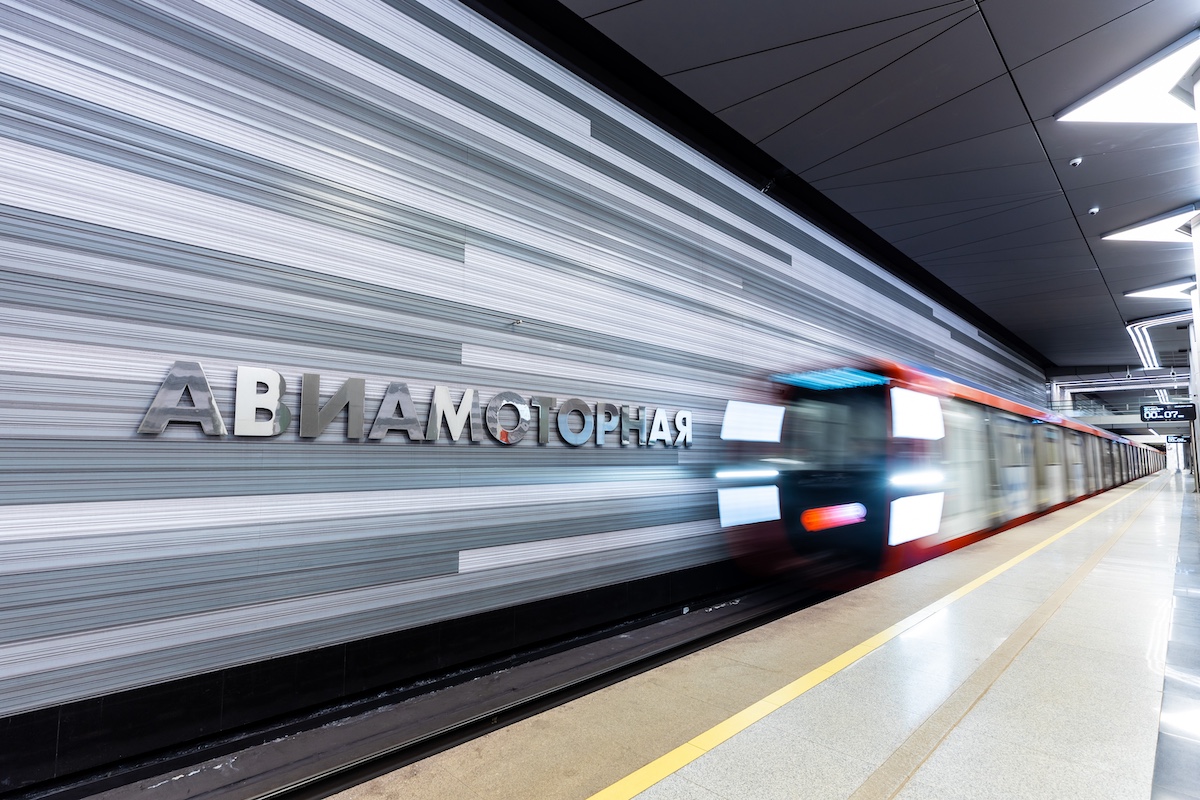
The Moscow Metro’s Big Circle Line turns three years old.

The Big Circle Line has become an integral part of the transportation system, cultural life, and daily comfort of Muscovites. The Big Circle Line is one of the most popular metro lines, with over 1.6 million trips made daily.

Key facts:

🔹 Dozens of new routes and transfers, saving up to 45 minutes per day.

🔹 New transport links between districts.

🔹 Exclusively modern “Moscow-2020” trains.

🔹 Innovative passenger services.

🔹 First-ever digital navigation.

🔹 Exhibitions, performances, and events.

🔹 Unique architecture and cutting-edge technology.

“The Big Circle Line is an outstanding example of modern metro construction. It combines passenger comfort, cutting-edge technology, and enormous potential for the development of the most innovative transport projects. It was here that Russian President Vladimir Putin and Moscow Mayor Sergey Sobyanin launched the official testing of Russia’s first driverless metro train in January 2026. The train, based on the “Moscow-2024″ model, is successfully operating on the Big Circle Line (BCL) without passengers. A driver is currently in the cab to ensure test safety and as required by law. We plan to begin passenger service in 2027,” said Maksim Liksutov.

Russian and International Rating Agencies Confirm Rosneft’s Leadership in Sustainable Development

Source: Rosneft – An important disclaimer is at the bottom of this article.

As part of its assessment of the world’s 2,000 largest companies, the World Benchmarking Alliance (WBA) has recognised Rosneft as the leading Russian oil and gas company in four rankings. These rankings focus on key areas of corporate responsibility, including a fair energy transition, social initiatives and gender equality.

Established in 2018 with the support of the United Nations, the WBA assesses corporate contributions to the achievement of the UN Sustainable Development Goals and regularly recognises the Company’s successes. In 2023, following a biennial assessment of the oil and gas industry, Rosneft was recognised as the leading Russian oil and gas company and was ranked among the top 10 global oil and gas companies in terms of a number of sustainability indicators.

The largest international investment and consulting agency, Institutional Shareholder Services (ISS), has also awarded Rosneft a high rating for its activities in the field of environmental protection, including the Company in the top group for environmental rating.

For the third consecutive year, RAEX, Russia’s largest non-credit rating agency, has assigned Rosneft an ESG rating of “AA”, thereby confirming that the Company’s environmental, social and governance performance is of a very high standard. In the new rating, Rosneft became the only oil and gas company to receive such a rating for the reporting year 2024. At the same time, the quality of corporate governance has been assessed at the highest level for the third consecutive year, achieving an AAA rating.

In addition, for the second consecutive year, Da-strategy, a business development agency, awarded Rosneft, the only Russian oil and gas company, the highest rating of A+ for “Leader of Corporate ESG Practices in the Russian Federation”.

Rosneft’s strategy stands upon the idea of a business that takes into account the highest requirements of industrial safety and environmental protection. Since 2007, the Company has published an annual Sustainability Report in accordance with the Global Reporting Initiative’s (GRI) international standards. Since 2018, it has also confirmed its commitment to the United Nations’ 17 Sustainable Development Goals (SDGs) on an annual basis.

Environmental responsibility is one of Rosneft’s key priorities. The Company has consistently increased the volume of green investments: by the end of 2024 it reached 74 billion roubles, and from 2022 to 2024 – nearly 200 billion roubles. The funds are allocated to programmes for improving pipeline reliability, constructing associated petroleum gas utilisation infrastructure, reducing emissions and other projects.

Thanks to the successful implementation of the energy-saving programme between 2022 and 2024, Rosneft enterprises achieved actual savings of over 1 million tonnes of fuel equivalent in terms of energy and fuel resources, while reducing absolute greenhouse gas emissions by 3 million tonnes of CO₂ equivalent.

Rosneft applies the principles of a circular economy in its water management practices. Consequently, the proportion of recycled and reused water has consistently exceeded 90% for nine years.

Rosneft’s focus on reforestation activities contribute to the sustainable development of ecosystems and the preservation of biodiversity. Between 2022 and 2024, subsidiaries planted almost 28 million seedlings and trees of various species in the regions where they operate. In addition, Rosneft’s enterprises released approximately 127 million fish fry into water bodies.

As part of its collaboration with the Russian Ministry of Natural Resources, Rosneft is implementing a series of measures as part of the federal project “Preservation of Biological Diversity and Development of Ecological Tourism”. These include research in the Arctic zone related to the study of polar bears and their habitat, as well as an assessment of the population of wild reindeer and valuable species of biological resources in the estuary of the Yenisei River.

Department of Information and Advertising
Rosneft
February 13, 2026

Keywords: Corporate governance 2026

Please note; this information is the raw content received directly from the information source. This is exactly what the source claims and does not necessarily reflect the position of MIL-OSI or its clients.

Rosneft Specialists Participate in Floating University Programme

Source: Rosneft – An important disclaimer is at the bottom of this article.

Specialists from Rosneft’s Arctic Scientific Centre (ASC) took part in the winter school of the Floating University, a Russian scientific and educational programme. Sakhalin greeted the programme participants – students from the country’s leading universities – for the first time. The three-day educational programme entitled “Exploring Unknown Waters: The conference, entitled ‘From Terra Incognita to Marine Biotechnology of the Future”, focused on a range of research areas in the northern seas, including geophysics, hydrology, biology and ecology.

Rosneft representatives delivered a presentation on the Company’s extensive scientific research in the Arctic region, which has been ongoing since 2012. Since then, over 60 expeditions have been organised and carried out along the entire Arctic Ocean coastline. These expeditions have been dedicated to the study of glaciers and icebergs, marine and coastal areas, rare species of animals and birds, including bioindicator species such as polar bears, wild reindeer, Atlantic walrus, etc. Scientists use information about the current status of these animal populations to make conclusions about the state of the fragile ecosystems of the Far North.

Rosneft specialists also presented a report on a large-scale project dedicated to the flora and fauna of the White Sea. Over a period of three years (2023-2025), ASC staff, in collaboration with colleagues from Innopraktika and scientists from the country’s leading scientific institutes, undertook a repeat of the expedition of Soviet hydrobiologist Konstantin Deryugin, who first described the biodiversity of the White Sea basin in detail 100 years ago. During the course of the project, scientists used both historical and innovative research methods, including molecular genetic techniques.

Rosneft and Innopraktika have launched another joint environmental project dedicated to cleaning the northern seas of chronic hydrocarbon pollution caused by maritime transport operations. The Oceanida biological product is derived from cold-loving bacteria that utilise hydrocarbons as a nutritional source. The product, the effectiveness of which has been proven in laboratory and field tests, has received a positive conclusion from the state environmental review.

As part of the Floating University winter school programme, students gained insight into the content of scientific atlases, which comprise knowledge about individual seas in the Russian Arctic, in addition to data obtained during Rosneft’s scientific research expeditions.

For reference:

The Floating University programme is being implemented as part of the UN Decade of Ocean Science, is part of the Science to Win initiative of the Russian Federation’s Decade of Science and Technology, and is supported by the Ministry of Science and Higher Education. The event has been organised by the Floating University Coordination Centre at the Moscow Institute of Physics and Technology.

The Floating University programme includes a winter science school and genuine sea expeditions. During these, students learn how to use equipment, collect data and conduct research, all under the guidance of mentors.

Department of Information and Advertising
Rosneft
February 12, 2026

Keywords: Social news 2026

Please note; this information is the raw content received directly from the information source. This is exactly what the source claims and does not necessarily reflect the position of MIL-OSI or its clients.

Rosneft Supports Festival of Indigenous Peoples of the North in Tyumen Region

Source: Rosneft – An important disclaimer is at the bottom of this article.

With the support of RN-Uvatneftegaz (Rosneft subsidiary), the Uvat Taiga Riches festival, which celebrates the culture of indigenous peoples, was held in the administrative centre of the Uvat district. This year’s event welcomed over 1,500 guests from the Tyumen Region and Khanty-Mansi Autonomous District-Yugra.

Thanks to the support of oil workers, the festival, which began several years ago as a folk crafts fair at the oil field, has grown into a large-scale cultural event.

The festive programme included folk singing and dancing performances. In the central area, near the traditional chum, people sang Khanty songs and danced. They also created traditional amulets in masterclasses. Guests were energised and filled with excitement by the national sports games. The screening of the The North Suits Us documentary film, which included a segment filmed in the Uvas Mir Hot ethnic village, was met warmly by guests.

In support of the events of the Year of Unity of the Peoples of Russia, an educational lecture series was organised on the history, culture and ethnography of the Uvat district. This was done in cooperation with the head of the ethnology sector of the Institute for Northern Development Problems of the Siberian Branch of the Russian Academy of Sciences. The lecture closed with an Encyclopaedia of the Native Land quiz, with prizes being awarded to those who correctly answered the questions.

The fairgrounds showcased a variety of traditional crafts made from taiga treasures, while the air was filled with the enticing aromas of northern fish soup and berry tea. The young guests particularly enjoyed riding on reindeer sleds.

The Uvat Trophy sports and hunting tournament was a highlight of the festival, where participants competed in an obstacle course that tested their agility and skill. In addition to these events, national sports competitions were held, including throwing a tynzyan onto a khorey (a lasso on a pole used to chase reindeer), archery, jumping over sleds, and tug-of-war.

One of the key areas of Rosneft’s social policy is the support and preservation of the national culture of the indigenous peoples of the North and their traditional way of life. The Company and its subsidiaries implement numerous social projects in their regions of operation, developing infrastructure in northern villages, supporting reindeer herding families, and improving the material and technical base of educational, social and medical institutions in the ancestral homelands of indigenous minorities.

As part of the festival, RN-Uvatneftegaz, in collaboration with the Uvat district administration, provided indigenous residents with equipment for traditional crafts. This included snowmobiles, boat motors, petrol generators, and Rosneft motor oil. Over the past few years, the Khanty families have received over 180 pieces of machinery.

For reference:

With the support of RN-Uvatneftegaz, the Uvas Mir Hot ethnographic centre (whose name translates as “House of Northern People” from Khanty) has been established and is operating successfully in Tyumen. This unique venue has become a popular destination for national holidays, educational activities, cultural events, and interactive tours, and it plays a significant role in preserving the traditions of the indigenous peoples of the North.

Department of Information and Advertising
Rosneft
February 9, 2026

Keywords: Social news 2026

Please note; this information is the raw content received directly from the information source. This is exactly what the source claims and does not necessarily reflect the position of MIL-OSI or its clients.

Rosneft Consolidates Its Technological Leadership in the Russian Oil and Gas Industry

Source: Rosneft – An important disclaimer is at the bottom of this article.

Rosneft secured 77 patents for innovative inventions in 2025. The technology leader in the oil and gas industry currently has 1,178 pieces of intellectual property that have undergone state registration in its portfolio.

In 2025, the Company’s scientists made a number of significant discoveries in the field of rock research. These included a method for determining the chemical composition of rock, developed by specialists in Ufa and Krasnoyarsk. In contrast to previous methods, this innovation is able to show the content of all elements in the rock, including rare earth metals.

Specialists from institutes in Tyumen and Tomsk have patented a method of determining the relative permeability of phases – that is, the ability of rocks to allow liquids and gases to pass through them. The development focuses on optimising extraction technology and enhancing the efficiency of extracting reserves from deposits with complex geological structures.

Extensive research generates unique findings. While studying the core, scientists in Tomsk discovered well-preserved imprints from the Jurassic period in rock samples, including ray-finned fish, parts of a sea lily and the skeleton of an ophiuroid, which is a distant relative of the starfish. Traces of ancient organic matter enable scientists to identify scattered fragments of flora and fauna more accurately, establish their connections with the environment and determine the conditions that are favourable for the formation and accumulation of oil.

Rosneft is the first Russian oil company to have created and successfully developed a software suite covering all key oil and gas production processes. Corporate software is superior to imported analogues in terms of speed, list of tasks to be solved, application of modern algorithms and clear interface.

The Company’s scientists are actively developing AI tools to solve production problems. In 2025, experts at the Ufa Institute developed EchoTools software, the first domestic software of its kind to use AI to determine the liquid level and sound velocity in the inter-pipe space of a well. These indicators are used by oil workers to calculate bottomhole pressure and select the optimal operating mode for the well, with a view to achieving maximum productivity.

A team of specialists from Samotlorneftegaz and the Company’s Samara Research Institute has developed software based on neural network modelling. This software is intended to optimise the operation of production wells at the Samotlor field. This new digital instrument generated an economic benefit of 100 million roubles in 2025 alone.

Research specialists at a Tyumen-based research institute have developed software called RN-AutoBalance, which is also based on neural network modelling technology. Innovative software automatically calculates optimal well operating modes, thus increasing the efficiency of mature oil field development.

In addition, the Tyumen Institute’s specialists have developed and implemented a software solution using large language models. This innovation reduces the routine workload associated with searching, checking, and formatting text information by 70-80%.

Rosneft is a market leader within the domestic petrochemical industry for catalysts. Specialists at the Novokuybyshevsk Scientific Institute have developed Russia’s first catalogue of hydrocarbon raw material catalysts. A variety of oil refining and petrochemical catalysts have been collected for further analysis and comparison with new products manufactured in Russia and abroad.

The centralised collection and storage of samples in the library facilitates the swift transfer of catalysts for a range of innovative projects and other scientific work, as well as for technological tasks requiring testing and rapid decisions on the selection of catalytic systems.

The Company is continually enhancing the efficiency of its technological equipment. In 2025, scientists at the Ufa Institute achieved a breakthrough by developing and patenting Russia’s first robotic complex for repairing pump and compressor pipes. Two technological lines enable pipes to be repaired and a protective coating to be applied to their inner surface. The complex’s productivity reaches up to 21,000 pipes per month.

Scientists at the Izhevsk Institute have developed and tested an innovative method of assessing the corrosion rate of oil well equipment. The economic effect of implementing this innovation is estimated to average 1.4 million roubles over a five-year period per well. The new approach is based on measuring the corrosion rate of steel plates in the thermobaric conditions of wells. The process is carried out using special submersible probes, which are also developed by the institute’s specialists. Previously, the corrosion rate was measured inside the cavities of above-ground pipeline infrastructure.

The Company’s research and design unit focuses particularly on creating innovative training simulators to improve the quality of professional training for specialists.

For instance, engineers in Ufa have developed a simulator that combines hardware and software to facilitate training and practice in managing wells equipped with electric centrifugal pump units. The training complex is designed to simulate the operation of submersible equipment and accurately reproduce the technological processes occurring in the well.

Specialists from the Samara Institute have developed a VR model of the Gerasimovskaya substation belonging to the Orenburgneft enterprise (Rosneft’s production asset), which accurately replicates the real facility. The model includes a virtual simulator that allows users to practise possible scenarios for rapid switching in various emergency situations.

In order to develop the potential of future industry professionals, Rosneft organises a large-scale IT Marathon on an annual basis. Seven competitions are scheduled for 2025, including information modelling contests, the Additive Technologies and Reverse Engineering Cup, the Student Hackathon, the Academic Tournament, and the Geonavigation League. Over 900 participants from 71 cities, 80 companies and 92 universities took part in the intellectual competition.

In 2025, the Company also held two specialised competitions. In Krasnoyarsk, a corporate institute hosted a seismic data interpretation competition that drew over 300 leading specialists. The Tomsk Institute organised the Russia’s first championship for creating digital twins of oil and gas preparation facilities among domestic software product developers.

Environment protection is an integral part of the Company’s corporate culture and social responsibility. In 2025, Rosneft experts have developed a ground-breaking oil spill detection technology that will considerably enhance the effectiveness of environmental protection measures in the oil industry. Thanks to a combination of laser scanning and aerial photography, this technology allows to distinguish natural water bodies from oil slicks with high accuracy.

Technological leadership is one of the key items of the Rosneft 2030 Strategy. The Company’s innovation activities are focused on developing and implementing new technologies, products and approaches to business process management.

Rosneft would like to congratulate the Russian scientific community on Russian Science Day!

Department of Information and Advertising
Rosneft
February 6, 2026

Keywords: Corporate governance 2026

Please note; this information is the raw content received directly from the information source. This is exactly what the source claims and does not necessarily reflect the position of MIL-OSI or its clients.