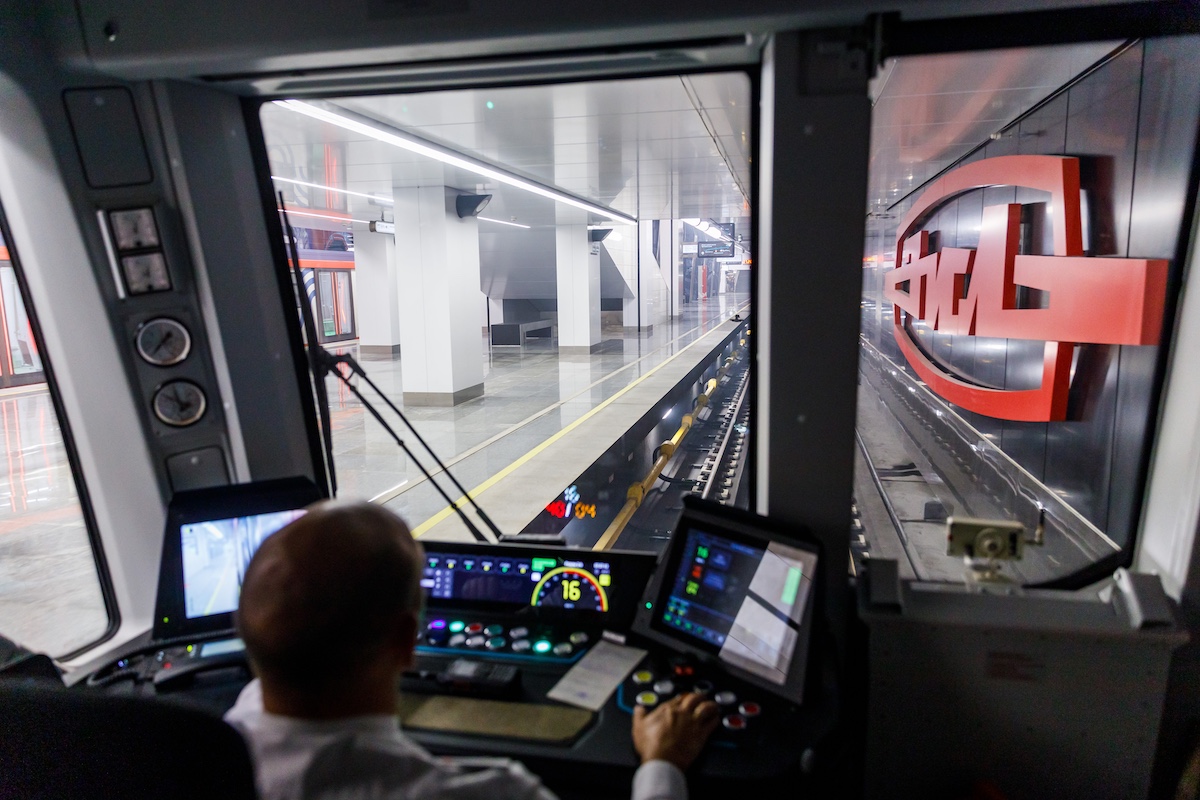
A new season of the Music in the Metro project has launched in Moscow.

A new season of the Music in the Metro project, one of the largest cultural formats integrated into the city’s transportation system, has launched in Moscow. Artists from various genres once again perform for passengers at metro stations, the Moscow Central Diameters (MCD), and other public transportation hubs.

Today, the project brings together over 400 musicians—vocalists, instrumentalists, and ensembles. Both emerging performers and established artists can be heard at the “Music in the Metro” venues. This year, interest in the project has grown significantly: over 2,000 applications were submitted—a third more than last season. As usual, participants were selected by a professional jury based on in-person auditions.

Over the years, the project has come a long way: while the first season featured approximately 30 musicians and performances at just three venues, today concerts are held at 40 locations. These include metro stations, including the Big Circle Line, MCD facilities, the Moscow Transport pavilion, the Severnye Vorota international bus station, and, in the warmer months, the Northern and Southern River Terminals.

Last year, the project became a key location in the large-scale celebratory program celebrating the 90th anniversary of the Moscow Metro, attracting renowned performers. In 2026, when “Music in the Metro” turns 10, passengers will also enjoy special concerts by popular musicians.

At the same time, the “Art in the Metro” project is developing in the capital, bringing together artists, sculptors, and illustrators. Since 2024, more than 300 artists have participated. Eleven venues at metro stations are available, and a permanent exhibition space has been opened in the passageway between Sokolniki stations on the Big Circle Line and Sokolnicheskaya Line.

“The Music in the Metro project has grown from 30 participants in the first season to over 400 musicians today, and the number of venues has increased more than 13-fold. At the request of Moscow Mayor Sergey Sobyanin, the capital’s transport complex continues to develop creative initiatives in the city’s infrastructure,” noted Maksim Liksutov, Deputy Mayor of Moscow for Transport and Industry.

Moscow Transport operating normally despite heavy snowfall.

Moscow — Despite intense snowfall, the capital’s public transport system continues to operate normally. All services have switched to an enhanced режим to ensure passenger comfort and safety.

Special attention is being paid to the uninterrupted operation of the Moscow Metro. Metro staff are clearing snow from depot tracks and open-air sections around the clock. The condition of track infrastructure directly affects the stability, comfort, and safety of trips for more than 8 million passengers daily.

A comprehensive set of measures is being used to combat snowfall. Specialized equipment with powerful brushes and compressed air systems is deployed on tracks, switches, and contact rail areas. These machines can clear snowdrifts up to 0.65 meters high. Where machinery cannot be used, snow is removed manually — more than 600 employees are involved in these works at the metro’s 23 depots. Special anti-icing agents are applied locally to prevent ice formation.

In total, over 3,000 employees and specialized vehicles are engaged in snow removal near metro stations, depot sidings, tram stops, and bus terminals. Platforms and adjacent areas are being cleared on the Moscow Central Diameters (MCD). City services are also clearing stops and turning areas for buses and electric buses.

All rolling stock is fully prepared for operation in severe weather conditions. Before entering service, all trams, buses, and electric buses undergo mandatory technical inspections. Drivers have also received additional briefings on operating vehicles during snowfall.

“On the instructions of Moscow Mayor Sergey Sobyanin, we ensure comfortable and safe travel in any weather. Taking care of track infrastructure is our key priority. Thanks to the creation of significant reserve capacity, the city’s transport system is always ready to accommodate additional passengers. Dispatch services monitor route operations and weather conditions in real time, while city services prioritize snow removal for transport,” said Maksim Liksutov, Deputy Mayor of Moscow for Transport and Industry.

The operation of city transport and infrastructure remains under constant monitoring.

MKB paid coupon and principal of Eurobonds CBOM'26 EUR to noteholders in Russian depositories

Источник: Credit Bank of Moscow – Московского Кредитного Банка –

Важный отказ от ответственности находится в нижней части этой статьи.

MKB paid coupon and principal of Eurobonds CBOM’26 EUR to noteholders in Russian depositories

29.01.2026

Please be informed about the status of the 3.1% senior 5-year EUR Notes (ISIN – XS2281299763, XS2281299847) (CBOM’26 EUR), coupon and principal payments.

On January 28, 2026 MKB (“the Bank”) paid out coupons on senior 5-year Eurobonds CBOM’26 EUR. The payment was made to the National Settlement Depository in Russian rubles at the CBR exchange rate as of the date of payment in favour of the all noteholders in Russian depositaries (the central depository / other depositories of the Russian Federation) as at 20 January 2026, in accordance with the Executive Order dated March 5, 2022 No. 95 “On Temporary Procedures for Meeting Loan Obligations to Certain Foreign Creditors” and the Executive Order dated July 5, 2022 No. 430 “On the Repatriation by Residents Participating in Foreign Economic Activity of Foreign Currency and the Currency of the Russian Federation” and the regulatory documentation.

Fulfillment of payment obligations under Eurobonds remains a priority for MKB. For any additional information, please contact us via e-mail: capital_markets@mkb.ru.

Примите к сведению; Эта информация является необработанным контентом, полученным непосредственно от источника информации. Она представляет собой точный отчет о том, что утверждает источник, и не обязательно отражает позицию MIL-OSI или ее клиентов.

Attendance Record: Nikas Safronov’s Exhibitions Successfully Held in India with Rosneft’s Support

Source: Rosneft – An important disclaimer is at the bottom of this article.

With the support of Rosneft, the exhibitions of People’s Artist of Russia Nikas Safronov were met with great success in India. The Dream Vision immersive project proved to be one of the most notable cultural events of the season, attracting a record number of visitors and receiving widespread public acclaim.

The exhibition took place at two major cultural centres in India. The first one was held in New Delhi at the national Lalit Kala Akademi from 7 to 21 December 2025 and the second one at the National Gallery of Modern Art, Mumbai from 30 December 2025 to 16 January 2026.

The Dream Vision exhibition is recognised as the most popular and significant one in India in the last 60 years. The exposition attracted significant numbers of visitors every day.

In India, 100 of Nikas Safronov’s best works were showcased, including a series of paintings created exclusively for the Indian public. The artist’s canvases featured picturesque architectural views of Moscow and St Petersburg alongside images of the Taj Mahal and other iconic places in India. Through the paintings, one could trace the evolution of Safronov’s artistic language: from classical painting and symbolism to the author’s Dream Vision style, which gave the exhibition its title. This unique technique enables the artist to create multi-layered paintings that blur the boundaries between reality and fiction.

The expositions were high-tech and based on the synergy of classical painting and modern multimedia solutions, including light, sound, video installations, LED screens and digital technologies.

In New Delhi, the works were housed in eight rooms across two floors of the Academy of Art, with a total exhibition area of around 1,300 square metres. At the entrance, guests were greeted by decorative sculptures of elephants hand-painted in Russian folk techniques. Over 400 metres of LED screens with augmented reality, artificial intelligence and immersive interaction were set up for visitors along the entire exhibition route. Furthermore, decorative solutions using robotics and animatronics were integrated into the exhibition space. Each room has been customised with its own unique sound and aroma design.

In Mumbai, large-format LED screens greet visitors at the entrance, creating the effect of transitioning from the real world to a world of images. There was a particular focus on works that combine traditional Russian patterns, such as Gzhel, Khokhloma and Palekh motifs, with Indian cultural codes. For this museum, Nikas Safronov created a Hindu mandala installation that came to life inside the gallery’s huge dome. This installation revealed the project’s key idea: the unification of Eastern and Western cultures.

The exhibitions in New Delhi and Mumbai attracted art critics, curators, collectors, cultural figures and representatives from the government, diplomatic circles and the media. The project has become a significant event in the cultural and social life of India. The exhibition received a high rating from India’s Ministry of Culture and Tourism, and the exposition was personally visited by the country’s Minister of Culture and Tourism, Gajendra Singh Shekhawat.

The series of paintings painted by Safronov specifically for Indian audiences have attracted particular attention from art critics. They described these works as “a subtle and intellectual dialogue of cultures in which Russia speaks to India in the language of images and emotions.” These artworks are a testament to the artist’s respect and admiration for India, its history, philosophy, religious traditions, mythology, and architecture.

Rosneft supports major cultural initiatives in Russia and internationally, playing an active role in fostering cultural relations between Russia and India. In the summer of 2025, with the Company’s support, the Festival of India was held on Manezh Square in Moscow. Guests were treated to presentations of handicrafts and national delicacies, as well as performances by famous Indian creative groups. In October 2024, Tatiana Navka’s ice show tour in the Indian city of Ahmedabad was a great success, supported by Rosneft. Scheherazade’s Love Story, featuring the world’s top figure skaters, is the first ice show to be held in India.

Department of Information and Advertising
Rosneft
January 16, 2026

Keywords: Social news 2026

Please note; this information is the raw content received directly from the information source. This is exactly what the source claims and does not necessarily reflect the position of MIL-OSI or its clients.

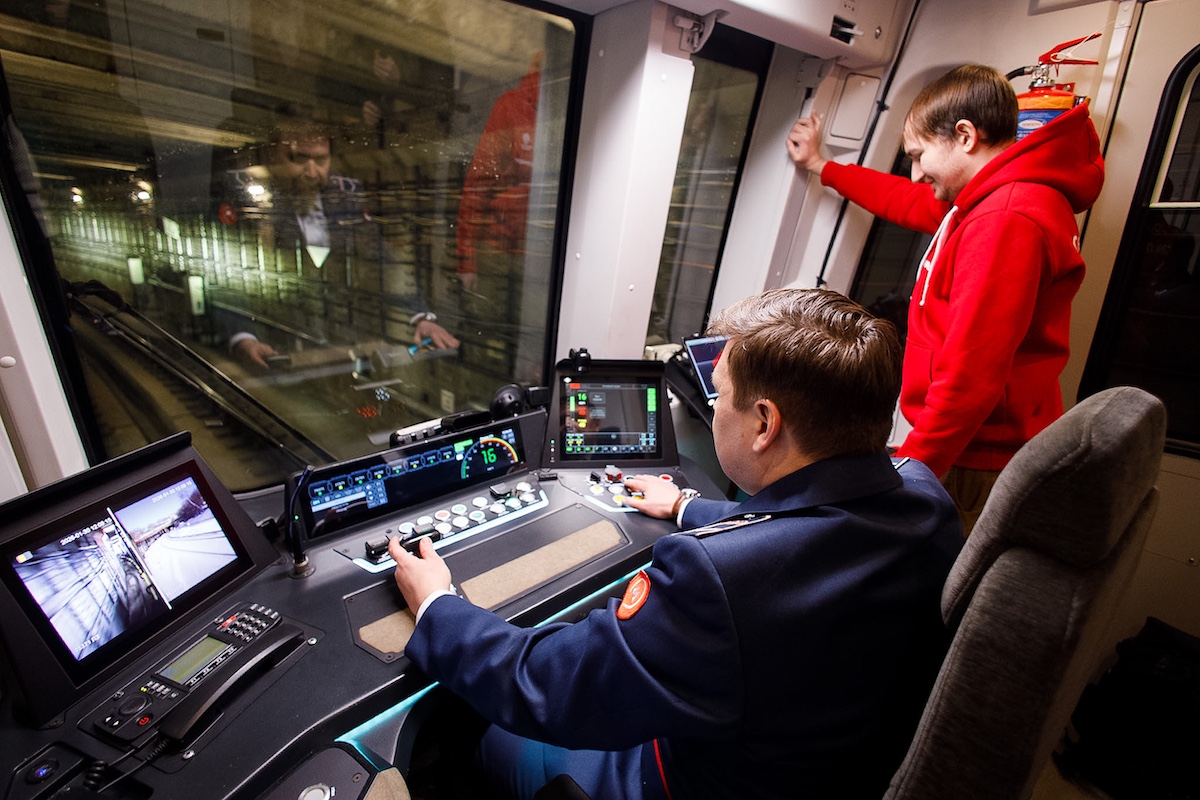
Rosneft Uncovers New Archaeological Sites

Source: Rosneft – An important disclaimer is at the bottom of this article.

Researchers from Rosneft’s scientific institute in Samara discovered seven previously unrecorded archaeological sites in 2025 across the Samara and Orenburg regions. Specialists surveyed more than 200 land plots allocated for commercial development by Samaraneftegaz and Orenburgneft, Rosneft’s production subsidiaries.

The survey covered 17 cultural heritage sites, seven of which had never been documented before. The newly discovered sites comprise three burial mound groups, two single burial mounds and a settlement called Nizhnenikolskoye III in Samara region.

Artefacts recovered from the settlement—including decorated pottery fragments and animal bones—date to the Srubnaya culture* of the late Bronze Age (mid-second millennium to early first millennium BC), according to the specialists.

Near the village of Pervoye Maya in Orenburg region, researchers uncovered three burial mounds at a previously unrecorded site. The fieldwork yielded surface archaeological material including a bronze stirrup buckle (an element of horse harness) made using casting techniques. The site is thought to date from the early Iron Age (seventh century BC to fourth century AD).

The 2025 fieldwork also established more precise boundaries for known heritage sites including the Maryevka I burial complex, Maryevka II mound and the burial site near Lebyazhka village.

The surveys conducted by institute specialists have added new archaeological sites to the historical maps of the Urals and Volga regions.

Rosneft is committed to the preservation of historical and cultural heritage and, in accordance with Russian law, conducts archaeological surveys at the pre-project stage of any construction works.

* The Srubnaya cultural-historical community is an archaeological culture of the late Bronze Age (mid-second millennium to early first millennium BC).  Geographically, it was distributed across the steppe and forest-steppe zones of Eastern Europe between the Dnieper and the Urals.  In the Volga region and Urals, the culture is widely represented by archaeological monuments: settlements and burial mound complexes. Ethnic affiliation: Indo-Iranians.  The main activities of Srubnaya culture representatives were livestock farming and agriculture.

For reference:

Archaeological teams have operated from Rosneft’s Samara institute since 2019. Over six years, specialists have surveyed more than 1,600 sites for planned facilities, determined boundaries and registered 204 archaeological monuments (settlements, individual mounds, burial mound complexes) with the state, whilst conducting preservation monitoring and inspections of a further 183 cultural heritage sites.

Department of Information and Advertising
Rosneft
January 15, 2026

Keywords: Social news 2026

Please note; this information is the raw content received directly from the information source. This is exactly what the source claims and does not necessarily reflect the position of MIL-OSI or its clients.
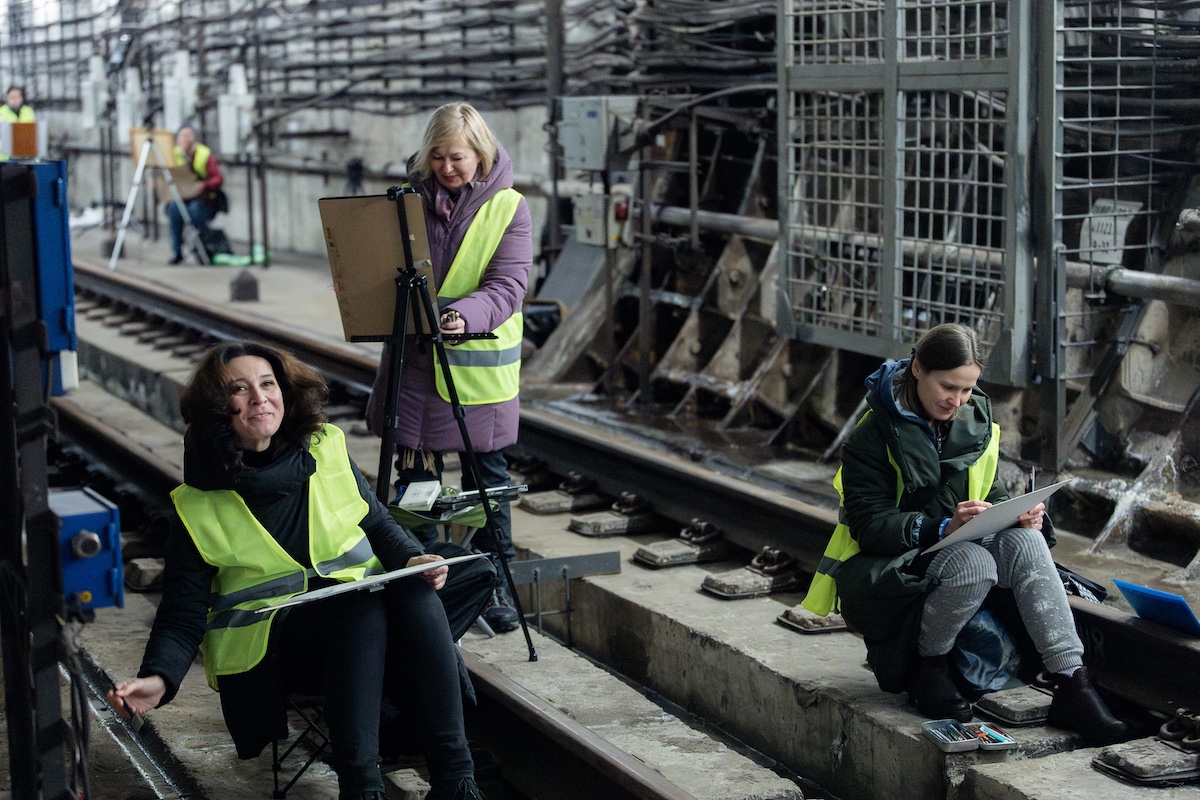
Over 3.8 million trips were made by passengers on the T1 route.

Since the launch of the Moscow Tram Diameter (MTD):

🔹 Modern Lvyonok-Moskva trams completed over 23,000 trips.
🔹 The total distance covered on the route amounted to 617,000 km.
🔹 The daily peak passenger traffic increased to 78,000 trips, which is 1.5 times higher than our forecasts.

The T1 operates according to the standards of an above-ground street metro: minimal intervals, convenient transfers to the metro and Moscow Central Diameters (MCD), and the smooth ride of autonomous cars. This approach allows residents and visitors to save travel time.

“The First Moscow Tram Diameter has become the most in-demand tram route. In just two months, Muscovites made over 3.8 million trips on it. This result shows that the format of diametrical tram routes with minimal intervals and modern cars is maximally convenient for passengers. Following the instructions of Moscow Mayor Sergey Sobyanin, we continue to develop the tram network and integrate it into the unified ecosystem of the capital’s transport to make trips even faster and more comfortable,” – noted Maksim Liksutov, Deputy Mayor of Moscow for Transport and Industry.

Rosneft Awards Winners of Major IT Competition Marathon

Source: Rosneft – An important disclaimer is at the bottom of this article.

Rosneft announced the results of the IT Marathon, a series of high-tech competitions in which participants solve production-related problems.

In 2025, the Ufa Scientific Institute and the Company’s Centre for the Development and Implementation of Science-Intensive Technologies organised seven competitions under the IT Marathon banner. These were the Information Modelling Contests, the Additive Technologies and Reverse Engineering Cup, the Student Hackathon, the Academic Tournament, and the Geo-Navigation League. Over 900 participants from 71 cities, 80 companies and 92 universities took part in the intellectual competitions, demonstrating the significant interest in technological challenges in the oil and gas industry among the professional and student communities. All the winners of the IT Marathon competitions met at the grand finale in Moscow.

In May, Rosneft’s research and design institutes and production enterprises participated in information modelling competitions. The teams developed information models and presented the most effective ways to apply ready-made models in production.

The participants of the Additive Technologies Cup, who had successfully passed the online qualifying stage, competed in September on the site of the TNF Industrial and Energy Forum. The students designed the impeller of a centrifugal pump used in oil refineries. They scanned a sample, created a digital model of it, and then used a 3D printer to print the plastic parts. The winners of the Cup were defined by the jury based on the results of the stand tests. They were participants from St. Petersburg, Tyumen and Ufa.

Over 340 participants from 45 Russian cities took part in the Student Hackathon in November. In 48 hours, the teams developed computer vision models that automatically highlight areas on a map with different oil well placement patterns. The developers of the ten best solutions presented their projects to the jury at the hackathon. The students from Moscow State University, Central University, and ITMO National Research University were among the top three winners.

The Academic Tournament saw a record number of participants this year, beating its own record from the previous three years. The scientific relay race attracted 154 representatives of 62 organisations from 25 cities. The teams developed algorithms and programmes that speed up the solution of a specific type of system of linear equations. This task is important for modelling fluid filtration processes in porous media, particularly when changes in the properties of oil-saturated reservoirs are taken into account. Ten teams made it to the competition finale based on the results of preliminary testing. Based on the results of the tests and the teams’ presentations, the jury announced the winners of the Academic Tournament: First place went to the Testv team, second place to Yars and third place to RESHALA. The most successful solutions from the tournament will be incorporated into Rosneft’s knowledge-intensive software: RN-SIGMA, RN-KIM and RN-GRID.

This year, the Geo-Navigation League brought together over 300 professionals and students from over 100 universities and organisations. The virtual drilling of horizontal wells championship was held using the RN-GORIZONT+ corporate software system. Following the online selection rounds, 23 professionals and 22 students were selected as finalists. This was the first time that the final professional qualifying round had been broadcast live. The best participants gathered for the grand finale in Moscow. They analysed the geological situation in real time based on incoming data, assessed risks and built the well trajectory in the corporate simulator, responding promptly to unforeseen situations. The top three student winners were: Eldar Nigmatullin (Tyumen State University), Kirill Kosarev (Irkutsk State University) and Egor Nikitin (Tyumen Industrial University). The best results among professionals were demonstrated by Leonid Sivkov, Nikolay Kruglov and Lenar Sabirov (all from the Institute of Geology and Development of Combustible Minerals).

Representatives of leading universities and major Russian companies attended the IT Marathon finale. The speakers covered breakthrough technologies and artificial intelligence trends, as well as aspects of information modelling, in the oil and gas industry.

For over seven years, the company’s IT competition marathon has been a significant platform for identifying and supporting talented specialists, integrating innovative solutions into production processes, and fostering partnerships between educational, industrial, and scientific organisations. Since 2019, Rosneft has held 24 competitions, which have attracted over 7,500 participants from 13 countries and 140 cities.

Department of Information and Advertising
Rosneft Oil Company
December 18, 2025

Keywords: Social news 2025

Please note; this information is the raw content received directly from the information source. This is exactly what the source claims and does not necessarily reflect the position of MIL-OSI or its clients.
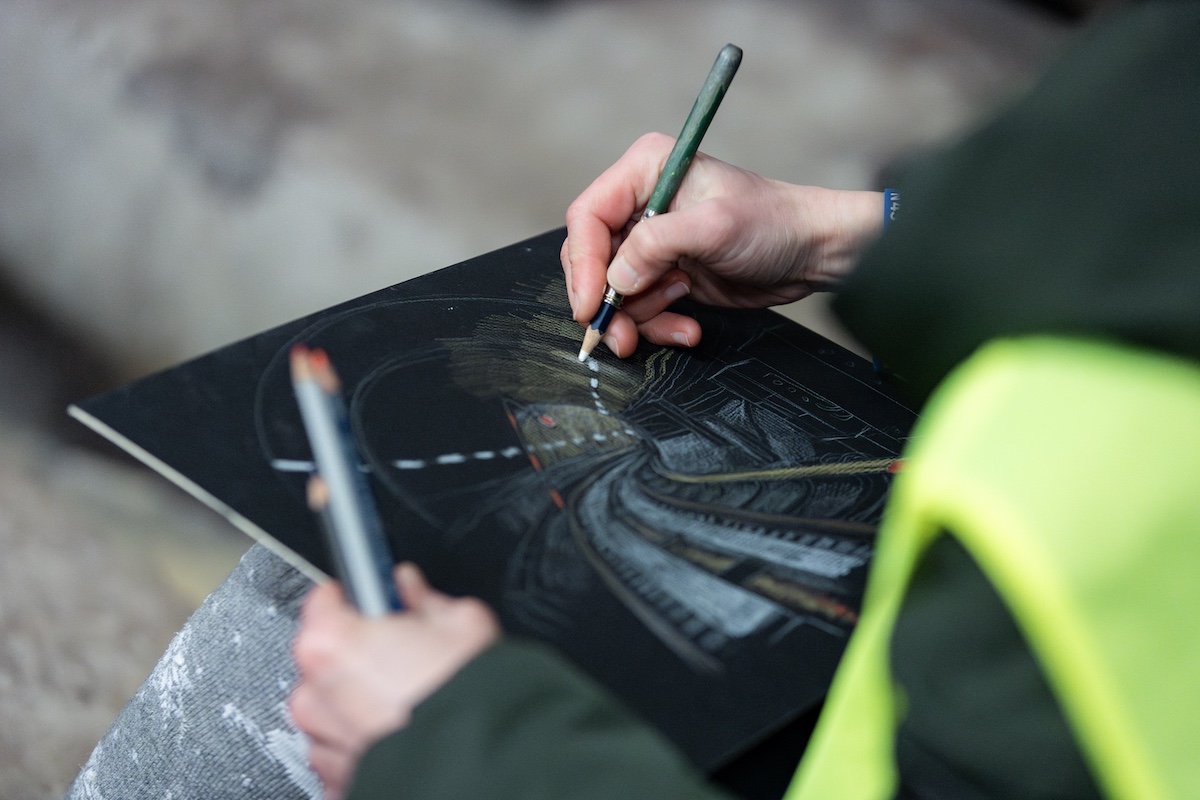
Rosneft Selects Winners of Chemistry Education Projects

Source: Rosneft – An important disclaimer is at the bottom of this article.

Novokuibyshevsk Petrochemical Company (part of Rosneft’s refining and petrochemical complex) announced the results of a methodological development competition for school chemistry teachers. The project’s goal is to identify and promote the most effective methods of fostering students’ interest in the advanced study of chemistry. The competition aims to promote the implementation of best practice in supplementary education in schools in the Samara region.

The competition jury experts noted the region’s pedagogical community’s high creative and professional potential. The six winning projects were designed to solve educational and vocational guidance tasks, drawing students’ attention to the subject and encouraging them to make a conscious choice about their future profession.

The author of Making Chemistry Together programme is among the winners for conducting experiments and developing students’ skills in chemical analysis and using digital equipment.

The Fun Chemistry programme is a course designed to build an understanding of chemical processes at a domestic level. This could be the first step towards a career in the food or petrochemical industries.

The Test Tube to Production project provides a ready-made engineering workshop in which high school students act as technologists, solving cases from the petrochemical industry. The course develops systems engineering thinking, which is important for future technologists.

“Novokuibyshevsk. Chemistry. Science. Catalysts” – a programme involving the creation of an educational ecosystem comprising a school, enterprise and research institute. Schoolchildren are immersed in the industrial and scientific environment of their hometown. Engineers and scientists pass on their knowledge and experience to the next generation of specialists.

“Oil and Gas: From Production to Refining” is a career guidance project covering the entire production cycle, from geological exploration and drilling to petrochemicals and logistics. The course provides students with a comprehensive understanding of the oil and gas industry and an interest in engineering specialities.

The Company promotes the introduction of modern educational technologies and methodological materials by supporting the best pedagogical initiatives. The methodologies and solutions presented are aimed at developing adolescents’ engineering thinking skills and expanding the practical and laboratory chemistry classes’ toolkit.

By fostering young people’s interest in the exact sciences, the Company is investing in the region’s future and paving the way for technological breakthroughs in the country.

For reference:

The Novokuibyshevsk Petrochemical Company’s Science Park popular science festival is designed to spark children’s and teenagers’ interest in scientific knowledge and innovation, and to explain the importance of the natural sciences in an accessible way.

The enterprise has organised the festival in Novokuibyshevsk every year since 2015, with more than 5,000 schoolchildren participating. The petrochemical enterprise involves children in the study of the natural sciences, organising exciting practical experiments and masterclasses that broaden the scope of the school curriculum.

In 2025, the Science Park educational project was included in the 50 Best Projects collection of the Silver Archer National Award for public relations development.

Department of Information and Advertising
Rosneft Oil Company
December 17, 2025

Keywords: Social news 2025

Please note; this information is the raw content received directly from the information source. This is exactly what the source claims and does not necessarily reflect the position of MIL-OSI or its clients.
Rosneft Employees Fulfil New Year’s Wishes for Children in Russian Regions

Source: Rosneft – An important disclaimer is at the bottom of this article.

In the run-up to the New Year, Rosneft enterprises in regions of operation are holding charity events and making dreams come true for children facing difficult life circumstances. As part of the Rosneft Christmas Tree campaign, Company volunteers gave 4,500 gifts to children.

In the Khanty-Mansi Autonomous Area, Samotlorneftegaz employees collected more than a thousand gifts for children in Nizhnevartovsk and its surrounding district. Oil workers also participated in a New Year performance at a boarding school in Izluchinsk, where children with disabilities from across Yugra study.

Employees of RN-Yuganskneftegaz brought festive cheer to pupils at a social centre and patients at a rehabilitation centre in Nefteyugansk, giving them sweet gifts.

Volunteers from RN-Nyaganneftegaz dressed up as Father Christmas and the Snow Maiden to celebrate with the children of Nyagan. Gift sets were put together based on each child’s interests and wishes.

The Kondaneft team sent gifts and well wishes to children in social care institutions.

Employees of RN-Uvatneftegaz in Tyumen Region gave educational games, sweets, toys, stationery, clothes and other essentials to the children at the Semya rehabilitation centre. In turn, the children put on a show for the oil workers. Gifts were also sent to children from indigenous families in remote settlements in the Uvatsky District in the North. Additionally, with the enterprise’s support, a family performance of Umka was staged at the Tyumen Puppet Theatre, attended by over a thousand children and their parents.

Volunteers from Tyumenneftegaz supported children from the Special Child organisation. Together with Father Christmas and the Snow Maiden, they presented the children with skis, skates, kick scooters and much more.

In the Yamalo-Nenets Autonomous Area, Kharampurneftegaz activists organised a festive concert and ethno-biathlon competitions for children from the Kharampur settlement. They also gave the children sweets. Volunteers from the enterprise prepared an entertainment programme for the pupils of the Siyanie Severa family centre in Tyumen at the Rubinovets ice rink. The children also received tickets to the circus and trampoline complex.

SevKomNeftegaz staff held a charity event for children at the Elena social centre in Gubkinsky, giving them New Year gifts.

RN-Vankor continued its tradition of supporting children at the Zabota family centre in Igarka, in the Krasnoyarsk region.

In the Irkutsk region, young specialists from Verkhnechonskneftegaz performed an interactive show for children from the Zalarinsky municipal district social centre. They also handed out gifts during the performance.

The Angarsk Polymer Plant’s employees donated books, toys, stationery and boxes of sweets to the charity Families for Children.

In the Republic of Sakha (Yakutia), young Taas-Yuryakh Neftegazodobycha specialists helped to make the New Year dreams of children from the Irkutsk Centre for Children Left Without Parental Care and the Lensk Social Rehabilitation Centre come true.

During the winter holidays, employees of Sakhalinmorneftegaz-Shelf will visit the Lastochka social rehabilitation centre in Tomari in the Sakhalin region to bring some New Year cheer to its pupils.

In the Orenburg region, Orenburgneft volunteers fulfilled the Christmas wishes of disadvantaged children by giving them scooters, sledges, toys and sports equipment. They also organised a cinema trip with greetings from Father Christmas and the Snow Maiden.

In the Udmurt Republic, pupils at the boarding school in Sokolovka, Sarapul District, received construction sets, board games, and craft kits from Udmurtneft employees.

Employees of Bashneft enterprises congratulated children in two regions: the Republic of Bashkortostan and the Nenets Autonomous Area. A concert programme was held for children from the Nash Dom family centre in Naryan-Mar, and gifts were given out. In Bashkortostan, pupils at the Family Centre in Mikhailovka, Ufa District, were congratulated, as were children undergoing treatment at the rehabilitation centre in Kuterem, Kaltasinsky District, and the social centre in Chishminsky District, both in Bashkiria.

As part of Rosneft Christmas Tree, employees of Samaraneftegaz in the Samara region collected and fulfilled wishes from children at the Solnechny Luchik rehabilitation centre. Children from the Samara Semya centre also received gifts from the oil workers.

Volunteers from the Company’s research institute in Samara organised a visit to the Snow Queen ice show, directed by Ilya Averbukh, for children from the Samara branch of the Russian Children’s Fund.

Employees of the Novokuybyshevsk Refinery gave sweets to children facing difficult life circumstances. Employees of the plant organised a trip to the cinema and held a cooking masterclass for children from the Vyshe Radugi social centre and the city boarding school under the plant’s patronage.

Volunteers from the Kuybyshev Oil Refinery gave gifts to children from large and low-income families in Samara, as well as to children at the Samara Regional Children’s Clinical Hospital.

Employees of the Saratov Refinery in the Saratov region sent their best wishes to children at the regional children’s hospital, the Vozvrashchenie rehabilitation centre and the social centre in the Gagarinsky district.

Activists from the Syzran Refinery made the dreams of young children in Syzran come true. These included sports equipment, toys, and festive clothing.

In the Krasnodar Territory, Tuapse Refinery employees collected and granted wishes from children at the Akhtyr Family Centre.

In the Ryazan region, young specialists from the Ryazan Oil Refining Company dressed up as Father Christmas and the Snow Maiden to congratulate pupils at social institutions across the region.

In the Khabarovsk Territory, volunteers from the Komsomolsk Refinery prepared gifts for children at a family centre in Khruba settlement. The children had requested construction sets, radio-controlled toys, gadgets and much more. The refinery also donated snow-clearing equipment to the centre.

Employees at the central office of Rosneft in Moscow fulfilled children’s wishes by sending numerous gifts to family centres in Sergiev Posad and Yegoryevsk, near Moscow, and to a social centre in Kondrovo in the Kaluga region.

In the Leningrad Region, RN-SeveroZapad volunteers helped to fulfil the Christmas wishes of children from social centres in Priozersk, Vsevolozhsk and Novodvinsk (in the Arkhangelsk Region). The children were also treated to a festive programme with Father Christmas and the Snow Maiden.

Department of Information and Advertising
Rosneft Oil Company
December 30, 2025

Keywords: Social news 2025

Please note; this information is the raw content received directly from the information source. This is exactly what the source claims and does not necessarily reflect the position of MIL-OSI or its clients.
Three Cultural Facilities Open in Yugra with Support of Rosneft

Source: Rosneft – An important disclaimer is at the bottom of this article.

With the support of RN-Yuganskneftegaz, three cultural facilities were opened in the Khanty-Mansi District-Yugra. The cultural and sports complex was built under the terms of the cooperation agreement between Rosneft and the government of the Khanty-Mansi Autonomous District-Yugra. The Barsova Mountain leisure and creative centre and museum were also provided with modern equipment.

The multifunctional cultural and sports complex is situated in Yarki village, in the Khanty—Mansi district. The 3,000-square-metre, two-storey building will house creative studios, a library with a collection of over 9,000 books, a gym, an auditorium and a choreography studio. The complex will become an active recreation centre for local residents. Offices of youth organisations such as the Movement of the Firsts, Rosmolodezh and Dobro.Center will also be located there, as well as hobby clubs for the older generation.

A new leisure and creative centre has opened in Solnechny village in the Surgut district. It is provided with professional stage, sound and lighting equipment, including facilities for live broadcasting. Fog and snow generators, confetti machines and bubble machines were purchased to create visual theatre effects. The choreography hall has also been fitted with new sound equipment, mirrors and machines. The transformer space is equipped with changing scenery to expand its functionality. The new stage in Solnechny has become home to 22 creative groups, comprising over 300 participants.

The Barsovo Mountain Museum in Barsovo, a village in the Surgut District, has also received modern equipment and machinery. The museum complex covers an area of over 1,600 square metres. It comprises two exhibition halls, six storerooms, restoration workshops, an archaeological laboratory, a 3D visualisation laboratory, and an archive. The purchase of office equipment, furniture, tables for restoration work and exhibit layout was made possible by the support of oil workers. A disinsection system has now been installed in the storerooms for the 200,000 exhibits. The exhibition halls are equipped with electronic tour equipment, cameras and projectors. The museum fully meets the requirements for exhibiting and preserving collections, which will allow some of the Barsova Mountain finds, currently stored in various museums around the country, to be returned.

Rosneft supports major Russian cultural initiatives and establishes new cultural facilities in regions of operation. The Company uses its funds to implement numerous activities aimed at developing children’s creative potential and reviving and preserving spiritual and national values.

For reference:

RN-Yuganskneftegaz is a key asset for Rosneft, accounting for around 30% of the Company’s total production. It is involved in geological exploration and field development across 40 licence areas totalling over 21,000 square kilometres in the Khanty-Mansi Autonomous District-Yugra.

Department of Information and Advertising
Rosneft Oil Company
December 30, 2025

Keywords: Social news 2025

Please note; this information is the raw content received directly from the information source. This is exactly what the source claims and does not necessarily reflect the position of MIL-OSI or its clients.