
Assembly of the new Moskva-2026 trains has begun at Transmashholding (TMH).

Earlier, Moscow Mayor Sergey Sobyanin announced that the city’s metro system would continue its large-scale rolling stock renewal. The first Moskva-2026 train is set to be assembled by the end of this year and will then enter testing on Moscow Metro infrastructure.

The new trains will retain the key advantages of the Moskva-2024 model, including:

  • Wide doors and inter-carriage walkways.
  • Modern climate control systems.
  • Adaptive lighting and a large number of screens.
  • USB and Type-C charging ports.
  • Cabin lighting that matches the line’s color scheme, and more.

In the Moskva-2026, some interior plastic elements, glass on the handrails of the entrance area, the rearview camera housing, and the futuristic lighting of the train’s front section will be updated.

“Moscow Metro is the city’s main transport operator. On weekdays, it serves over 8 million passengers. Ensuring passenger comfort and safety is our top priority. Following the directive of Moscow Mayor Sergey Sobyanin, we continue to renew the metro’s rolling stock. Currently, 79% of the fleet consists of new trains. We expect this figure to reach 90% by 2030. Additionally, by the end of 2026, we plan to fully renew the train fleet on the Line 3. To achieve this, more than 350 modern Moskva-2026 cars will be delivered to the metro next year, with over 700 new cars introduced over two years,” said Maksim Liksutov.

ACRA has affirmed MKB’s credit rating at A+(RU)

Источник: Credit Bank of Moscow – Московского Кредитного Банка –

Важный отказ от ответственности находится в нижней части этой статьи.

ACRA has affirmed MKB’s credit rating at A+(RU)

21.10.2025

On 21 October 2025, ACRA affirmed the credit rating of Credit Bank of Moscow (MKB) at A+(RU) with a “Stable” outlook.

The affirmation reflects the stable standalone creditworthiness assessment, adequate assessments of business profile, capital adequacy, and funding and liquidity, and the satisfactory risk profile.

In ACRA’s opinion, MKB maintains solid market positions among the largest banks and moderate systemic importance, servicing strategically important companies in major sectors of economy. The agency analysts also noted that the bank plans to develop both the corporate and retail business lines, including the small business segment.

As for funding and liquidity, the agency assumes that MKB will retain its comfortable liquidity cushion in the nearest 12-18 months.

Click here for more details.

The full text of the press release can be found here

Примите к сведению; Эта информация является необработанным контентом, полученным непосредственно от источника информации. Она представляет собой точный отчет о том, что утверждает источник, и не обязательно отражает позицию MIL-OSI или ее клиентов.

Investing in a Green Future: Bashneft Plants a Quarter Million Trees

Source: Rosneft – An important disclaimer is at the bottom of this article.

Bashneft (part of Rosneft), has announced the results of its extensive reforestation initiatives in 2025. The Company planted 255,000 trees across the Republic of Bashkortostan and Tyumen Oblast, establishing young forests covering 73 hectares.

A flagship project involved planting 24,000 trees along the shores of Lake Aslikul — largest lake in Bashkortostan. The initiative addresses a pressing environmental challenge: the shallowing and swamping of the reservoir’s coastal zone. Specialists from the Ufa Federal Research Centre of the Russian Academy of Sciences confirm that planting coniferous species is an effective method for preserving this unique water body.  Bashkir oil workers began forest restoration around Aslikul back in autumn 2023 and have already planted more than 102,000 pine and larch seedlings across over 25 hectares around the lake.

Employees of Bashneft’s subsidiaries and regional offices also planted pine and spruce seedlings throughout Bashkortostan and Tyumen Oblast. The most substantial forest plantings were carried out by Bashneft-Dobycha (Bashneft’s key extraction enterprise) — nearly 210,000 trees — and Sorovskneft (Bashneft’s extraction enterprise in Khanty-Mansi Autonomous Okrug) — over 16,000 trees.

Preservation of the environment for future generations is an integral part of the corporate culture of Rosneft. The Company implements large-scale environmental programmes aimed at minimising environmental impact, improving the eco-friendly production, and preserving and replenishing natural ecosystems.

The greening measures represent a continuation of the company’s comprehensive programme. Since 2020, Bashneft has planted more than 5.5 million trees across 1,600 hectares.

For reference:

Bashneft is one of the oldest oil and gas enterprises in the country, engaged in oil production, refining and marketing. The key assets of Bashneft, including the refinery and petrochemical complex, are located in the Republic of Bashkortostan. Additionally, Bashneft carries out exploration and production of oil in the Khanty-Mansi Autonomous District-Yugra, the Nenets Autonomous District, the Perm and Orenburg Regions and the Republic of Tatarstan.

Department of Information and Advertising
Rosneft
October 20, 2025

Keywords: Environmental news 2025

Please note; this information is the raw content received directly from the information source. This is exactly what the source claims and does not necessarily reflect the position of MIL-OSI or its clients.


Oceanida Microbial Treatment Receives Positive State Environmental Expert Review

Source: Rosneft – An important disclaimer is at the bottom of this article.

Oceanida, a microbial treatment developed by Rosneft as an environmental innovation, has received a positive conclusion from the state environmental expert review.  The treatment is designed for effective and safe remediation of hydrocarbon contamination in the waters of the Arctic region. The expert commission has determined that the innovation meets all requirements for environmental protection. The conclusion was approved by order of Rosprirodnadzor.

The biopreparation is the product of years of rigorous scientific research. Rosneft’s Arctic Research Centre developed it in partnership with Innopraktika, working from laboratories at the Faculty of Biology, Lomonosov Moscow State University.  At its core are psychrophilic microorganisms—cold-adapted bacteria that consume hydrocarbons as food source.

Specialists mounted several Arctic expeditions to isolate indigenous microbial strains with the strongest oil-degrading properties. They then engineered a delivery system: shell-coated granules housing dormant bacterial cells alongside the nutrients needed to kickstart their activity.

Comprehensive safety testing covered impacts on humans, wildlife, and marine ecosystems.  Oceanida’s effectiveness has been proven not only under laboratory conditions but also through field trials at the White Sea Biological Station of Lomonosov Moscow State University.  Hydrocarbon reduction reaches up to 36.7% over 45 days even at temperatures of −1.5°C. Based on the obtained data regarding the development’s safety for marine ecosystems, the environmental expert review confirmed the possibility of applying Oceanida treatment in the waters of the Arctic region.

Care for the environment while conducting business activities is one of Rosneft’s key priorities. The application of advanced biotechnological solutions will enable effective and environmentally safe elimination of consequences from hydrocarbon contamination of any type, particularly so-called “chronic pollution” that occurs as a result of maritime transport operations.

Department of Information and Advertising
Rosneft
October 14, 2025

Keywords: Environmental news 2025

Please note; this information is the raw content received directly from the information source. This is exactly what the source claims and does not necessarily reflect the position of MIL-OSI or its clients.
Rosneft Enterprises Become Leaders in Social Responsibility

Source: Rosneft – An important disclaimer is at the bottom of this article.

Rosneft subsidiaries — the Kuibyshev, Novokuibyshevsk and Komsomolsk refineries — won prizes and honourable mentions at the regional stages of the Russian Organisation of High Social Effectiveness competition, based on their performance in 2024.

Adhering to the principles of high social responsibility, Rosneft traditionally pays special attention to creating a favourable social environment at its enterprises and in the regions of operation. The Company provides additional social protection for employees, facilitates professional development and contributes to the social and economic development of the regions.

The Kuibyshev Refinery was awarded first place in the following categories: “For Creating and Developing Jobs in Industrial Organisations”, “For Supporting Employees with Many Children and Their Children in Industrial Organisations”, and “For Promoting a Healthy Lifestyle in Industrial Organisations”. In addition, the refinery was awarded second place in three categories: “For Developing Social Partnerships in Industrial Organisations”, “For Providing Best Working Conditions for Employees with Family Responsibilities in Industrial Organisations”, and “For Contributing to Regional Development through Social Investment and Charity”. The enterprise also won bronze in the category of “For Developing Human Resource Potential in Industrial Organisations”. The refinery offers a wide range of opportunities for professional development and career growth. Employees with three or more children receive special consideration. The collective agreement provides for special benefits and payments for these families. The refinery implements corporate projects relating to housing acquisition, education, medical care and health resort treatment. It carries out systematic work aimed at promoting the health and wellbeing of its employees and encouraging them to take part in regular sports activities.

The Komsomolsk Refinery was awarded first place in the categories of “For Creating and Developing Jobs” and “For Providing Best Working Conditions for Employees with Family Responsibilities”. The enterprise also won prizes in the following categories: “For Supporting Employees with Many Children and Their Children”, “For Developing Social Partnerships”, “For Developing Human Resource Potential”, and “For Promoting a Healthy Lifestyle”. The reduction in industrial injuries and occupational diseases was mentioned in particular. These achievements were made possible through the consistent implementation of a wide variety of measures. Every enterprise employee is provided with an extensive social package. This includes travel payments to holiday destinations within Russia, vouchers for health and wellness facilities, voluntary medical insurance and various types of financial assistance. The enterprise offers its employees favourable terms on mortgages, a corporate pension scheme and housing rental compensation for non-resident employees.

The Novokubyshevsk Refinery triumphed in the regional stage of the national competition, winning seven awards. The city-forming enterprise was recognised as the leader in the categories “For Developing Human Resource Potential”, “For Developing Social Partnerships”, and “For Providing Best Working Conditions for Employees with Family Responsibilities in Industrial Organisations”. The refinery also won second place for its work in creating jobs, reducing industrial injuries, promoting healthy lifestyles and making charitable contributions to the local community’s development.

The Novokubyshevsk Refinery is investing significantly in creating favourable conditions and projects to improve the health of its employees and their families. The enterprise runs several social facilities, including a health resort, a summer recreation centre and the Gagarin Children’s Camp. These facilities allow employees, their families and veterans of the enterprise to enjoy their holidays and improve their health. The refinery’s mortgage lending programme, which has helped to improve housing conditions for 170 employees, is particularly popular. The refinery is promoting specialised Rosneft classes and collaborative projects with the affiliate of Samara State Technical University and the Petrochemical Technical College. Young professionals are successfully benefiting from corporate mentoring and training programmes. The training centre at the refinery helps young people to integrate quickly into the workplace and enables experienced employees to improve their qualifications. Every year, the enterprise provides charitable aid to municipal social and medical institutions. Last year, for instance, Rosneft and the refinery provided the city hospital with the most advanced equipment for its perinatal centre.

Department of Information and Advertising
Rosneft
October 17, 2025

Keywords: Social news 2025

Please note; this information is the raw content received directly from the information source. This is exactly what the source claims and does not necessarily reflect the position of MIL-OSI or its clients.

Building the world’s best and most convenient transportation system for Muscovites.

All modes of urban transportation are being developed in the capital, and they are fully integrated. Total spending on developing Moscow’s transportation system in 2026 will amount to approximately 1.3 trillion rubles.

Over the next three years, 26.9 km of metro lines, 13 stations, and one depot are planned to be commissioned. The new Rublevo-Arkhangelskaya Line will be added, the first section of the Biryulevskaya Line, and Golyanovo station on the Arbatsko-Pokrovskaya Line will be opened. Construction will also continue on the southern section of the Troitskaya Line, as well as the Yuzhny Port station on the Lyublinsko-Dmitrovskaya Line and Dostoyevskaya station on the Circle Line.

Rail transport will become more comfortable and accessible for Muscovites, residents of the Moscow Region, and residents of central Russia. As part of a large-scale development program for the Central Transport Hub, new routes will be added by 2030, and train intervals will be significantly reduced.

The Moscow government is actively involved in the country’s largest transport project—the construction of the Moscow-St. Petersburg high-speed highway.

Additional electric buses, buses, trams, new-generation metro cars, and trains will be purchased for the Central Transport Hub’s commuter rail routes, as well as electric scooters for city rental.

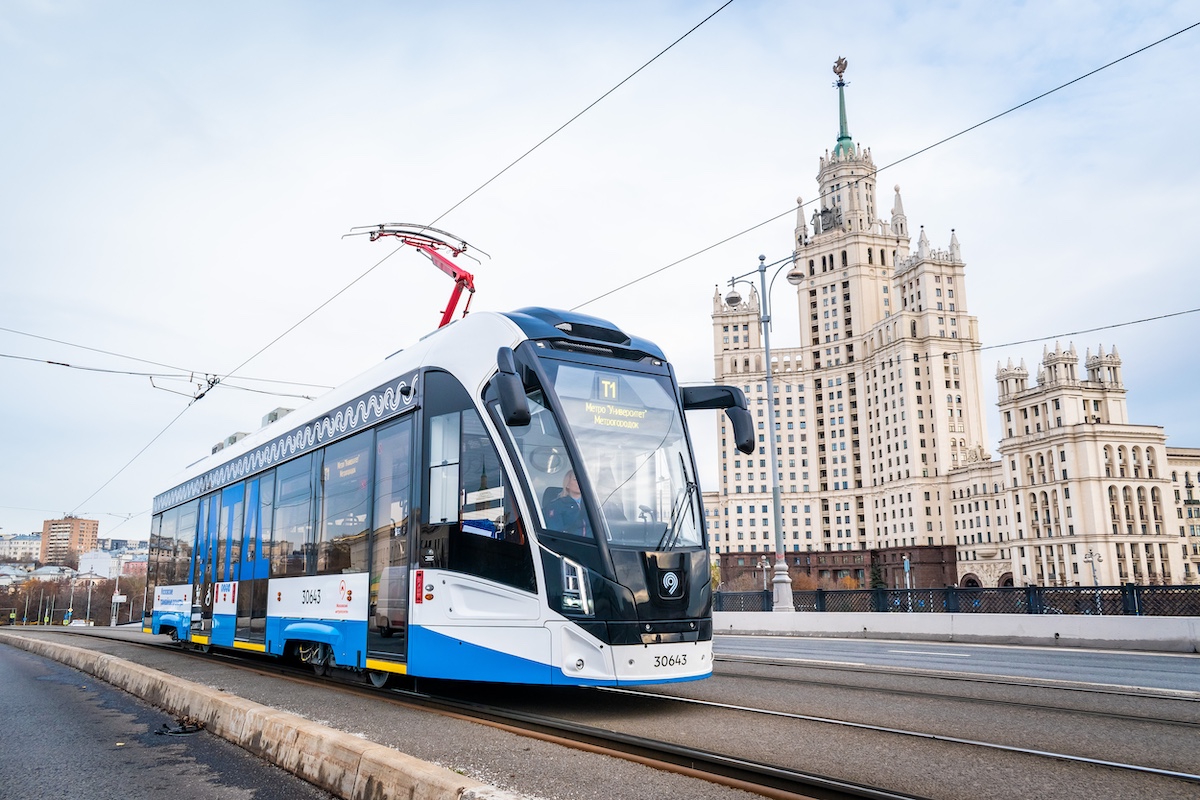
Driverless technologies are rapidly developing in transport. By the end of next year, 15 driverless trams will be operating in the city, and the first driverless metro train will be launched. By the end of 2030, two-thirds of the tram fleet is planned to be driverless.

In 2026, the fourth route of the capital’s river tram, “Kyiv – Luzhniki,” will be launched.

Rosneft Develops Programme to Preserve Biodiversity in All Regions of Operation

Source: Rosneft – An important disclaimer is at the bottom of this article.

Rosneft’s environmental specialists have developed a standard corporate programme to preserve biodiversity in all regions of the Company’s operation. The document was developed on the basis of many years of experience in biodiversity preservation research and projects, as well as a wealth of scientific data gathered during numerous ecological expeditions.

The research work was carried out by experts from the Severtsov Institute of Ecology and Evolution of the Russian Academy of Sciences, Rosneft’s Arctic Scientific Centre and the Company’s scientific institute in Tyumen.

The programme is the result of extensive work that led to the creation of a comprehensive, prioritised list of significant species. These are biological indicators of marine and terrestrial mammals, birds, amphibians, reptiles, fish, terrestrial invertebrates, zooplankton, phytoplankton and terrestrial plants. The document provides a detailed description of each bioindicator species.

While working on the programme, the ecologists compiled a register of specially protected natural areas in Russia that correspond to the International Union for Conservation of Nature (IUCN) categories 1a (Strict Nature Reserve) and 1b (Wilderness Area). Such natural sites are ecologically important and are included in the UNESCO World Heritage List. Registries of the mandatory and additional measures implemented to preserve biological diversity in the regions of the Company’s operation between 2018 and 2022 were also created.

The programme incorporates the requirements and recommendations of Russian legislation on biodiversity preservation, as well as the provisions of the Kunming-Montreal Global Framework Programme, other international agreements and recommendations from international oil and gas producer industry associations.

The document also includes a standard template for a biodiversity programme for subsidiaries. It is planned to pilot test it in several enterprises. Following the results of the pilot project, there are plans to approve a unified standard programme for the Company to preserve biodiversity. This programme will take into account the specific characteristics of the region, the type of activity, and other criteria relating to the Company’s subsidiaries. This will make a significant contribution towards supporting national environmental protection projects.

One of Rosneft’s strategic environmental goals is to preserve and restore ecosystems and implement biodiversity preservation programmes.

Rosneft is implementing the most ambitious programme to study Arctic flora and fauna since the Soviet era. Over the past 13 years, more than 60 expeditions have been carried out, exploring all the Arctic seas, islands and coastlines. During the project, the scientists conducted a thorough study of the habitats, examining over 400 animals and tagging 140 of them with satellite transmitters. They also performed over 1,500 laboratory analyses of selected biological samples.

Rosneft supports the activities of the Amur Tiger Centre, an autonomous non-profit organisation that aims to increase the population of Amur tigers and protect their habitat. The Company’s funds are directed towards developing a comprehensive system for protecting the Amur tiger. This includes protecting the tiger outside specially protected natural areas and equipping operational hunting surveillance teams with modern technology and equipment to combat poaching. The system also aims to preserve food sources and reduce conflicts between tigers and humans. The project also involves monitoring the population status of the largest cat on Earth and conducting scientific research into it, as well as carrying out educational and awareness-raising activities. Thanks to collaborative efforts, the population of Amur tigers has grown to over 750 individuals, ensuring the preservation of this unique species.

Rosneft subsidiaries are also implementing various environment-oriented projects to study key species of flora and fauna in the regions of the Company’s operation. As part of the Under Strong Wing project, eighty Steller’s sea eagle nesting sites have been discovered in the Far East. The project’s goal is to restore and preserve the population of this bird species. This data formed the basis for a set of measures developed to protect the largest birds in the Far East that are listed in the Red Book.

The Company supported the Central Siberian State Nature Reserve’s specialists in Evenkia as they studied the musk deer’s habitat. The scientists have discovered that there are 300 individuals of these cloven-hoofed animals in an area that was previously considered unsuitable for them. The results open up new possibilities for protecting the small population of Siberian musk deer from predators. Furthermore, the scientists are studying the possibility of setting up a farm to breed a species of animal listed in the Red Books of several Russian regions and on the IUCN Red List as endangered.

The Sakhalin Region has been implementing a programme to monitor the population of grey whales for 27 years. These marine mammals are a rare species listed in the Red Book and inhabit the northern part of the Pacific Ocean.

A series of environmental atlases presents the results of many years of scientific research. Rosneft has published several scientific works on the results of its activities, including the expeditions it has undertaken. The Species – Bioindicators of the State of Arctic Marine Ecosystems atlas, published in 2020, provides information on over 60 indicator species.

Between 2020 and 2023, the Company took part in various events as part of the national Ecology project. Over 320 million roubles were allocated to the project studying the state dynamics of key species, which are indicators of the sustainability of Arctic ecosystems, for the period 2019–2023.

At the 27th St. Petersburg International Economic Forum in 2024, Rosneft signed a new agreement with the Russian Ministry of Natural Resources and Environment on jointly implementing a number of measures under the Preservation of Biological Diversity and Development of Ecological Tourism federal project in 2024–2027, as part of the Ecological Well-being national project.

Department of Information and Advertising
Rosneft
October 21, 2025

Please note; this information is the raw content received directly from the information source. This is exactly what the source claims and does not necessarily reflect the position of MIL-OSI or its clients.

Rosneft Restores Population of Endangered Black Sea Salmon

Source: Rosneft – An important disclaimer is at the bottom of this article.

The Tuapse Refinery (part of Rosneft’s oil refining complex) has released over 35,000 fry of Black Sea salmon (sea trout) back into their natural habitat. The initiative is part of the enterprise’s project to restore the population of this endangered species, which is listed in the Red Book.

Black Sea salmon was a commercial fish until 1955. However, unregulated fishing and poaching have caused its population to decrease significantly. The government is currently protecting Black Sea salmon. The preservation and reproduction of sea trout is only possible thanks to special programmes that involve rearing fry in artificial conditions before releasing them into their natural habitat.

At the request of the Tuapse Refinery, a trout farm was used to raise sea trout fry in water from artesian wells. Special feed containing vitamins and probiotics was given to the fry to boost their immunity. Once the fry had reached a weight of 1.5 grams, salt baths were prepared to help them adapt to seawater. Each fish weighed about four grams before release.

Representatives from the Federal Agency for Fishery and the Azov Research Institute of Fisheries and Oceanography determine the areas in which fry should be released, taking into account factors such as water composition, food supply, temperature, currents and distance from the sea. The water temperature of the river must match the water temperature where the fish was raised. There should be a distance of ten kilometres from the place of release to the sea, which the fry will cross in two months. The salmon gain weight in the sea and return to the release site for spawning after 2-3 years.

In 2020–2021, the enterprise had already organised the release of fry in batches of 6,000 and 12,000. The environmental campaigns aimed at restoring the salmon population are yielding positive results. It has already been confirmed that fish weighing up to 500 grams are returning to the rivers.

Preserving the environment for future generations is one of the key areas of Rosneft’s development strategy. The Company and its subsidiaries are implementing a number of comprehensive programmes to preserve biodiversity and natural resources in the regions of operations. They are also striving to ensure environmentally friendly production processes and minimise their environmental impact.

In addition to releasing fry, the Tuapse Refinery participates in environmental campaigns and organises community clean-up days, including those held near the Kiselev Rocks natural monument. The enterprise’s volunteers also raise environmental awareness among young people.

Department of Information and Advertising
Rosneft
October 16, 2025

Keywords: Environmental news 2025

Please note; this information is the raw content received directly from the information source. This is exactly what the source claims and does not necessarily reflect the position of MIL-OSI or its clients.

Rosneft Enterprises Organise Family Environmental Festivals in Samara Region

Source: Rosneft – An important disclaimer is at the bottom of this article.

Rosneft enterprises organised environmental festivals in Novokuybyshevsk and Syzran. The events saw over 1,500 residents of the region take part in the large-scale events.

The employees of the Novokuybyshevsk Refinery held the tenth anniversary EcoLife environmental family festival. The festival offered opportunities for education, recreation, communication and creativity. Both adults and children took part in environmental masterclasses, quizzes, and competitions, as well as completing a geography quest. A lectorium on the environment, a photo exhibition and interactive areas where visitors could study the Samara Region’s flora and fauna were all part of the festival. At the EcoWardrobe stand, the organisers showed guests how to recycle items and held a masterclass on making vibrant artworks from unwanted clothing.

This year, the festival brought together environmental clubs, museums, children’s libraries, and schools from Novokuibyshevsk. Together with activists from the Movement of the Firsts, young environmentalists organised a marketplace where people could exchange plastic bottle caps for chestnut seedlings. The enterprise’s volunteers also explained the principles of separate waste collection and recycling.

The Syzran Refinery organised the FormatECO family festival for the eighth time. The city festival featured masterclasses on creating crafts from natural materials, themed photo zones, and a collection point for plastic and paper waste. All interested visitors could take a quiz on nature conservation and recycling. The enterprise organised an interactive paper show for the youngest guests and subsequently sent all the requisites for recycling. At the end of the environmental festival, the employees and their children planted juniper seedlings near the Nadezhda sports and recreation centre.

Rosneft’s corporate culture is characterised by a strong focus on environmental initiatives. The Company’s enterprises pay great attention to environmental education, promoting a careful attitude towards nature and useful ecological habits among young people.

Department of Information and Advertising
Rosneft
October 15, 2025

Keywords: Social news 2025

Please note; this information is the raw content received directly from the information source. This is exactly what the source claims and does not necessarily reflect the position of MIL-OSI or its clients.

Biometric payment has been in operation on Moscow transport for four years.

According to Maksim Liksutov, passengers have used the service more than 177 million times since its launch. And this figure is constantly growing.

Currently, biometric payment is available at turnstiles on the metro, the Moscow Central Circle (MCC), regular river routes, the Aeroexpress, and some MCD stations. Around 600.000 users are registered, making over 170.000 passes every working day.

The system offers a favorable rate of 63 rubles. As part of a promotion, the cost is only 53 rubles until November 30th. Maksim Liksutov announced that a promotion has been launched on Moscow transport since October 1st, in partnership with VTB Bank. Passengers will receive a 10-ruble refund to their accounts when paying for travel on the metro, the MCC, MCD*, and regular river electric transport using biometrics.

“At the direction of Moscow Mayor Sergey Sobyanin, we launched biometric payment on public transport in 2021. Since then, the service has earned the trust and popularity of Muscovites. Nowhere else in the world is it available with such convenience and scale as in the Russian capital. In the last year alone, the number of registered users has increased by 1.5 times. Thanks to biometrics, Muscovites don’t need cards, phones, or paper tickets to enter – a glance at the camera on the turnstile is enough,” added Maksim Liksutov.