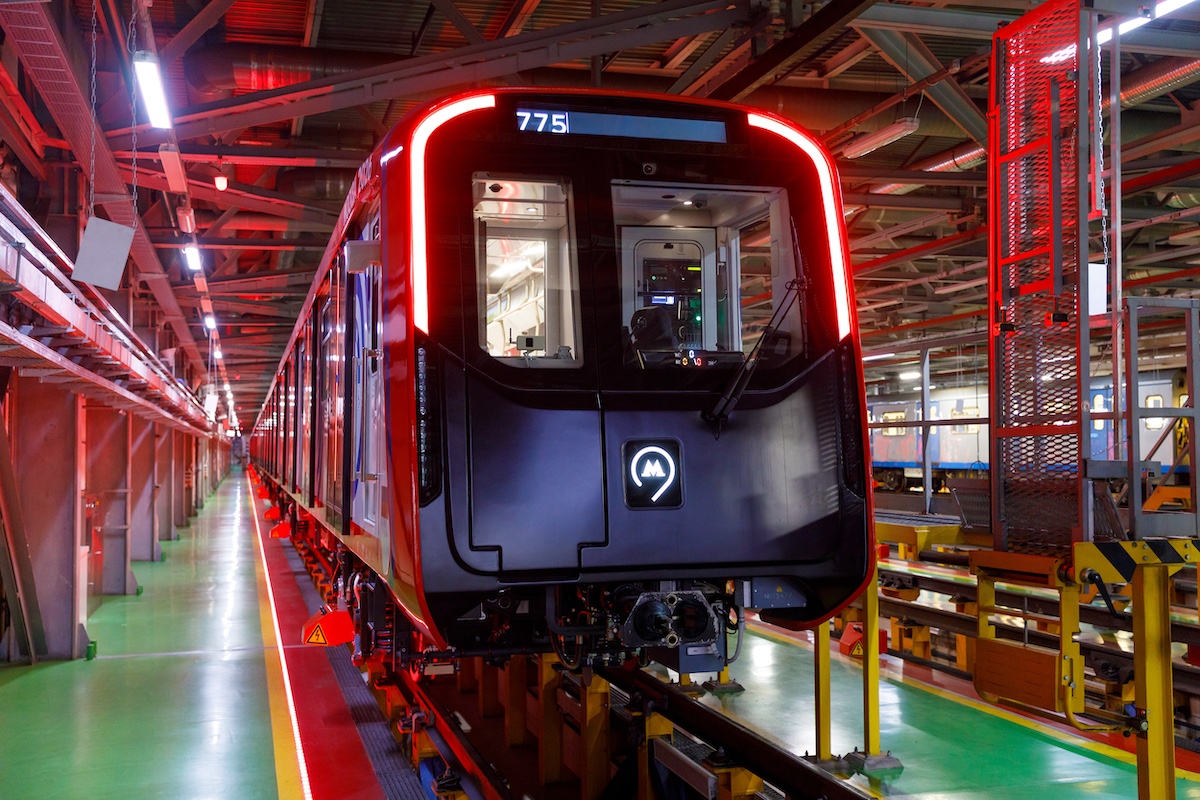
Moscow Metro – A black Ivolga has launched on MCD-4

Source: Moscow Metro

TMH JSC, TVZ, and Central Suburban Passenger Company (CPPK) have launched the 100th Ivolga 4.0 in an exclusive livery.

A black Ivolga has launched on MCD-4.

The matte black body with the bright red letters “MCD” and the shiny number “100” makes the train a true metropolitan art object. Inside, passengers continue to enjoy maximum comfort, complemented by the mint color scheme.

It is an expression of emotion, style, and a symbol of Moscow’s future-defining transport.

“The 100th Ivolga is a special train. Passengers have been eagerly awaiting its arrival, and today it hit the roads. It is a symbol of Moscow transport’s development, a combination of engineering, design, and passenger comfort. By launching the black anniversary Ivolga on MCD-4, Moscow has once again set an example of what modern urban transport should be. “We are developing the MCD on the instructions of Moscow Mayor Sergey Sobyanin,” said Maksim Liksutov.

The Big Circle Line (BCL) has already seen 1 billion trips since its full launch.

Since its launch, the Big Circle Line (BCL) has become the longest circular metro line in the world and has transformed the commute for residents and visitors alike:

🔹 Dozens of new routes and transfers allow travelers to save up to 45 minutes per day.

🔹 The entire metro has become more accessible. For example, the Circle Line has been reduced by up to 25%.

🔹 Many districts of the capital now have their first metro service.

“The BCL has already made history in global metro construction. The line, built under the leadership of Moscow Mayor Sergey Sobyanin, has long been one of the most popular metro systems, which celebrates its 90th anniversary this year. More than 1.5 million trips are made on a weekday. The line is ready to continue to accommodate new passengers: the BCL has built up capacity for decades to come,” said Maksim Liksutov.

На БКЛ совершили уже 1 млрд поездок с момента полного запуска движения.

С момента своего запуска Большая кольцевая линия (БКЛ) стала самой протяженной кольцевой линией метро в мире и изменила поездки всех жителей и гостей города:

🔹 Десятки новых маршрутов и пересадок позволяют экономить до 45 мин. в день.

🔹 Во всем метро стало свободнее. Например, Кольцевая линия разгрузилась до 25%.

🔹 Во многих районах столицы метро появилось впервые.

«БКЛ уже вошла в историю мирового метростроения. Линия, которую построили под руководством Мэра Москвы Сергея Собянина, давно стала одной из самых востребованных в метрополитене, который в этом году отмечает 90-летие. В рабочий день здесь совершают более 1,5 млн поездок. Линия готова и дальше принимать новых пассажиров: на БКЛ создан запас провозной способности на десятилетия вперед», — сообщил Максим Ликсутов.

Russia’s first autonomous trams, “Lvyonok-Moskva,” have traveled over 33,000 kilometers.

According to Maksim Liksutov, 20 modern trams operate on the line, capable of operating without overhead wires. Here’s how it works:

🔹 Trams store energy when they come into contact with overhead wires.

🔹 At stops before sections without overhead wires, the driver lowers the pantograph on the roof.

🔹 Along Akademika Sakharova Avenue, the tram operates autonomously, without being connected to overhead wires.

🔹 After completing the autonomous section, the driver raises the pantograph. The tram continues along the route and stores energy again.

“Lvyonok-Moskva” demonstrates reliability and safety. Route 90 is in demand: up to 17,000 trips are made on it daily. Trams make approximately 300 trips daily.

“We continue to develop a modern and environmentally friendly transportation system in the capital, as instructed by Moscow Mayor Sergey Sobyanin. With the opening of the tram line on Academician Sakharov Avenue, transportation links in the city center have improved. Today, Russia’s first autonomous trams, “Lvyonok-Moscow,” are operating here on route 90. Their energy storage system is proving to be excellent,” said Maksim Liksutov.

Более 33 тыс. км проехали первые в России автономные трамваи «Львенок-Москва».

Как рассказал Максим Ликсутов, на линии работают 20 современных вагонов, которые могут ехать без контактной сети. Как это работает:

🔹 Трамваи накапливают энергию, когда соприкасаются с проводами.

🔹 На остановках перед участком без контактной сети водитель опускает пантограф на крыше.

🔹 По проспекту Академика Сахарова трамвай едет на автономном ходу без подключения к проводам.

🔹 После автономного участка водитель поднимает пантограф. Трамвай продолжает ехать по маршруту и снова накапливает энергию.

«Львенок-Москва» демонстрирует надежность и безопасность. Маршрут 90 востребован: каждый день на нем совершают до 17 тыс. поездок. Трамваи ежедневно выполняют около 300 рейсов.

«Мы продолжаем развивать современную и экологичную транспортную систему в столице, как поручил Мэр Москвы Сергей Собянин. С открытием трамвайной линии на проспекте Академика Сахарова улучшили транспортные связи в центре города. Сегодня здесь, по маршруту 90, ходят первые в России автономные трамваи «Львенок-Москва». Их система накопления энергии отлично показывает себя в работе», — сообщил Максим Ликсутов.

Metro Logo in Space.

A Soyuz-2.1a launch vehicle carrying the Progress MS-32 transport spacecraft has lifted off from the Baikonur Cosmodrome. Its hull was decorated with the 90th anniversary logo of the Moscow Metro.

The spacecraft has already successfully docked with the International Space Station. The flight went according to plan and was part of the regular supply program for the station, delivering fuel for refueling, drinking water, fresh food, and “Orlan” spacesuits for spacewalks.

For the first time ever, the symbol of Moscow’s transport system was presented in space, making this a truly unique event. The collaboration between Moscow’s transport system and Roscosmos highlights the importance of developing high-tech industries and their contribution to urban life.

“In honor of the 90th anniversary of the Moscow Metro, the anniversary logo appeared on a Roscosmos rocket for the first time in history. This union of two industries—transport and space—symbolizes progress, technological advancement, and respect for the country’s historical heritage,” said Maksim Liksutov.

Логотип метро в космосе.

С космодрома Байконур стартовала ракета-носитель «Союз-2.1а» с транспортным кораблем «Прогресс МС-32». На ее корпус нанесли логотип 90-летия Московского метрополитена.

Корабль уже успешно пристыковался к Международной космической станции. Полет прошел в штатном режиме и стал частью регулярной программы снабжения станции топливом для дозаправки, питьевой водой, свежими продуктами и скафандрами «Орлан» для выхода космонавтов в открытый космос.

Символику столичного транспорта впервые в истории представили в космосе, это стало уникальным событием. Сотрудничество московского транспорта и Роскосмоса подчеркивает значение развития высокотехнологичных отраслей и их вклад в жизнь горожан.

«В честь 90-летия Московского метрополитена юбилейный логотип метро впервые в истории появился на ракете Роскосмоса. Такое объединение двух отраслей — транспортной и космической — символизирует движение вперед, технологичность и уважение к историческому наследию страны», — отметил Максим Ликсутов.

Russia’s first tram line without overhead wires opens on Akademika Sakharova Avenue.

A new tram line, Route 90, has been launched from Sokolniki to Paveletskiy railway terminal, connecting 20 key stations along the city’s rail framework—including four major central railway stations and sixteen metro and Moscow Central Diameter (MCD) stations. This new route is served by about 20 state-of-the-art “Lvyonok-Moskva” trams with autonomous operation. On a 2-kilometer stretch along Akademika Sakharova Avenue, these trams run without overhead wires, using stored energy instead.

The new line has significantly improved transportation options on Akademika Sakharova Avenue and Masha Poryvayeva Street, areas that previously had no city transit service. Around 300,000 Moscow residents now have access to faster and more convenient travel options. For example, the tram now offers a quicker connection between Three Stations Square and Paveletsky Station than the metro.

Since the launch on September 10, 2025, the autonomous trams have completed over 1,300 trips, proving both the reliability and popularity of the new route. This is just the first step toward creating the Moscow Tram Diameters and completing the upgrade of the city’s tram fleet by the end of 2026.

“The new Route 90, launched by Moscow Mayor Sergey Sobyanin, has proven to be in high demand. Getting around the city center has become more convenient and faster for both residents and visitors. We are closely monitoring the performance of the trams on this route,” added Maksim Liksutov.

На проспекте Академика Сахарова открыли первую в России трамвайную линию без контактной сети.

Запущена новая трамвайная линия маршрута №90 от Сокольников до Павелецкого вокзала, которая связала 20 станций рельсового каркаса — четыре центральных железнодорожных вокзала и шестнадцать станций метро и МЦД. Новый маршрут обслуживают около 20 современных трамваев «Львёнок-Москва» с автономным ходом, которые на участке в 2 км по проспекту Академика Сахарова движутся без подключения к контактной сети, используя накопленную энергию.

Новая линия значительно улучшила транспортное сообщение на проспекте Академика Сахарова и улице Маши Порываевой, где ранее не ходил городской транспорт. Примерно 300 тысяч москвичей получили более удобные и быстрые варианты поездок, например, от площади трёх вокзалов до Павелецкого вокзала теперь можно доехать быстрее на трамвае, чем на метро.

С момента запуска 10 сентября 2025 года автономные трамваи выполнили более 1300 рейсов, доказав высокую надежность и востребованность нового маршрута. Это первый шаг к созданию Московских трамвайных диаметров и завершению обновления парка трамваев к концу 2026 года.

«Новый маршрут 90, который запустил Мэр Москвы Сергей Собянин, доказал свою востребованность. Поездки в центре стали удобнее и быстрее для жителей и гостей города. Мы внимательно следим за работой трамваев на маршруте», — добавил Максим Ликсутов.

Construction of the Biryulevskaya metro line has begun in Moscow.

Construction of the Line 18 (Biryulyovskaya) began in the capital in 2025. The future line will be 22.2 kilometers long, with 10 stations and transfers to the Zamoskvoretskaya, Troitskaya, and Big Circle Line (BCL), the Moscow Central Circle (MCC), and the Paveletskaya Line of the Moscow Railway.

The metro will reach the Biryulyovo Vostochnoye and Zapadnoye districts and improve transportation services to the Danilovsky, Nagatinsky Zaton, Nagatino-Sadovniki, Pechatniki, Moskvorechye-Saburovo, and Tsaritsyno districts. This will benefit approximately one million Muscovites. Many will have metro stations near their homes, while others will benefit from faster and more convenient metro options.

The ZIL, Ostrov Mechty, and Klenovy Bulvar stations are currently under construction. Seven more stations are in the planning stages. Construction of the Biryulevskoye depot is also underway.