
Здравоохранение и технологии – Москва запускает сервис искусственного интеллекта для диагностики переломов плеча

Источник: Департамент здравоохранения Москвы

Москва внедрила новый сервис искусственного интеллекта (ИИ) для обнаружения переломов плеча на рентгеновских снимках. По словам Юрия Василева, начальника отдела радиологии Департамента здравоохранения Москвы, это 41-я клиническая область, в которой радиологи используют технологии компьютерного зрения.
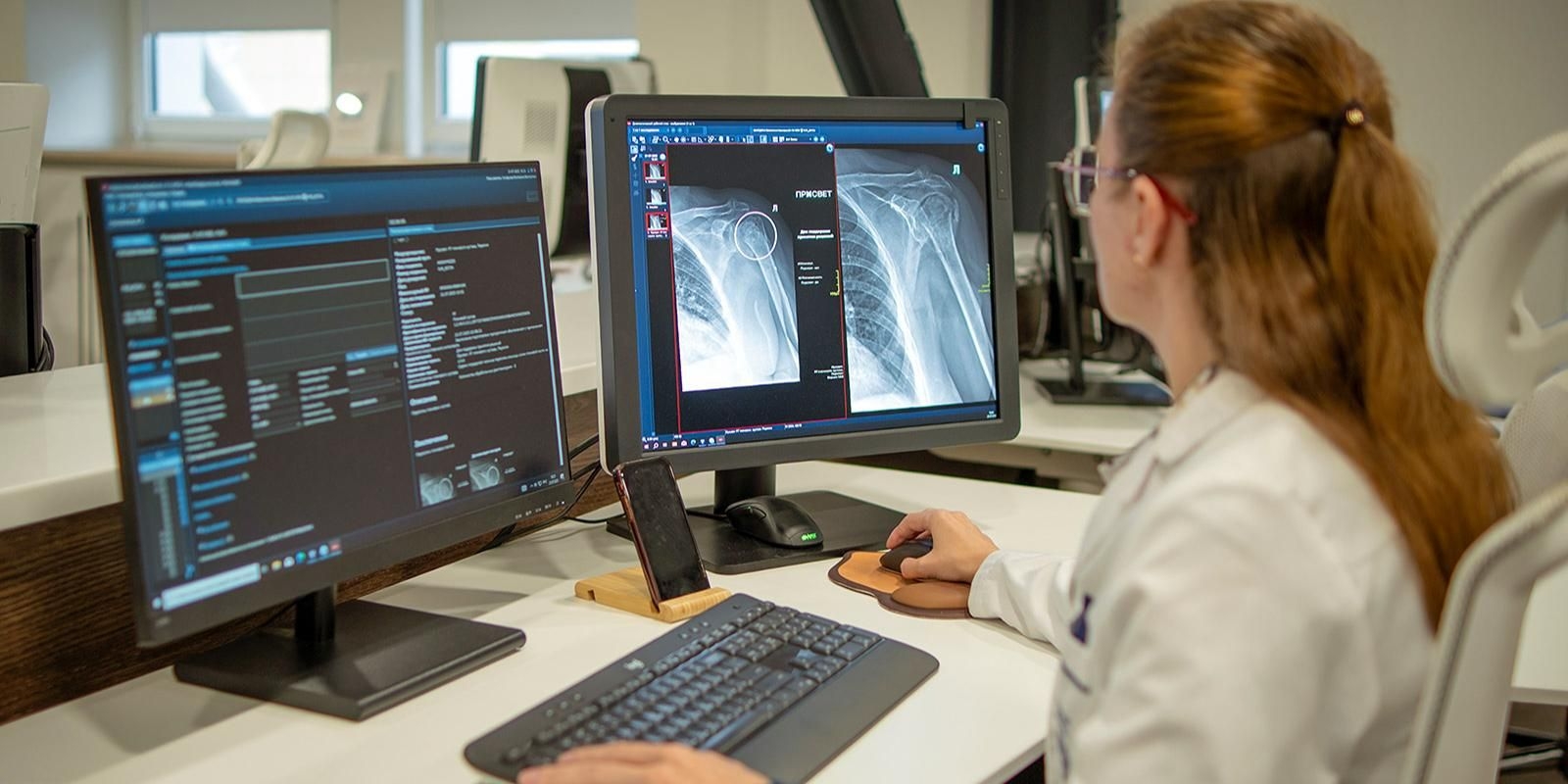
Департамент здравоохранения Москвы запускает сервис искусственного интеллекта для диагностики переломов плеча.

Москва продолжает продвигать интеграцию технологий искусственного интеллекта в практические приложения в сфере здравоохранения. Алгоритм помогает врачам, автоматически выделяя подозрительные области, указывающие на возможные переломы, и выполняя необходимые измерения на снимках. Это ускоряет интерпретацию исследований и повышает точность обнаружения травм. Васильев подчеркнул критическую важность этого сервиса в травматологических центрах, где эффективность и точность диагностики имеют первостепенное значение для своевременного лечения и снижения риска осложнений. Эта интеграция ИИ в травматологию способствует дальнейшему развитию цифровой медицины в Москве, интегрируя сервис в комплексную инфраструктуру нейронных сетей города, которая в настоящее время работает в 41 направлении.

«Плечевой сустав — одна из самых сложных анатомических областей для интерпретации рентгеновских снимков, — отметил Василев. — Даже незначительные отклонения в положении пациента во время обследования могут повлиять на точность визуализации, что требует исключительной внимательности врача. Этот алгоритм искусственного интеллекта действует как дополнительный фильтр, служа надежным вспомогательным инструментом для повышения точности анализа».

«Плечевой сустав является одной из самых сложных анатомических задач для интерпретации рентгеновских снимков», — отметил Василиев. «Даже незначительные отклонения в положении пациента могут повлиять на точность визуализации, что требует исключительной клинической бдительности. Этот алгоритм искусственного интеллекта функционирует как диагностический фильтр, служа надежным вспомогательным инструментом для повышения точности анализа».

Своевременная диагностика переломов имеет решающее значение для определения тактики лечения. Задержки увеличивают риск осложнений, включая неправильное сращение костей, хроническую боль и ограниченную подвижность. Внедрение ИИ минимизирует эти риски, позволяя начать лечение на более ранней стадии.

В рамках пятилетнего эксперимента по компьютерному зрению в Москве в сферу здравоохранения интегрировано более 200 ИИ-сервисов, участвующих в проекте. Около 100 алгоритмов интегрировано в медицинскую информационную систему города, около 50 из них в настоящее время анализируют медицинские изображения в режиме реального времени.

Проект возглавляет Московский комплекс социального развития на базе Центра диагностики и телемедицины Департамента здравоохранения Москвы в сотрудничестве с Департаментом информационных технологий города. Он соответствует целям Стратегии развития медицины в Москве до 2030 года, направленной на улучшение качества и доступности медицинской помощи для жителей.

Health and Technology – Moscow Launches AI Service for Diagnosing Shoulder Fractures

Source: Moscow Health Care Department 

Moscow has deployed a new artificial intelligence (AI) service to detect shoulder fractures on X-ray images. This marks the 41st clinical area where the radiologists utilize computer vision technologies, according to Yuri Vasilev, Chief Officer of Radiology at the Moscow Health Care Department.

Moscow Health Care Department Launches AI Service for Diagnosing Shoulder Fractures.

Moscow is continually advancing the integration of artificial intelligence technologies into practical healthcare applications. The algorithm assists doctors by automatically highlighting suspicious areas indicating potential fractures and performing necessary measurements on the images. This accelerates the interpretation of studies and enhances the accuracy of injury detection. Vasilev emphasized the service’s critical importance in trauma centers, where efficiency and diagnostic precision are paramount for timely treatment and reducing complication risks. This integration of AI into traumatology advances Moscow’s ongoing development of digital medicine, integrating the service into the city’s comprehensive neural network infrastructure, which now operates across 41 modalities.

“The shoulder joint is one of the most complex anatomical areas for interpreting X-ray images,” Vasiliev noted. “Even minor deviations in the patient’s position during the examination can affect visualization accuracy, demanding exceptional doctor attentiveness. This AI algorithm acts as an additional filter, serving as a reliable auxiliary tool to increase analysis accuracy.”

“The shoulder joint is one of the most complex anatomical challenges for X-ray interpretation,” Vasiliev noted. “Even minor patient positioning variations can compromise visualization accuracy, requiring exceptional clinical vigilance. This AI algorithm functions as a diagnostic filter, providing a reliable auxiliary tool to enhance analytical precision.”

Timely fracture diagnosis is crucial for determining treatment tactics. Delays increase risks of complications, including improper bone fusion, chronic pain, and limited mobility. AI implementation minimizes these risks by enabling earlier therapy initiation. 

Moscow’s integration of smart algorithms into healthcare, as part of a five-year experiment in computer vision, now includes over 200 AI services participating in the project. Approximately 100 algorithms have been integrated into the city’s medical information system, with about 50 currently analyzing medical images in real-time streaming mode.

The project is led by the Moscow Social Development Complex, based on the Center for Diagnostics and Telemedicine of the Moscow Healthcare Department, in collaboration with the city’s Department of Information Technology. It aligns with the goals of the Moscow Medicine Development Strategy until 2030, aiming to improve the quality and accessibility of medical care for residents.

Center for Diagnostics and Telemedicine Celebrates Graduation of First Masters in Medical Artificial Intelligence

Source: Center for Diagnostics and Telemedicine of the Moscow Health Department (MHD)

Earlier, the Center for Diagnostics and Telemedicine of the Moscow Department of Health and RTU MIREA signed a landmark agreement to jointly develop and deliver specialized training programs in artificial intelligence applied to healthcare. This collaboration resulted in the creation of a unique, and at the time, the only joint educational program integrating scientific knowledge and practical expertise gained from the Moscow Experiment on computer vision implementation. The program combines the Center’s hands-on experience with the university’s foundational competencies in mathematics and computer science. Additionally, practitioners from Third Opinion Platform, a leading Russian AI healthcare developer, contributed to curriculum development and student training.

On June 10, 2025, the inaugural graduation ceremony was held for the first master’s students of the Intelligent Data Analysis program within the Computer Science and Computer Engineering faculty.

Graduates have already showcased impactful healthcare innovations, including an algorithm for early detection of liver tumors with 85% accuracy and complex medical decision support systems. These projects received recognition at the All-Russian Engineering Competition, where one student emerged as the winner and six others were laureates. These advancements are poised to significantly reduce the interval between oncological disease detection and surgical intervention.

Anton Vladzimirsky, Deputy Director of R&D at the Center for Diagnostics and Telemedicine of the Moscow Department of Health, emphasized:
“The integration of artificial intelligence into medical practice is becoming a reality through the training of highly qualified specialists. Our graduates possess a unique combination of skills that enable them to develop cutting-edge solutions for digital medicine and drive the advancement of intelligent healthcare technologies.”

Stanislav Kudzh, Rector of RTU MIREA, added:

“The achievements of the first graduates of the AI Data Analysis program demonstrate that deep interdisciplinary training is essential for the successful integration of AI into medical practice. These specialists have not only mastered advanced technologies but have also contributed practically to digital medicine’s development. They are set to become leaders in creating innovative solutions that will enhance healthcare quality and accelerate the adoption of intelligent technologies across Russia. This represents a significant milestone in the evolution of healthcare.”

About RTU MIREA
RTU MIREA (Russian Technological University) is a multidisciplinary state university educating over 30,000 students across various modalities. The university’s Institute of Artificial Intelligence offers 17 specialized programs and annually graduates hundreds of programmers and AI experts. With more than 250 educational programs spanning IT, radio electronics, chemistry, biotechnology, and robotics, RTU MIREA actively integrates industry practices from high-tech companies into its curriculum.

About the Center for Diagnostics and Telemedicine of the Moscow Health Department

The Center for Diagnostics and Telemedicine is a leading scientific and practical institution within the Moscow Health Department. It oversees the development of diagnostic services, drives digital transformation in healthcare, implements AI technologies in clinical practice, conducts research, and provides medical workforce training. Since 2013, the Center has produced over 800 scientific publications and registered more than 200 intellectual property results. Since 2020, it has been conducting an experiment deploying computer vision technologies, analyzing over 14 million medical images across 40+ clinical areas with high accuracy. By presidential directive, the Center operates MosMedAI, a digital platform offering AI-powered medical image processing and automated radiology analysis, currently adopted by 71 Russian regions.

About Third Opinion Platform

Third Opinion Platform is a Russian developer of AI-powered diagnostic support tools for radiology and laboratory medicine, including a proprietary smart video analytics system. Its algorithms detect over 100 pathological indicators, such as breast cancer, stroke, lung cancer, and aortic aneurysm. The platform is implemented across 58 Russian regions and in private clinics, including the European Medical Center (EMC). To date, its AI solutions have processed over 10 million clinical studies. The company’s flagship products are registered as Class III medical devices by Roszdravnadzor. Since 2020, Third Opinion Platform has partnered strategically with MEDSI Group, one of Russia’s largest private healthcare networks.